


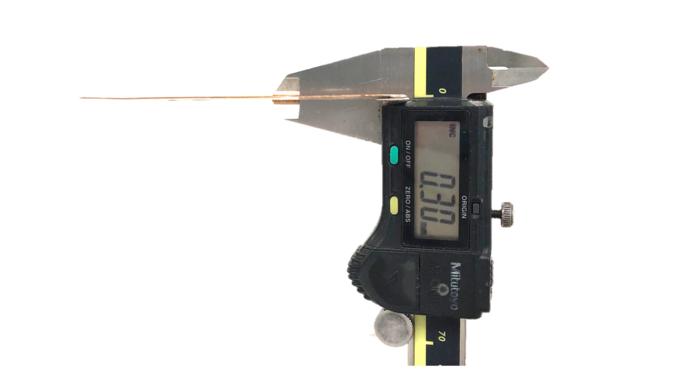
Scientists from Nagoya University in Japan have unveiled a groundbreaking solution to one of the most persistent challenges in mobile technology: managing heat dissipation in increasingly powerful smartphones and tablets. Their latest innovation, the ultra-thin loop heat pipe (UTLHP), is poised to revolutionize the landscape of mobile devices by enabling advanced performance without compromising on size or design. At a mere 0.3 mm thick, this cutting-edge cooling technology can fit seamlessly into modern slim smartphones and tablets, paving the way for the next generation of efficient and sleek electronics.
The UTLHP offers a sophisticated solution to thermal management issues faced by electronic components during intense usage scenarios, such as gaming or video processing. The challenge of cooling such powerful components is exacerbated by the limited space available in ultra-slim devices. Traditional cooling technologies often fall short in efficiency, leading to performance throttling and overheating problems. However, this innovative device can effectively mitigate heat buildup, ensuring that mobile devices operate smoothly even under demanding conditions.
The research, published in the prestigious journal Applied Thermal Engineering, emphasizes the need for innovative heat management solutions as smartphones continue to evolve. As manufacturers strive to create thinner devices with enhanced processing capabilities, the risk of thermal issues grows. The UTLHP not only addresses this pressing issue but also excels in performance, allowing manufacturers to push the boundaries of what is possible in mobile device design.
Loop heat pipes are known for their efficiency in passive heat transfer, using a closed-loop system to transport heat without the need for external power. This marks a significant advancement over traditional heat pipes, which typically have limitations in heat load transfer and distance. The complexity of the UTLHP design introduces a reservoir that stabilizes the system, ensuring the continuous circulation of cooling fluid. This reservoir allows for more effective heat management, making it ideal for high-performance electronics.
The innovative construction of the UTLHP involves thin copper sheets designed with intricate flow paths and a wick, composed of sintered copper powder. By utilizing laser welding to create a solid and precise unit, researchers can leverage water as a cooling agent within the thin channels. The cycle of heat absorption, evaporation, and condensation occurs efficiently, maintaining optimal thermal conditions and enhancing overall device longevity.
During testing, the UTLHP demonstrated its capability to transport up to 10 W of heat. This performance was consistent across various device orientations, a crucial factor since users often hold their phones in multiple positions. Previous iterations of loop heat pipes struggled with size constraints, making it difficult to integrate them into modern devices. However, thanks to advanced numerical modeling during the design phase, the new UTLHP has been optimized for compactness without sacrificing efficacy.
A notable achievement of this technology is its extraordinary thermal conductivity, which surpasses that of traditional materials like copper and graphite. With a heat transport capacity approximately 45 times greater than copper and about ten times that of graphite sheets, the UTLHP stands out as a game-changer in thermal management technology. Its performance suggests that the future of smartphones and tablets could include even smaller, lighter, and more powerful devices capable of handling sustained high performance.
In addition to addressing heat-related performance undermining issues, the UTLHP also presents an opportunity to enhance battery life. By maintaining optimal operating temperatures, the device could reduce energy waste, helping to extend the lifespan of key components. Furthermore, the UTLHP’s adherence to international standard sizes means that it can be adapted for use in not just smartphones but also sophisticated smart cards, expanding its potential utility across various applications.
The collaborative effort between Nagoya University researchers and Porite Corporation, a leader in powder metallurgy, has been instrumental in bringing this innovative device to fruition. The partnership highlights the importance of academic-industry collaborations in driving technological advancements. Prof. Hosei Nagano, a leading researcher on the project, notes that the UTLHP could significantly enhance the next generation of mobile devices, making them thinner without compromising their performance.
Graduate student Jun Sasaki echoed the sentiment, emphasizing the urgency of developing effective cooling technologies in light of the growing complexity and capability of mobile devices. As heat management becomes a critical aspect of mobile technology, the UTLHP stands as a beacon of potential, set to spearhead a new era of advanced electronics that not only meet consumer demands but do so more efficiently.
In conclusion, the development of the ultra-thin loop heat pipe marks a significant leap forward in thermal management technology for mobile devices. Its thin profile and remarkable performance capabilities challenge previous notions of thermal management in consumer electronics, setting the stage for a future where devices can deliver exceptional performance and user experience without succumbing to the limitations imposed by overheating. This exciting innovation underscores the potential for profound shifts in how we engage with our technology, inviting us to rethink what is possible in the ever-evolving landscape of mobile devices.
Keywords
Mobile technology, cooling technology, loop heat pipe, thermal management, smartphones, efficient design, Nagoya University, advanced electronics, heat dissipation.
Cite Scienmag News
Denise Maddox. (April 11, 2025). Revolutionary Ultra-Thin Cooling Solution Enables Sleeker, High-Performance Mobile Devices. Scienmag. https://scienmag.com/revolutionary-ultra-thin-cooling-solution-enables-sleeker-high-performance-mobile-devices/
Denise Maddox. "Revolutionary Ultra-Thin Cooling Solution Enables Sleeker, High-Performance Mobile Devices." Scienmag, 11 April 2025, https://scienmag.com/revolutionary-ultra-thin-cooling-solution-enables-sleeker-high-performance-mobile-devices/. Accessed 4 September 2026.
Denise Maddox. "Revolutionary Ultra-Thin Cooling Solution Enables Sleeker, High-Performance Mobile Devices." Scienmag. April 11, 2025. https://scienmag.com/revolutionary-ultra-thin-cooling-solution-enables-sleeker-high-performance-mobile-devices/


