

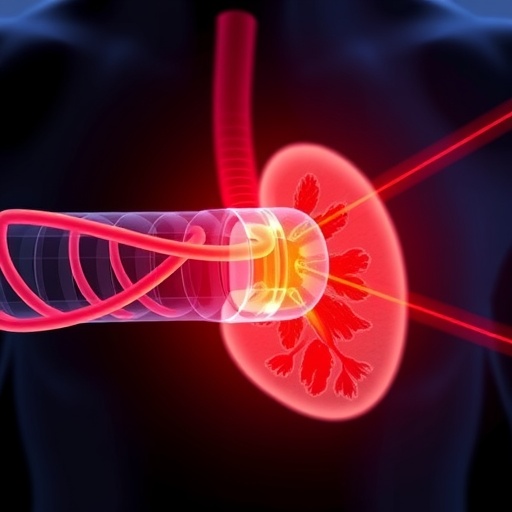
In a groundbreaking study, researchers have unveiled a novel approach to liver cancer detection that could potentially revolutionize the way clinicians screen and diagnose this malignancy. Through the innovative use of small extracellular vesicle microRNAs (miRNAs) and a sophisticated RCA-CRISPR sensor system, their findings promise enhanced sensitivity and specificity in detecting liver cancer at its earliest stages. This advancement is not merely a step forward; it represents a leap toward a future where early detection could significantly improve survival rates and patient outcomes.
At the heart of this research lies the critical role of small extracellular vesicles (sEVs) which have garnered immense attention due to their ability to encapsulate and transport various biomolecules, including miRNAs, that reflect the physiological state of cells. These vesicles circulate in bodily fluids, making them an ideal non-invasive biomarker source for various diseases, including cancer. Their potential is amplified in liver cancer, where early detection is paramount yet often challenging due to the asymptomatic nature of initial disease stages.
The researchers meticulously harvested serum samples to isolate these small extracellular vesicles, focusing particularly on their miRNA content. By employing sophisticated isolation techniques, they ensured that the vesicles obtained were pure and representative of the physiological changes associated with liver tumorigenesis. This step is crucial because the accuracy of subsequent analyses hinges on the quality of the isolated biomolecules.
To enhance the sensitivity of miRNA detection, the team designed a multi-target RCA-CRISPR sensor, a groundbreaking technology combining multiple advanced methodologies. The RCA (Recombinase Polymerase Amplification) technique amplifies specific miRNA sequences, creating a substantial signal from minute quantities. Meanwhile, the CRISPR (Clustered Regularly Interspaced Short Palindromic Repeats) system facilitates precise targeting and detection of these amplified sequences, significantly improving the detection threshold of the assay.
One of the standout features of this study is its focus on the multi-target capability of the sensor, allowing for the simultaneous detection of several miRNAs associated with liver cancer. This multi-faceted approach not only enhances the accuracy of diagnosis but also provides a more comprehensive picture of the disease state, as different miRNAs can indicate different facets of tumor biology. This level of detail can facilitate personalized treatment strategies, tailoring interventions to patient-specific cancer profiles.
Validation of the sensor’s efficacy included rigorous testing against various cohorts of individuals, including healthy controls and those diagnosed with liver cancer at varying stages. The results were compelling, showcasing a marked increase in detection rates compared to traditional biomarker approaches. The high specificity and sensitivity metrics underscore the potential of this technology to redefine clinical practice in oncology.
Furthermore, the researchers delved deeper into the biological significance of the miRNAs identified through their assays, drawing connections to established pathways that fuel liver cancer progression. This provides not only diagnostic information but insights into potential therapeutic targets, opening avenues for the development of novel therapies that could supplement existing treatment modalities like surgery, chemotherapy, and immunotherapy.
The integration of RCA-CRISPR technology exemplifies the convergence of various scientific disciplines: molecular biology, bioinformatics, and nanotechnology. This interdisciplinary approach is crucial as it mirrors the complexity of cancer itself, which often arises from multiple contributing factors and can present in myriad forms. By adopting this multifaceted strategy, the research team encourages the scientific community to rethink how we approach cancer detection and treatment.
As promising as these results appear, the researchers remained cautiously optimistic, emphasizing the need for larger-scale clinical trials to validate their findings across diverse populations and demographics. This step is essential to ensure the technology’s robustness in real-world settings, where genetic and environmental variations can significantly influence disease presentation and progression.
In anticipation of future clinical applications, the researchers call for collaboration with diagnostic companies to expedite the commercialization of this technology. By translating their findings into real-world applications, they foresee a new era in liver cancer diagnostics, where non-invasive, precise, and rapid testing becomes the standard of care.
Additionally, the broader implications of this research extend beyond liver cancer alone. The methodologies developed here could be adapted for other malignancies, and potentially even non-cancerous conditions characterized by comparable miRNA signatures. This flexibility heralds a transformative shift in how we think about disease detection and monitoring, paving the way for a future where early intervention becomes the norm rather than the exception.
Ultimately, the synthesis of innovative technologies and biological insights embodied in this study not only advances our understanding of liver cancer but also exemplifies the power of interdisciplinary research in tackling complex health challenges. As we stand at this pivotal intersection, the potential to save lives through timely detection grows brighter, showcasing the profound impact scientific inquiry can have on humanity.
The research conducted by Fan, Zhou, Chen, and their colleagues thus not only elucidates the complex biology of liver cancer but also provides a tangible solution that could significantly alter clinical practices and enhance patient outcomes. As the medical community eagerly awaits further developments, the excitement surrounding this scientific breakthrough serves as a reminder of the tremendous potential embedded within innovative research and collaborative efforts aimed at improving human health.
In conclusion, the novel serum small extracellular vesicle miRNAs and the RCA-CRISPR sensors stand as a testament to the advances in biotechnology and molecular diagnostics. By equipping clinicians with powerful tools for early detection, the pursuit of improved patient care and survival outcomes in liver cancer is a closer, more achievable reality than ever before.
Subject of Research: Liver Cancer Early Detection Through sEVs and RCA-CRISPR Technology
Article Title: Novel serum small extracellular vesicle miRNAs with multi-target RCA-CRISPR sensor for liver cancer detection
Article References:
Fan, T., Zhou, B., Chen, H. et al. Novel serum small extracellular vesicle miRNAs with multi-target RCA-CRISPR sensor for liver cancer detection.
J Transl Med (2026). https://doi.org/10.1186/s12967-025-07628-3
Image Credits: AI Generated
DOI: 10.1186/s12967-025-07628-3
Keywords: Liver Cancer, Small Extracellular Vesicles, miRNAs, RCA-CRISPR, Early Detection, Molecular Diagnostics


