


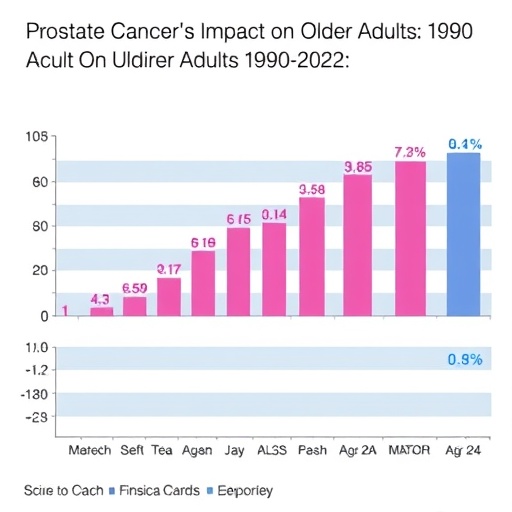
Prostate cancer has emerged as a pressing health concern, particularly among older adults. The systematic analysis by Ding, Li, Wang, and their colleagues provides a comprehensive overview of the burden of this malignancy between 1990 and 2021, offering vital insights into its epidemiology, progression, and repercussions on the aging population. As the global demographic landscape shifts toward an increasingly aging populace, understanding the implications of prostate cancer becomes paramount in framing health policy and clinical care.
At the heart of this study is the Global Burden of Disease Study 2021, a robust framework designed to encapsulate the various dimensions of diseases, including incidence, prevalence, mortality, and risk factors. This systematic analysis of prostate cancer yields critical data that reveal not only the trajectory of the disease over three decades but also its differential impact across geographical and socio-economic strata. It serves as a crucial guide for healthcare professionals, policymakers, and researchers alike.
The findings highlight alarming trends in the incidence of prostate cancer, particularly in men aged 65 years and older. As life expectancy increases globally, the upward trajectory of prostate cancer cases presents a significant challenge to healthcare systems. The prevalence rates are particularly pronounced in high-income countries, suggesting underlying factors such as advanced screening technologies and healthcare access that influence detection, diagnosis, and treatment pathways.
The mortality rates associated with prostate cancer also demonstrate concerning patterns. While advances in medical technology and treatment modalities have improved survival rates, disparities remain stark. Communities with less access to healthcare services or preventative care exhibit higher mortality rates, raising ethical concerns regarding health equity. Understanding these disparities is crucial for targeted interventions and resource allocation.
Crucially, the systematic analysis underscores the need for enhanced awareness and education about prostate cancer among older adults. Many individuals within this demographic may lack the necessary knowledge regarding symptoms, screening recommendations, and treatment options. Empowering patients through education can lead to earlier detection and ultimately improve prognostic outcomes.
Histologically, prostate cancer displays significant heterogeneity, further complicating its management. The study identifies various subtypes and their corresponding risk levels, which can inform treatment decisions. The molecular characteristics of prostate cancer also remain an active area of research, with emerging therapeutic options targeting specific genetic profiles showing promise.
Moreover, the psychological burden of a prostate cancer diagnosis cannot be underestimated. Older adults often grapple with mental health issues stemming from their diagnosis, including anxiety and depression. Addressing the psychosocial aspects of cancer care is essential in providing comprehensive treatment that goes beyond just physical health, enhancing the overall quality of life for patients.
The implications of this research extend beyond individual patient care. Policymakers are urged to consider the broader health care implications, such as resource allocation for screening programs and research funding. Prioritizing prostate cancer within health agendas may ensure that ongoing studies and care innovations continue to address the evolving needs of older adults.
Looking ahead, future studies should focus on longitudinal data collection to monitor outcomes and response to treatment over time. Collaborative efforts between epidemiologists, oncologists, and health economists are paramount in crafting a multifaceted approach to combat the growing burden of prostate cancer. These endeavors will ultimately reflect in the strategies deployed at community health levels, shaping public health initiatives that are proactive rather than reactive.
Further exploration into lifestyle modifications and their potential protective effects against prostate cancer is another essential component of future research. Identifying modifiable risk factors, such as diet, exercise, and substance use, could lead to preventive strategies that significantly reduce incidence rates. The intersection of lifestyle choices and genetic predispositions remains an expansive field ripe for investigation.
In conclusion, the systematic analysis by Ding, Li, Wang, and others sheds light on the escalating burden of prostate cancer among older adults from 1990 to 2021. The findings compel a collective response from healthcare providers, policymakers, and researchers to address the multifaceted challenges posed by this disease. By prioritizing research, education, and health equity, the vision for a future with reduced prostate cancer incidence and improved patient outcomes becomes not only a possibility but a necessity.
As we navigate the complexities of an aging population, studies like these illuminate the critical role that advanced research plays in informing public health strategies. With ongoing collaboration and dedication, there remains hope for improved management and outcomes for those affected by prostate cancer, paving the way for innovative solutions to emerge in the battle against this disease.
Ding, W., Li, L., Wang, ZL. et al. Burden of prostate cancer in older adults, 1990–2021: a systematic analysis based on the global burden of disease study 2021.
BMC Geriatr (2026). https://doi.org/10.1186/s12877-025-06528-x
Cite Scienmag News
Nathaniel Bowman. (January 8, 2026). Prostate Cancer’s Impact on Older Adults: 1990-2021. Scienmag. https://scienmag.com/prostate-cancers-impact-on-older-adults-1990-2021/
Nathaniel Bowman. "Prostate Cancer’s Impact on Older Adults: 1990-2021." Scienmag, 8 January 2026, https://scienmag.com/prostate-cancers-impact-on-older-adults-1990-2021/. Accessed 3 September 2026.
Nathaniel Bowman. "Prostate Cancer’s Impact on Older Adults: 1990-2021." Scienmag. January 8, 2026. https://scienmag.com/prostate-cancers-impact-on-older-adults-1990-2021/


