


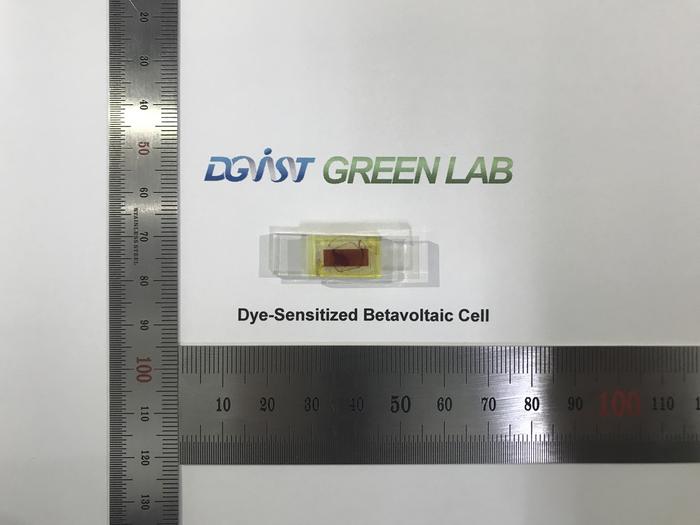
Researchers at the Daegu Gyeongbuk Institute of Science & Technology have made a significant breakthrough in the field of energy storage with the development of a new type of battery that utilizes radiocarbon, promising to deliver a long-lasting and efficient alternative to conventional lithium-ion batteries. This innovative approach addresses the limitations of traditional batteries, which often require frequent recharging and diminish in capacity over time. By leveraging the principles of nuclear energy, the team aims to meet the increasing demand for sustainable power sources in a plethora of applications ranging from portable electronics to medical devices.
Traditional lithium-ion batteries have become ubiquitous, powering a myriad of devices, from smartphones to electric vehicles. However, they come with inherent challenges, including limited lifespan and environmental concerns related to lithium extraction and battery disposal. Researchers led by Su-Il In are now looking beyond these conventional energy solutions towards utilizing radioactive materials that can harness energy for extended periods without the need for recharging. The basic premise involves the safe use of betavoltaic cells, a technology that converts radiation emitted by isotopes into electrical energy.
In the development of their prototype, the researchers chose carbon-14, a well-known isotope of carbon associated with radiocarbon dating, which emits beta particles that pose minimal risk to human health when properly shielded. The use of carbon-14 not only enhances safety but also reduces costs, as it is a by-product of nuclear reactors and can be recycled. This makes it an appealing option for creating reliable power sources that could function for decades or longer, presenting various possibilities for everyday technology.
At the American Chemical Society’s Spring 2025 meeting, In detailed how the betavoltaic battery they developed employs a unique design that places radiocarbon at both the anode and cathode, effectively increasing the energy conversion efficiency from 0.48% to a promising 2.86%. This dual placement allows the battery to harness maximum beta radiation, optimizing the performance of the injected electrons into the semiconductor layer, leading to more effective electricity generation.
The prototype battery features advanced semiconductor technologies that boost energy conversion, using titanium dioxide, a material commonly found in solar cells, combined with a ruthenium-based dye. This combination allows electrons emitted by the radiation to interact efficiently with the semiconductor, creating a chain reaction of electron transfer termed an "electron avalanche." This phenomenon amplifies the current produced, making it imperative for the proper functioning of this innovative nuclear battery.
Investigating the balance between energy efficiency and safety protocols remains paramount. The decision to employ a radiocarbon source which only emits beta rays ensures that the battery’s operation remains secure even in small-scale consumer applications. Targeting devices that traditionally relied on lithium-ion batteries, such as implantable medical devices and remote sensors, underscores the transformative potential of this technology.
The significance of improving battery performance extends beyond just electronics; it confronts the environmental impact of our ever-growing reliance on rechargeable batteries. Lithium extraction is often associated with ecological degradation, raising concerns about sustainability as global demand surges for greener alternatives. The shift towards a nuclear-powered battery could dramatically reduce these issues, providing an opportunity for cleaner energy technologies in a world increasingly aware of climate challenges.
Moreover, the long-term operational benefits of nuclear batteries, such as those that could last a lifetime in medical devices like pacemakers, could revolutionize numerous industries. Eliminating the need for battery replacements not only minimizes health risks associated with surgical procedures but also addresses potential waste management issues associated with spent batteries.
Though the current efficiency rates of these new betavoltaic designs might not exceed those of conventional lithium-ion batteries just yet, the researchers believe they are on the cusp of breakthroughs that could significantly ameliorate their energy output. Future efforts will pivot towards optimizing the physical configuration of beta-ray emissions and improving the efficiency of energy absorption at the device’s electrodes.
This research exemplifies the shifting landscape of battery technology, where public perception around nuclear energy is evolving. The idea of compact, safe nuclear batteries could redefine how we think about energy and power supply in our everyday lives. As scientific understanding and technological capabilities progress, we stand at the threshold of integrating safe nuclear power sources into devices that are not only efficient but may also be perceived as environmentally favorable.
Overall, the implications of this research extend well beyond personal gadgets. Such advancements in energy storage technology could very well facilitate the next wave of innovations across diverse fields, ensuring that energy demands are met in a manner that is both sustainable and secure. With support from organizations dedicated to advancing scientific understanding, the prospects for this innovative nuclear battery technology seem bright.
Keywords
Nuclear batteries, energy storage, betavoltaic cells, radiocarbon, lithium-ion battery alternatives, semiconductor technology, sustainable power solutions, medical devices.
Cite Scienmag News
Faith Mcneil. (March 26, 2025). Revolutionary Nuclear Battery Promises Lifetime Power with Enhanced Safety. Scienmag. https://scienmag.com/revolutionary-nuclear-battery-promises-lifetime-power-with-enhanced-safety/
Faith Mcneil. "Revolutionary Nuclear Battery Promises Lifetime Power with Enhanced Safety." Scienmag, 26 March 2025, https://scienmag.com/revolutionary-nuclear-battery-promises-lifetime-power-with-enhanced-safety/. Accessed 4 September 2026.
Faith Mcneil. "Revolutionary Nuclear Battery Promises Lifetime Power with Enhanced Safety." Scienmag. March 26, 2025. https://scienmag.com/revolutionary-nuclear-battery-promises-lifetime-power-with-enhanced-safety/


