


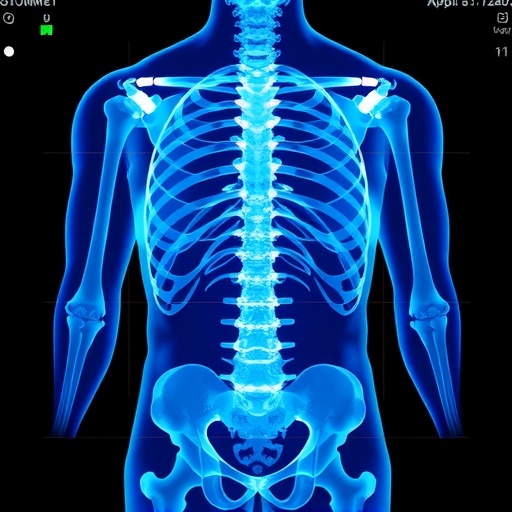
In a groundbreaking study led by researchers Zhang, Y., Ma, M., and Tian, C., a novel machine-learning-based tool has been developed to enhance the screening process for osteoporosis. This innovative system leverages the Shapley Additive exPlanation (SHAP) method to provide significant insights into the predictive features of osteoporosis risk. The research, published in the esteemed journal Archives of Osteoporosis, aims to address a growing concern in geriatric health and preventive medicine.
The urgency of developing effective osteoporosis screening tools cannot be overstated. Osteoporosis is often dubbed a silent disease, as it progresses quietly, leading to fractures that can drastically affect people’s quality of life. With advances in machine learning and data analysis, there has been renewed hope in creating precise, predictive models that can identify individuals at higher risk before serious complications arise. This research contributes to that hope by integrating advanced computational methods into healthcare practices.
The SHAP method, integral to this study, allows for transparency in machine-learning models by attributing output predictions to input features. This is particularly crucial in medical contexts where understanding the reasoning behind predictions can foster trust among healthcare providers and patients alike. By applying SHAP, the researchers could clarify how individual risk factors influence osteoporosis prediction, enabling targeted interventions.
The study meticulously developed and validated the machine-learning model against a comprehensive dataset, reflecting varied demographics and clinical histories. This diversity is critical, as osteoporosis can manifest differently across populations, depending on factors such as age, gender, and genetic predisposition. The validation process underscored the model’s robustness, demonstrating high accuracy in predicting osteoporosis risk while also being generalizable across different demographics.
In an era where data is plentiful but analysis must be precise, the new screening tool exemplifies the trend of harnessing complex algorithms to tackle straightforward yet critical health challenges. This intersection of artificial intelligence with traditional medical assessments represents a promising avenue for future health innovations. By minimizing false positives and negatives in osteoporosis screening, the research stands to improve patient outcomes and streamline healthcare resources.
Moreover, the implications of this study extend to the healthcare system’s operational efficiency. Enhanced screening capacities can lead to timely therapeutic interventions, thereby decreasing the incidence of osteoporosis-related fractures and associated healthcare costs. The investment in preventive measures could ultimately relieve financial burdens on health systems strained by chronic diseases prevalent in aging populations.
As the researchers delve deeper into the data, their future work may also explore the integration of additional variables, such as lifestyle and environmental factors, which could further refine the predictive capacities of the model. Collaboration among multi-disciplinary teams—combining expertise in medicine, data science, and public health—may yield even more sophisticated tools that cater to the complexities of osteoporosis.
In practical terms, healthcare providers could utilize this machine learning tool as part of routine screenings, allowing for more proactive management of osteoporosis risk factors. For patients, particularly those in high-risk categories, understanding their individual risk profiles could empower them to engage in preventive strategies, such as lifestyle modifications and regular monitoring.
The technology encapsulated in this study reflects broader trends in healthcare toward personalization and precision. With the ability to tailor preventative strategies based on individual risk assessments, patients may find renewed motivation to adhere to treatment plans and make informed lifestyle choices.
However, the journey from research to widespread implementation involves navigating regulatory landscapes, ensuring that the algorithms meet safety and efficacy standards before they can be utilized in clinical settings. These hurdles, while significant, are surmountable, especially with the promising results this study presents.
Ultimately, as the landscape of medical diagnostics continues to evolve through technological advancements, the integration of machine learning into osteoporosis screenings signals a formidable shift in how we perceive and manage bone health. The insights gained from this study are not just academic; they have the potential to be transformative, paving the way for increased awareness and preventive strategies against osteoporosis in diverse populations globally.
In summary, this research not only showcases the power of machine learning in clinical applications but also opens the door for future studies that could further elucidate the complexities of osteoporosis and other silent diseases. With persistent efforts in validation and real-world application, we might see a substantial improvement in how osteoporosis is screened and managed worldwide.
Cite Scienmag News
Ophelia Keating. (January 19, 2026). Revolutionary AI Tool Enhances Osteoporosis Screening Accuracy. Scienmag. https://scienmag.com/revolutionary-ai-tool-enhances-osteoporosis-screening-accuracy/
Ophelia Keating. "Revolutionary AI Tool Enhances Osteoporosis Screening Accuracy." Scienmag, 19 January 2026, https://scienmag.com/revolutionary-ai-tool-enhances-osteoporosis-screening-accuracy/. Accessed 5 September 2026.
Ophelia Keating. "Revolutionary AI Tool Enhances Osteoporosis Screening Accuracy." Scienmag. January 19, 2026. https://scienmag.com/revolutionary-ai-tool-enhances-osteoporosis-screening-accuracy/


