


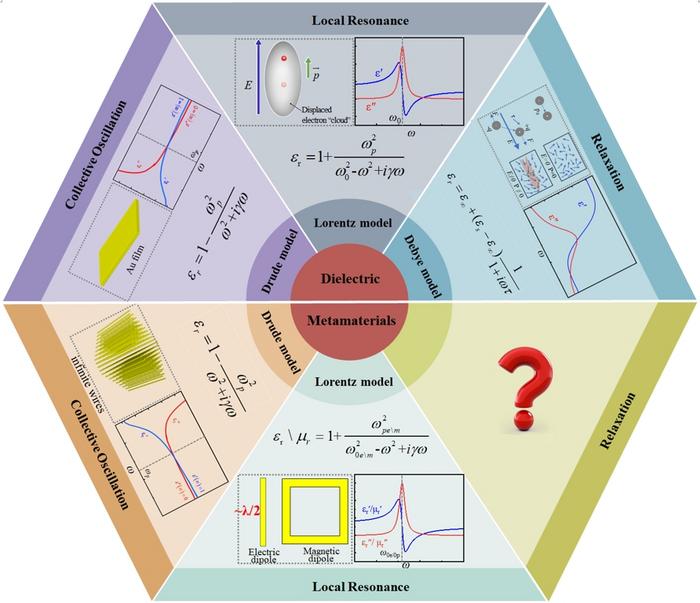
In a groundbreaking study that reshapes our understanding of metamaterials, researchers led by Xinmin Fu and Yajuan Han reveal a newly established theoretical framework integrating Debye relaxation into the realm of electromagnetic metasurfaces. Their work is set to influence the design and application of metamaterials significantly. Traditionally, mainstream dielectric materials have been explored through models such as Drude, Lorentz, and Debye, each offering unique insights into the polarization mechanisms within dielectric physics. However, the omission of the Debye relaxation model in the study of metamaterials has long been a notable gap. This research marks a pivotal step towards bridging that gap.
Polarization remains one of the most critical electromagnetic properties influencing the behavior of dielectric materials. It primarily arises from the movement of electrons within molecules or atoms. Through external electric fields, the arrangement and dynamics of these charges can result in dipoles that produce observable macroscopic polarization. Understanding these fundamental concepts is essential for deciphering the electromagnetic behavior exhibited by various materials, particularly in the design of metamaterials that currently dominate the material landscape.
While conventional dielectric materials can be characterized by their three polarization models, which include the Drude model for free electron oscillations, the Lorentz model for local dipole resonances, and the Debye model for dipole relaxation processes, metamaterials have primarily relied on just the Drude and Lorentz frameworks. This limited perspective restricts the full potential understanding of how metamaterials interact with electromagnetic fields. The research team underscores that incorporating Debye relaxation could profoundly enrich the theoretical underpinnings of these material systems.
In this pioneering study, the team introduces a relaxation response model specifically designed for electromagnetic metasurfaces, which are a type of metamaterial. They begin by examining the fundamental mechanisms behind the magnetic and electric resonances that typical reflective metasurfaces exhibit. The conventional understanding asserts that metamaterials primarily showcase abrupt phase transitions aligned with Lorentz-type resonances. However, the team’s findings challenge this notion, suggesting that the reflection phase can actually demonstrate first-order Debye relaxation effects.
A crucial finding of this research is the realization that, through careful engineering of resonance characteristics—such as frequencies, intensities, and quality factors—metamaterials can be engineered to exhibit not just first-order, but second-order and even higher-order relaxation processes. This breakthrough unveils the possibility of achieving ultra-wideband gradual variations in phase, a key feature for advanced functionalities in metamaterials.
To validate their proposed model, the research team developed an innovative Quad-Elliptical-Arc (QEA) metallic meta-atom designed to effectively harness these second-order Debye relaxation processes. Utilizing circularly polarized waves as excitation sources, they discovered that the QEA structure could intrinsically stimulate rotational electron movements along elliptical paths, thereby mimicking the dipole orientation effects critical to classical dielectric physics.
Extensive simulation results confirmed the designed system’s operational capabilities across the X-band spectrum. At 8.0 GHz, opposing surface currents indicated the presence of magnetic resonance, while at 12.0 GHz, the evidence of electrical resonance was observed. These two forms of resonance cooperatively lead to a broader span of second-order Debye relaxation, marking a significant advancement in metamaterial design strategies.
The implications of such advancements ripple through various scientific domains. As a result of successfully establishing a Debye relaxation framework for metamaterials, the research not only bridges classical dielectric physics with modern material science but also provides a more unified understanding of fundamental electromagnetic responses. Such insight expands the toolkit available for the engineering of novel electromagnetic phenomena and devices.
Furthermore, the research team’s framework is versatile, indicating the potential for application beyond just the microwave range, extending toward terahertz and optical frequencies. This could open avenues for innovative design in fields such as photonics and acoustic metamaterials. The prospect of implementing such theoretical foundations into practical applications exemplifies the dynamic interplay between theoretical physics and engineering challenges in material development.
The significance of this research underscores the necessity for continued interdisciplinary collaboration to explore and refine the potential of metamaterials. Breaking ground on the theories that bridge historical dielectric models with contemporary applications is vital for harnessing the diverse capabilities of engineered materials in future technologies.
In conclusion, the introduction of Debye relaxation into the fabrication and understanding of metamaterials is poised to revolutionize the field of electromagnetic materials. As researchers continue to decode the complexities of material behavior at the microscopic level, the future seems bright for innovations that promise unprecedented control and manipulation of electromagnetic properties.
News Publication Date: Unknown.
Web References: DOI: 10.1038/s41377-025-01813-1.
References: None provided.
Keywords
Metamaterials, Dielectrics, Polarization, Electromagnetic Properties, Debye Relaxation, Electromagnetic Metasurfaces, Dispersion Engineering.
Cite Scienmag News
Bethany Barker. (April 3, 2025). Revolutionary Advances in Metamaterials: Unveiling the Debye Relaxation Mechanism in Electromagnetic Responses. Scienmag. https://scienmag.com/revolutionary-advances-in-metamaterials-unveiling-the-debye-relaxation-mechanism-in-electromagnetic-responses/
Bethany Barker. "Revolutionary Advances in Metamaterials: Unveiling the Debye Relaxation Mechanism in Electromagnetic Responses." Scienmag, 3 April 2025, https://scienmag.com/revolutionary-advances-in-metamaterials-unveiling-the-debye-relaxation-mechanism-in-electromagnetic-responses/. Accessed 4 September 2026.
Bethany Barker. "Revolutionary Advances in Metamaterials: Unveiling the Debye Relaxation Mechanism in Electromagnetic Responses." Scienmag. April 3, 2025. https://scienmag.com/revolutionary-advances-in-metamaterials-unveiling-the-debye-relaxation-mechanism-in-electromagnetic-responses/


