


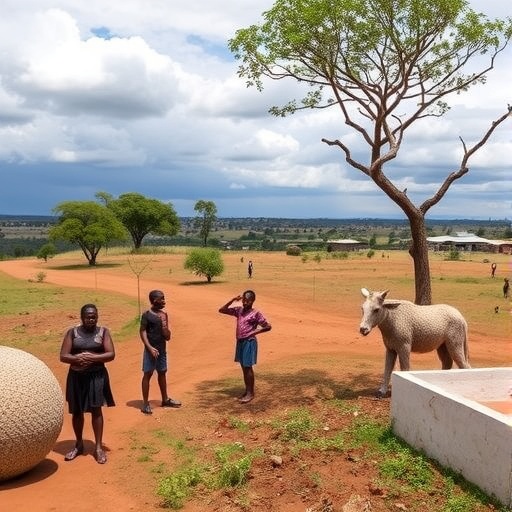
The Late Holocene epoch, a critical period spanning the last few thousand years, represents not just a transition in climatic conditions, but also significant anthropogenic interactions with various environments. A recent commentary by A. Reid offers illuminating insights into this transformative phase, particularly within Western Uganda. The discourse explores the archaeological perspectives surrounding the Kansyore culture alongside later settlers, providing a crucial understanding of how ancient communities navigated the challenges posed by their environments.
As one delves into its depths, the intricate relationship between the Kansyore people and the changing landscape of Western Uganda comes to the forefront. Historically, the Kansyore culture, which thrived in the region primarily during the Late Holocene, is characterized by unique pottery styles and subsistence strategies that reveal their adaptations to both environmental changes and resource availability. Reid emphasizes the significant adaptation mechanisms employed by these societies, which underscore their resilience and ingenuity in the face of evolving landscapes and climates.
The Late Holocene period is marked by a notable climatic transition that witnessed the gradual aridification of certain African regions, influencing ecological systems and the resources available to ancient inhabitants. Archaeological evidence suggests that Kansyore communities were not merely passive recipients of environmental changes but active agents who shaped their surroundings to meet their needs. This dynamic interaction is a testament to their agricultural practices and hunting-gathering strategies, as they meticulously adjusted their behaviors to optimize survival.
Reid’s commentary sheds light on the archaeological methods employed in understanding these past cultures. By analyzing artifacts, settlement patterns, and ecological data, researchers can reconstruct a vivid picture of life during the Late Holocene. Notably, the artifacts linked to the Kansyore culture, including their distinctive pottery and tool-making techniques, reveal an advanced understanding of material culture. This advanced craftsmanship not only points to their daily lives but also signifies broader trade networks and interactions with neighboring groups.
The concept of adaptation during the Late Holocene extends beyond mere survival strategies; it encompasses social structures, belief systems, and cultural identities. Reid argues that the Kansyore peoples were profound innovators, leveraging their surroundings to sustainably support their community. This observation resonates through the findings of burial practices and settlement layouts that reflect complex societal hierarchies and communal ties.
In examining the transition from the Kansyore culture to later settlers, Reid highlights the shifts brought about by technological advancements and social organization. As new agricultural techniques emerged and populations expanded, the landscape of Western Uganda transformed dramatically. This shift provides a compelling narrative arc that emphasizes the continuous evolution of human cultures, shaped by an interplay between environmental pressures and social innovation.
Moreover, Reid’s analysis aligns with contemporary discussions about climate change and its impacts on human societies. The lessons derived from the Kansyore culture offer valuable insights into how modern societies might adapt to increasingly unpredictable environmental conditions. The examination of ancient resilience strategies can serve as a blueprint for current communities grappling with similar issues, such as resource scarcity and shifting ecosystems.
The archaeological framework surrounding the Kansyore and later settlers is enriched by cross-disciplinary approaches, integrating geology, anthropology, and environmental science. This multiplicity of perspectives allows for a comprehensive understanding of how these ancient populations responded to their surroundings. Reid eloquently advocates for this integrative method, proposing that the insights gained from the Kansyore period can enrich current discourse on sustainability and adaptation strategies.
Reid’s commentary resonates within a larger narrative of African archaeology, where the contributions of ancient cultures are often undervalued. By bringing the Kansyore culture into the spotlight, Reid challenges prevailing narratives that often overlook the richness of African history. This assertion reaffirms the importance of studying diverse cultural perspectives within archaeological research and the need for a more inclusive approach that honors the myriad of identities that have shaped human history.
As readers navigate Reid’s thought-provoking commentary, they are invited to reflect on the interconnectedness of past and present. The historical lessons gleaned from the Kansyore and their contemporaries invite a critical examination of how cultures evolve in response to pressing challenges. This perspective not only enriches our understanding of human adaptability but also underscores the relevance of archaeological studies in contemporary discussions on sustainability and resource management.
The commentary serves as a clarion call for further research in Western Uganda, advocating for a comprehensive archaeological agenda that seeks to uncover the myriad of narratives that lie beneath the surface of the earth. By investing in research that explores these ancient cultures, scholars can illuminate overlooked facets of history that continue to shape cultural identities today. Reid’s work stands as a testament to the complexities of human-environment interactions and their significance in crafting a fuller understanding of our past.
In conclusion, Reid’s exploration of the Late Holocene environment and its archaeological narratives emphasizes the intricacies of human adaptation and resilience. By situating the Kansyore culture within a broader ecological and sociopolitical context, the commentary unearths valuable lessons that extend beyond academic discourse. The observations drawn from ancient practices advocate for a reconnection with our past, providing a clearer path toward a sustainable future that honors both our heritage and environment.
Reid, A. Commentary on Remaking the Late Holocene Environment of Western Uganda: Archaeological Perspectives on Kansyore and Later Settlers.
Afr Archaeol Rev 41, 605–609 (2024). https://doi.org/10.1007/s10437-024-09605-5
Cite Scienmag News
Courtney Benton. (January 19, 2026). Reviving Western Uganda’s Late Holocene: Archaeological Insights. Scienmag. https://scienmag.com/reviving-western-ugandas-late-holocene-archaeological-insights/
Courtney Benton. "Reviving Western Uganda’s Late Holocene: Archaeological Insights." Scienmag, 19 January 2026, https://scienmag.com/reviving-western-ugandas-late-holocene-archaeological-insights/. Accessed 4 September 2026.
Courtney Benton. "Reviving Western Uganda’s Late Holocene: Archaeological Insights." Scienmag. January 19, 2026. https://scienmag.com/reviving-western-ugandas-late-holocene-archaeological-insights/


