


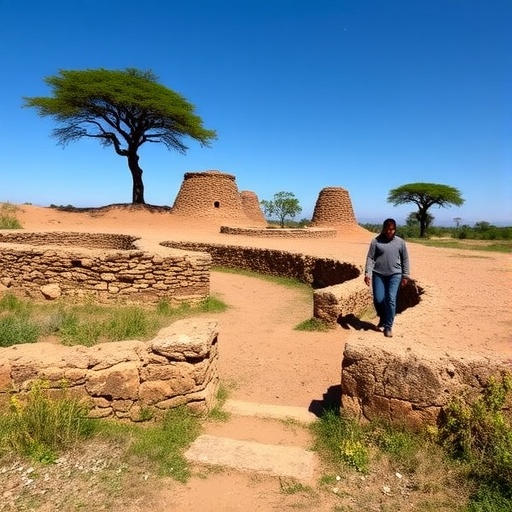
Central Tanzania’s Singida region has garnered significant attention in recent years, becoming a focal point of archaeological research that seeks to unlock the mysteries of its ancient civilizations. The recent findings published in ‘African Archaeological Review’ highlight the efforts of researchers like Itambu, Arous, and Fernandes who spearheaded renewed investigations into the remarkable lures of this historical territory. Their comprehensive work presents crucial insights into the region’s past, shedding light on the cultural, social, and economic practices of its inhabitants over millennia.
The research’s genesis stems from the recognition that the Singida region, despite its rich archaeological potential, had largely eluded rigorous scientific scrutiny. Setting out from this premise, the team undertook systematic excavations, detailed surveys, and advanced technological analyses. Their approach underscored a commitment to methodological rigor, employing both traditional archaeological techniques and modern technologies such as ground-penetrating radar and Geographic Information Systems (GIS). Such multidisciplinary approaches render a deeper understanding of the subsurface features and earthworks indicative of past human activity in the area.
Excavations revealed an array of artifacts that paint a vivid picture of daily life in ancient Singida. Pottery shards, stone tools, and remnants of ancient structures align with hypotheses regarding trade, agriculture, and domestic practices. Among the artifacts recovered are items indicative of local craftsmanship, dolerite tools utilized for various purposes, and unique pottery styles that suggest distinct cultural identities. The analysis of these finds not only attests to the region’s historical richness but also offers a glimpse into the technological advancements of its past societies.
One of the most intriguing aspects of the research pertains to the chronological framework established through rigorous dating techniques. The team employed radiocarbon dating methodology, allowing them to create a timeline that situates the material culture within specific historical contexts. This timeline proves crucial in understanding the socio-political dynamics that shaped the region, including periods of settlement, migration, and interaction with neighboring regions and cultures.
The exploration of burial practices in the Singida region also offered compelling insights into the spiritual and social beliefs of ancient inhabitants. Human remains excavated from designated burial sites were subjected to osteological analysis, revealing patterns of health, nutrition, and life expectancy. Furthermore, the orientation of burial sites and ceremonial artifacts suggests a complex belief system that intertwined with the daily lives of the region’s past populations. These findings resonate with contemporary discussions about ancestry, identity, and the continuity of cultural practices over time.
Integration with local communities emerged as a pivotal aspect of the research initiative. The researchers actively engaged with the inhabitants of Singida, recognizing the importance of indigenous knowledge in enriching their academic pursuits. Collaborations with local historians, artisans, and community leaders not only enhanced the project’s scope but also fostered a sense of ownership and pride among locals regarding their heritage. Such collaborations can serve as a model for future archaeological endeavors, demonstrating the value of inclusivity in research.
Amidst the wealth of discoveries, the Singida research program emphasizes the urgent need for cultural preservation. As globalization and urbanization threaten archaeological sites, the team underscores the importance of safeguarding these irreplaceable resources. This concern aligns with international efforts to promote sustainable practices in heritage management. The researchers advocate for the establishment of protective measures to ensure that the legacy of Singida’s ancient societies is not lost to time or development pressures.
Public outreach has formed an essential component of the initiative, aiming to disseminate knowledge beyond academic circles. Educational programs, workshops, and exhibitions have been organized to share findings with the broader public, igniting interest in the significance of archaeological research. By fostering a sense of curiosity and engagement, the team hopes to inspire future generations to respect and advocate for the preservation of their cultural heritage.
The implications of this research extend beyond academic inquiry, enhancing our understanding of the relationships between past societies and their environments. By contextualizing the archaeological evidence within broader anthropological and ecological frameworks, researchers are beginning to unravel how ancient communities adapted to changing climatic conditions and resource availability. This understanding fosters a discourse on resilience and adaptability that remains relevant in contemporary conversations about sustainability.
Critically, the Singida project also opens avenues for exploring the interconnectedness of African civilizations throughout history. The artifacts recovered indicate not only localized practices but also an intricate web of trade and communication extending beyond the region’s borders. This interconnectedness aligns with growing scholarly discourse on the complexity of African historical narratives, challenging reductive perceptions that often overlook the nuances of pre-colonial African societies.
As the research continues to unfold, the potential for further discoveries looms large. The ongoing investigations promise to elucidate unanswered questions surrounding migration patterns, agricultural practices, and social structures among the region’s ancient peoples. The next stages of research aim to explore untouched archaeological sites identified through remote sensing techniques, each promising a treasure trove of knowledge waiting to be excavated.
In conclusion, the renewed archaeological research in Singida, Central Tanzania, not only revitalizes interest in this historically rich region but also emphasizes the importance of an interdisciplinary approach, collaboration with local communities, and cultural preservation. The work of Itambu, Arous, and Fernandes serves as a beacon for future archaeological endeavors, showcasing the power of inquiry to bridge the past with the present. In an age where understanding our history is more crucial than ever, the findings from Singida underscore a collective responsibility to preserve and celebrate the narratives that shape human experience.
Cite Scienmag News
Courtney Benton. (January 18, 2026). Revived Archaeological Discoveries in Singida, Tanzania. Scienmag. https://scienmag.com/revived-archaeological-discoveries-in-singida-tanzania/
Courtney Benton. "Revived Archaeological Discoveries in Singida, Tanzania." Scienmag, 18 January 2026, https://scienmag.com/revived-archaeological-discoveries-in-singida-tanzania/. Accessed 4 September 2026.
Courtney Benton. "Revived Archaeological Discoveries in Singida, Tanzania." Scienmag. January 18, 2026. https://scienmag.com/revived-archaeological-discoveries-in-singida-tanzania/


