


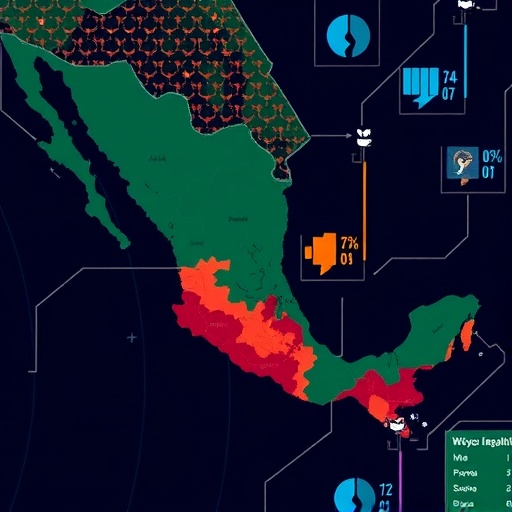
Liver disease could affect nearly half of adults in Mexico, but national surveillance and prevention efforts lag behind those for the metabolic conditions most strongly linked to it, according to a new review published in Archives of Medical Research. Released in tandem with the International Congress on Obesity in Mexico City, the analysis argues that liver health should be embedded in existing diabetes and obesity programs rather than handled as a standalone threat.
The paper, led by Jeffrey Lazarus and colleagues at CUNY’s Graduate School of Public Health and Health Policy, synthesizes evidence on the prevalence of metabolic dysfunction–associated steatotic liver disease (MASLD) in Mexico and evaluates the country’s readiness to detect and manage it.
MASLD arises when fat accumulates in the liver alongside cardiometabolic risk factors such as obesity and type 2 diabetes. In Mexico, obesity is estimated to affect 39% of adults and type 2 diabetes 16.4%, creating a large population at risk for progressive liver injury.
A multicenter screening study across five states found that 47% of participants met criteria for MASLD. The review notes that the condition has become a dominant driver of severe liver outcomes, ranking as the leading cause of cirrhosis at Mexican referral centers and accounting for 42.8% of cases from 2018 to 2024.
Importantly, not all MASLD remains non-progressive. About one in five people with MASLD develops the inflammatory form, MASH, which can advance to cirrhosis and liver cancer. This stepwise progression makes early identification clinically consequential.
The authors warn that Mexico currently tracks liver disease far less systematically than diabetes- and obesity-related outcomes. As liver disease was already the fifth leading cause of death in the country, with more than 19,000 deaths reported in the first half of 2025, improved detection could translate into measurable reductions in morbidity and mortality.
The review lays out practical, testable interventions. These include adding simple blood-based liver screening to diabetes and obesity care pathways, expanding public access to non-invasive diagnostic tools, and incorporating liver risk measures into ENSANUT, Mexico’s national health and nutrition survey.
The urgency has intensified because the first approved treatment for MASH has reached the market. When screening leads to actionable care, earlier detection can move beyond risk identification to meaningful disease modification.
Overall, the review frames MASLD as a public health opportunity: aligning screening, diagnosis, and equitable treatment with Mexico’s existing metabolic disease infrastructure can strengthen prevention and close a surveillance gap.
Cite Scienmag News
Courtney Benton. (July 14, 2026). Review Urges Mexico to Include Liver Health in Chronic Disease Programs. Scienmag. https://scienmag.com/review-urges-mexico-to-include-liver-health-in-chronic-disease-programs/
Courtney Benton. "Review Urges Mexico to Include Liver Health in Chronic Disease Programs." Scienmag, 14 July 2026, https://scienmag.com/review-urges-mexico-to-include-liver-health-in-chronic-disease-programs/. Accessed 4 September 2026.
Courtney Benton. "Review Urges Mexico to Include Liver Health in Chronic Disease Programs." Scienmag. July 14, 2026. https://scienmag.com/review-urges-mexico-to-include-liver-health-in-chronic-disease-programs/


