Wednesday, October 21, 2026
Science
No Result
View All Result
  • Login
  • HOME
  • SCIENCE NEWS
  • CONTACT US
  • HOME
  • SCIENCE NEWS
  • CONTACT US
No Result
View All Result
Scienmag
No Result
View All Result
Home Science News Biology

Review separates maternal microplastic transfer from offspring harm

October 21, 2026
in Biology
Drew Townsend
By Drew Townsend Scienmag Editorial Profile - Cell Biology
Reading Time: 3 mins read
0
Review separates maternal microplastic transfer from offspring harm

Review separates maternal microplastic transfer from offspring harm

65
SHARES
587
VIEWS
Share on FacebookShare on Twitter
ADVERTISEMENT

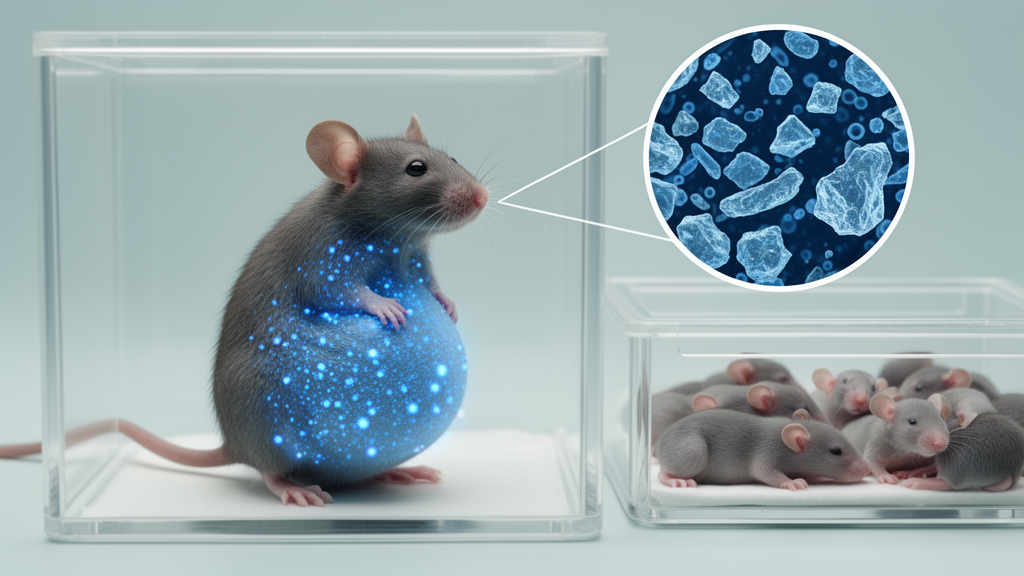
A critical review of research on aquatic organisms concludes that developmental or reproductive harm in offspring exposed through their parents does not by itself show that microplastic or nanoplastic particles passed directly from mother to offspring. The analysis, published in New Contaminants, found that direct evidence for maternal particle transfer remains limited and varies substantially among species. It proposes a classification system that distinguishes particles physically entering eggs or embryos from effects propagated across one or more unexposed generations through other biological mechanisms.

The distinction matters because parental exposure can influence offspring even when no plastic particles enter an egg or embryo. The review identifies possible pathways including damage to reproductive organs, altered egg quality and energy supply, hormonal disruption, oxidative stress, and changes in the parental gut microbiome. Embryos may also encounter particles externally after spawning, while mechanisms such as inflammation, mitochondrial stress, apoptosis, epigenetic changes and microbiome disturbances may connect parental exposure with later effects. Such associations do not establish that particles themselves were inherited.

Evidence is strongest in one studied system, the water flea Daphnia magna. Research examined by the review suggests that nanoparticles can reach embryos through the brood chamber and through an internal route running from the gut to the ovary and oocyte. One study estimated that approximately 88% of embryo exposure occurred through the brood chamber and about 12% was associated with internal transfer. In other aquatic animals, including rotifers, copepods, fish and bivalves, the available evidence is less conclusive. In fish, parental exposure has been associated with altered hatching, growth, heart rate, reproduction and behavior in offspring, but maternal particles have rarely been demonstrated directly within offspring tissues using multiple independent analytical methods.

To support stronger claims of maternal transfer, the authors recommend directly localizing particles inside eggs, embryos or offspring tissues with complementary analytical techniques. Experiments must also exclude surface contamination, leakage from fluorescent dyes and particles carried over in surrounding water, all of which can create misleading evidence that particles entered an organism. Studies reporting effects in generations that were not themselves exposed should additionally include clean-generation experiments. The authors also recommend using more environmentally realistic particles, improving particle identification, following unexposed generations and tracking reproductive outcomes from exposed parents through the growth and reproductive capacity of their descendants.

The review argues that environmental risk assessment should not focus solely on whether maternal transfer occurs. The broader ecological question is whether parental exposure ultimately reduces reproductive success, offspring fitness and population renewal, regardless of the route through which effects arise. This approach could make it possible to evaluate cross-generational toxicity without treating all observed effects as proof of inherited particles. The evidence supports concern about offspring effects following parental exposure, but the current literature does not yet establish how often direct maternal transfer occurs across aquatic species or how commonly it accounts for the reported developmental and reproductive changes.

Subject of Research: Evidence for maternal microplastic transfer and cross-generational effects in aquatic organisms

Article Title: Microplastics can affect the next generation without being passed directly from mother to offspring

Article References: Microplastics can affect the next generation without being passed directly from mother to offspring. Original publication (Bibliographic details unavailable.)

Image Credits: AI Generated

DOI: Not provided

Keywords: microplastics, nanoplastics, maternal transfer, aquatic organisms, Daphnia magna, cross-generational toxicity, environmental pollution, ecological risk, affect, next, generation, without

Cite Scienmag News

Drew Townsend. (October 21, 2026). Review separates maternal microplastic transfer from offspring harm. Scienmag. https://scienmag.com/review-separates-maternal-microplastic-transfer-from-offspring-harm/

Drew Townsend. "Review separates maternal microplastic transfer from offspring harm." Scienmag, 21 October 2026, https://scienmag.com/review-separates-maternal-microplastic-transfer-from-offspring-harm/. Accessed 21 October 2026.

Drew Townsend. "Review separates maternal microplastic transfer from offspring harm." Scienmag. October 21, 2026. https://scienmag.com/review-separates-maternal-microplastic-transfer-from-offspring-harm/

Tags: affectaquatic organismscross-generational toxicityDaphnia magnadistinction between direct and indirect microplastic effectsecological riskenvironmental pathways of microplastic contaminationenvironmental pollutiongenerationimpact of microplastics on gut microbiome and hormonal disruptioninfluence of parental microplastics on embryo developmentlimitations of evidence for maternal microplastic particle inheritancematernal microplastic exposure effectsmaternal particle transfer mechanismsmaternal transfermicroplastic effects on reproductive organs and egg qualityMicroplastic transfer in aquatic organismsmicroplasticsnanoparticle transfer in Daphnia magnananoplasticsnextpathways of microplastic impact on offspringreproductive harm from nanoplasticswithout
Share26Tweet16
Previous Post

Commentary proposes etiological tumor classification for clinical research

Next Post

Cervical Manipulation Preceded Pontine Stroke and Vertebral Artery Occlusion

Related Posts

Review maps plant cell-wall kinase links between growth and defense
Biology

Review maps plant cell-wall kinase links between growth and defense

October 21, 2026
Invasive squirrels in Hamamatsu show patchy ectoparasite diversity across landscapes
Biology

Invasive squirrels in Hamamatsu show patchy ectoparasite diversity across landscapes

October 21, 2026
Goonch Catfish Mitogenome Resolves Close Phylogeny, Flags Preliminary DNA Modifications
Biology

Goonch Catfish Mitogenome Resolves Close Phylogeny, Flags Preliminary DNA Modifications

October 21, 2026
HLA variants linked to pediatric neuroblastoma risk and outcomes in review
Biology

HLA variants linked to pediatric neuroblastoma risk and outcomes in review

October 21, 2026
Narrative review evaluates vesicle microRNAs as HSV-1 uveitis biomarkers
Biology

Narrative review evaluates vesicle microRNAs as HSV-1 uveitis biomarkers

October 21, 2026
Soil conditions linked to predicted biosynthetic diversity in Streptomyces
Biology

Soil conditions linked to predicted biosynthetic diversity in Streptomyces

October 21, 2026
Next Post
Cervical Manipulation Preceded Pontine Stroke and Vertebral Artery Occlusion

Cervical Manipulation Preceded Pontine Stroke and Vertebral Artery Occlusion

  • Mothers who receive childcare support from maternal grandparents show more optimized

    Mothers who receive childcare support from maternal grandparents show more parental warmth, finds NTU Singapore study

    27656 shares
    Share 11059 Tweet 6912
  • University of Seville Breaks 120-Year-Old Mystery, Revises a Key Einstein Concept

    1061 shares
    Share 424 Tweet 265
  • Bee body mass, pathogens and local climate influence heat tolerance

    682 shares
    Share 273 Tweet 171
  • Researchers record first-ever images and data of a shark experiencing a boat strike

    546 shares
    Share 218 Tweet 137
  • Groundbreaking Clinical Trial Reveals Lubiprostone Enhances Kidney Function

    531 shares
    Share 212 Tweet 133
Science

Embark on a thrilling journey of discovery with Scienmag.com—your ultimate source for cutting-edge breakthroughs. Immerse yourself in a world where curiosity knows no limits and tomorrow’s possibilities become today’s reality!

RECENT NEWS

  • Glycolysis Diverges from Its Transcripts in Human Hypertrophic Cardiomyopathy
  • SpongeBoost Opens Nominations for European Restoration Award
  • Stochastic analysis of finite-temperature effects on cosmological parameters by artificial neural networks
  • Review maps plant cell-wall kinase links between growth and defense

Categories

  • Agriculture
  • Anthropology
  • Archaeology
  • Athmospheric
  • Biology
  • Biotechnology
  • Blog
  • Bussines
  • Cancer
  • Chemistry
  • Climate
  • Earth Science
  • Editorial Policy
  • Marine
  • Mathematics
  • Medicine
  • Pediatry
  • Policy
  • Psychology & Psychiatry
  • Science Education
  • Science News
  • Social Science
  • Space
  • Technology and Engineering

Subscribe to Blog via Email

Enter your email address to subscribe to this blog and receive notifications of new posts by email.

Join 5,150 other subscribers

© 2025 Scienmag - Science Magazine

Welcome Back!

Login to your account below

Forgotten Password?

Retrieve your password

Please enter your username or email address to reset your password.

Log In
No Result
View All Result
  • HOME
  • SCIENCE NEWS
  • CONTACT US

© 2025 Scienmag - Science Magazine

Discover more from Science

Subscribe now to keep reading and get access to the full archive.

Continue reading