

Tuesday, October 20, 2026
Science
No Result
View All Result
  • Login
  • HOME
  • SCIENCE NEWS
  • CONTACT US
  • HOME
  • SCIENCE NEWS
  • CONTACT US
No Result
View All Result
Scienmag
No Result
View All Result
Home Science News Biology

Review finds pollination data for 98 of 1,231 orchid taxa in Guatemala

October 20, 2026
in Biology, Science News
Julie Wynn
By Julie Wynn Scienmag Editorial Profile - Pollination Biology
Reading Time: 3 mins read
0
Guatemala’s Orchids Keep Their Pollinators Secret: 98 of 1,231 Species Have Known Partners

Guatemala's Orchids Keep Their Pollinators Secret: 98 of 1,231 Species Have Known Partners

65
SHARES
587
VIEWS
Share on FacebookShare on Twitter
ADVERTISEMENT

A literature review of orchid pollination in Guatemala found documented pollinators for 98 of the 1,231 orchid species reported in the country, leaving most of its orchid flora uncharacterized in this respect. The synthesis included about 150 scientific publications covering 71 genera and highlighted substantial gaps in knowledge of the animals that transfer pollinia between orchids.

The authors used the orchid checklist published by Archila and colleagues in 2018, which listed more than 1,200 taxa, as the basis for their search. They searched academic databases including PubMed, Web of Science and Scopus, together with relevant botanical databases, using combinations of terms such as “orchids,” “pollination” and “Guatemala.”

Studies were eligible when they addressed pollination of orchid species known to occur in Guatemala and covered subjects such as floral morphology, pollinator behaviour or ecological interactions. The researchers excluded publications that did not provide solid data, including reports of pollinia transfer. Titles and abstracts were screened first, after which the full texts of selected studies were assessed.

Information was extracted from the included papers about the orchid species studied, identified pollinators, relevant floral traits and ecological settings. These data were organized for analysis. The resulting review showed that most of the available information was sparse or incomplete, and only a small number of the cited studies had been conducted in Guatemala itself.

At least one effective pollinator was documented for every species in 22 genera, but each of those genera was represented in Guatemala by only one or two species. For 150 genera, the review found no documented effective pollinator. Known pollinator groups included bees, wasps, flies, butterflies, moths and hummingbirds, with observations of pollinia transfer forming an important criterion for inclusion.

The pattern differed considerably among the larger genera. Known pollinators were reported for 27% of the 30 Guatemalan Stanhopea species, 25% of the four Phragmipedium species and 20% each for the five Acropera and Myrmecophila species. Coverage was lower for several other genera, including Sobralia, with known pollinators for three of 47 species, Encyclia, with two of 32, Epidendrum, with one of 113, and Stelis, with one of 36.

The review describes several limitations in studying pollination among tropical orchids. Their diversity complicates species identification and the construction of comprehensive datasets, while cryptic habits can make orchids difficult to locate. Specialized floral structures and strategies such as mimicry, deceit and rewards also require detailed study of both the plants and their pollinator communities. Some pollinators may be difficult to observe, and nighttime or otherwise elusive interactions can require specialized equipment and considerable logistical effort.

Environmental pressures add another constraint because habitat loss and climate fluctuations may affect both orchids and their pollinators. The review also notes an imbalance in the wider literature: tropical regions, including Latin America, are less represented than temperate and subtropical areas, where more active pollination research is concentrated. It cites an analysis in which only half of species records with reproductive data were epiphytic even though about 72% of orchid species exhibit epiphytic growth, indicating an underrepresentation of that ecological form in the available research.

Overall, the authors conclude that the pollination biology of Guatemala’s orchids remains largely unexplored. They argue that future investigations should combine expertise from ecology, botany and entomology to address the difficulty of studying tropical orchid–pollinator relationships. They also state that filling these gaps is important for understanding the role of orchids in tropical ecosystems and for developing effective conservation strategies for these threatened plants.

Subject of Research: A systematic literature review of pollination biology in Guatemalan orchid species

Article Title: Pollination of Guatemalan orchids – state of knowledge

Article References: Lipińska, M. M., & Barabasz, C. (2024). Pollination of Guatemalan orchids – state of knowledge. Neotropical Biology and Conservation, 19(2), 199-221. https://doi.org/10.3897/neotropical.19.e119499

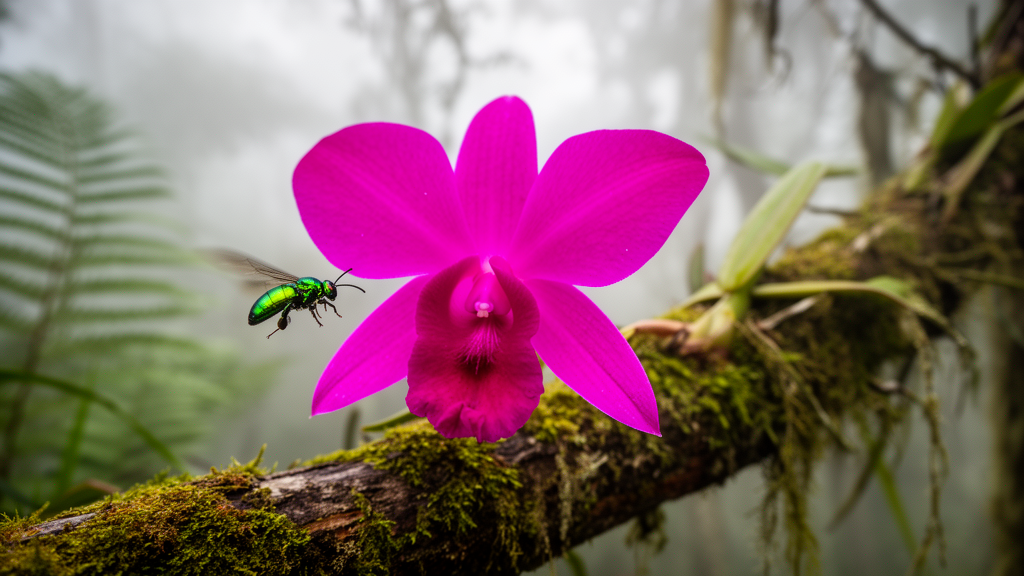
Image Credits: AI Generated

DOI: 10.3897/neotropical.19.e119499

Keywords: orchid pollination, Guatemala, pollinators, orchid diversity, systematic review, tropical ecosystems, pollinia transfer, research gaps, biodiversity conservation, Pollination, Guatemalan, orchids

Cite Scienmag News

Julie Wynn. (October 20, 2026). Review finds pollination data for 98 of 1,231 orchid taxa in Guatemala. Scienmag. https://scienmag.com/review-finds-pollination-data-for-98-of-1231-orchid-taxa-in-guatemala/

Julie Wynn. "Review finds pollination data for 98 of 1,231 orchid taxa in Guatemala." Scienmag, 20 October 2026, https://scienmag.com/review-finds-pollination-data-for-98-of-1231-orchid-taxa-in-guatemala/. Accessed 20 October 2026.

Julie Wynn. "Review finds pollination data for 98 of 1,231 orchid taxa in Guatemala." Scienmag. October 20, 2026. https://scienmag.com/review-finds-pollination-data-for-98-of-1231-orchid-taxa-in-guatemala/


Tags: Biodiversity Conservationbotanical databases for orchid researchconservation of Guatemalan orchidsecological interactions of orchidsgaps in orchid pollination dataGuatemalaGuatemalanorchid diversityorchid floral morphologyorchid pollinationOrchid pollination in Guatemalaorchid pollinator diversityorchid species documentationorchidspollinationpollination ecology in Central Americapollinatorspollinia transferpollinia transfer mechanismsresearch gapsscientific literature review on orchidsscientific publication analysis on orchidssystematic reviewtropical ecosystems
Share26Tweet16
Previous Post

Five-specimen cytogenetic study finds a 22-chromosome karyotype in Nysius graminicola

Next Post

Machine learning and cell study link shikonin to Parkin-dependent activity in hypoxic triple-negative breast cancer

Related Posts

Meta-analysis links Chinese herbal therapy to short-term cognitive gains in vascular dementia
Medicine

Meta-analysis links Chinese herbal therapy to short-term cognitive gains in vascular dementia

October 20, 2026
Mothers carry the heaviest load when children need tracheostomy care at home
Medicine

Cross-sectional study finds greater caregiver burden among mothers of children with tracheostomy

October 20, 2026
Cavers’ biosecurity habits fall short in the fight against white-nose disease
Biology

Global survey finds white-nose disease knowledge alone weakly predicts cavers’ biosecurity practices

October 20, 2026
Machine Learning Uncovers Shikonin as a Hypoxia-Selective Weapon Against Triple-Negative Breast Cancer
Cancer

Machine learning and cell study link shikonin to Parkin-dependent activity in hypoxic triple-negative breast cancer

October 20, 2026
Karyotype diversity in seed bugs far greater than scientists ever imagined
Biology

Five-specimen cytogenetic study finds a 22-chromosome karyotype in Nysius graminicola

October 20, 2026
Landslides on Bulgaria’s Black Sea coast threaten biodiversity and ancient heritage
Science News

Region 2 had highest socio-ecological landslide risk in three-section assessment of Bulgaria’s northern Black Sea coast

October 20, 2026
Next Post
Machine Learning Uncovers Shikonin as a Hypoxia-Selective Weapon Against Triple-Negative Breast Cancer

Machine learning and cell study link shikonin to Parkin-dependent activity in hypoxic triple-negative breast cancer

  • Mothers who receive childcare support from maternal grandparents show more optimized

    Mothers who receive childcare support from maternal grandparents show more parental warmth, finds NTU Singapore study

    27656 shares
    Share 11059 Tweet 6912
  • University of Seville Breaks 120-Year-Old Mystery, Revises a Key Einstein Concept

    1061 shares
    Share 424 Tweet 265
  • Bee body mass, pathogens and local climate influence heat tolerance

    682 shares
    Share 273 Tweet 171
  • Researchers record first-ever images and data of a shark experiencing a boat strike

    546 shares
    Share 218 Tweet 137
  • Groundbreaking Clinical Trial Reveals Lubiprostone Enhances Kidney Function

    531 shares
    Share 212 Tweet 133
Science

Embark on a thrilling journey of discovery with Scienmag.com—your ultimate source for cutting-edge breakthroughs. Immerse yourself in a world where curiosity knows no limits and tomorrow’s possibilities become today’s reality!

RECENT NEWS

  • Meta-analysis links Chinese herbal therapy to short-term cognitive gains in vascular dementia
  • Cross-sectional study finds greater caregiver burden among mothers of children with tracheostomy
  • Global survey finds white-nose disease knowledge alone weakly predicts cavers’ biosecurity practices
  • Machine learning and cell study link shikonin to Parkin-dependent activity in hypoxic triple-negative breast cancer

Categories

  • Agriculture
  • Anthropology
  • Archaeology
  • Athmospheric
  • Biology
  • Biotechnology
  • Blog
  • Bussines
  • Cancer
  • Chemistry
  • Climate
  • Earth Science
  • Editorial Policy
  • Marine
  • Mathematics
  • Medicine
  • Pediatry
  • Policy
  • Psychology & Psychiatry
  • Science Education
  • Science News
  • Social Science
  • Space
  • Technology and Engineering

Subscribe to Blog via Email

Enter your email address to subscribe to this blog and receive notifications of new posts by email.

Join 5,150 other subscribers

© 2025 Scienmag - Science Magazine

Welcome Back!

Login to your account below

Forgotten Password?

Retrieve your password

Please enter your username or email address to reset your password.

Log In
No Result
View All Result
  • HOME
  • SCIENCE NEWS
  • CONTACT US

© 2025 Scienmag - Science Magazine

Discover more from Science

Subscribe now to keep reading and get access to the full archive.

Continue reading