


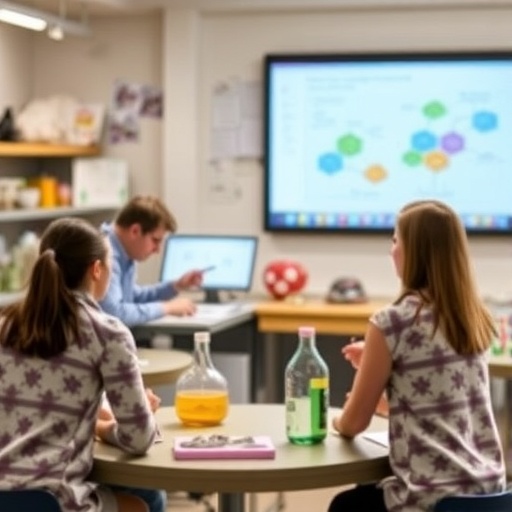
In the rapidly evolving landscape of education, the integration of multimedia and innovative teaching methodologies is becoming indispensable. The flipped classroom model, which rethinks the traditional educational paradigm, has gained momentum in recent years, particularly in subjects that require complex understanding, such as organic chemistry. In a groundbreaking study conducted by Nsabayezu, Habimana, and Nzabalirwa, the benefits and challenges of employing a multimedia-supported flipped classroom approach in organic chemistry instruction are deeply explored. This research not only sheds light on the instructional effectiveness but also provides a profound insight into the experiences of students and teachers engaged in this dynamic learning environment.
The essence of the flipped classroom model is its ability to shift much of the learning responsibility from the instructor to the students. Traditionally, students would learn theoretical concepts during lectures and then practice problems at home. The flipped classroom reverses this structure; students first encounter new content through multimedia resources, such as videos and interactive simulations, allowing them to engage actively during class time. This method aims to promote deeper cognitive processing and enhance student collaboration while giving educators the opportunity to facilitate learning rather than merely delivering content.
One of the primary advantages of the multimedia-supported flipped classroom approach is that it caters to various learning styles and paces. With access to diverse multimedia content, students can revisit challenging concepts at their convenience. For instance, auditory learners benefit from lectures recorded as podcasts, whereas visual learners engage with animated videos that illustrate complex biochemical processes. Such inclusivity encourages student autonomy, enabling them to take charge of their learning journey. This personalized approach can ultimately help demystify organic chemistry, a subject often perceived as particularly difficult.
In their research, the authors underscore an essential component of the flipped classroom: the active engagement of students during class sessions. Rather than passively absorbing information, students become participants in their learning process through discussions, problem-solving exercises, and collaborative projects. This active engagement leads to better retention of information and a more profound understanding of chemical principles. Additionally, the educator’s role transforms from that of a traditional lecturer to a mentor or facilitator, guiding students in their explorations of the subject matter.
However, despite the numerous advantages of this innovative teaching model, the authors also identify significant challenges faced by both students and educators. One of the foremost hurdles is the disparity in students’ readiness and motivation levels. Not all students approach the flipped classroom with equal enthusiasm or commitment. The research indicates that students who are less motivated or have varying levels of technological proficiency often struggle to adapt to the demands of this new model. Consequently, some institutions may need to implement preparatory workshops to ensure all students are equipped to engage meaningfully with multimedia resources.
Another poignant challenge highlighted in the study involves the technological demands of a multimedia-supported instructional approach. While access to technology can facilitate a more engaging learning experience, it can also create barriers for students without reliable internet access or technological devices. Institutions must address this inequity to avoid exacerbating existing educational disparities. It is imperative that schools and universities provide resources and support to ensure that all students can benefit from the flipped classroom experience.
The authors also examine the perceptions of teachers involved in implementing the flipped classroom model. Many educators express enthusiasm for the potential of this approach to promote active learning and student engagement. However, the transition from traditional teaching methods to a more dynamic model requires significant adaptation. In particular, instructors must invest time in preparing engaging multimedia content and learning activities, which can be labor-intensive. Moreover, teachers must also develop new strategies for assessing student learning in this transformed classroom environment, a shift that can be daunting.
Interestingly, the research reveals that professional development and support systems for educators are vital to successfully navigating these challenges. Teachers who receive targeted training in how to design and implement multimedia resources and flipped classroom methodologies tend to feel more confident and effective in their instructional delivery. Consequently, ongoing professional development initiatives are crucial in fostering a supportive community among educators as they adapt to innovative approaches in teaching organic chemistry and beyond.
Moreover, the cultural context of education plays a critical role in the successful implementation of the flipped classroom model. The study reflects on how various cultural norms and educational expectations shape student engagement and participation. In some educational environments, traditional methods are deeply ingrained, leading to resistance against new pedagogical models. Recognizing and addressing these cultural dynamics is essential for educators committed to the successful enactment of the flipped classroom in their own contexts.
Through their exploration, the researchers gather valuable feedback from students and educators, highlighting their diverse experiences within the flipped classroom. Students report varying degrees of satisfaction with their learning experiences, indicating that aspects such as the quality of multimedia resources, classroom dynamics, and instructor engagement significantly influence their perceptions. Meanwhile, educators emphasize the importance of establishing clear communication with students, setting expectations, and providing adequate support throughout the learning process.
The study concludes by asserting that while the multimedia-supported flipped classroom model holds significant promise for enhancing organic chemistry instruction, its successful implementation requires careful consideration of various factors, including technology access, student readiness, and educational culture. As educational institutions continue to embrace innovations, this research provides a roadmap for effectively navigating the transformations in teaching and learning paradigms.
In summary, the exploration of a multimedia-supported flipped classroom approach to organic chemistry instruction reveals a landscape of opportunities and challenges. Engaging multimedia tools facilitate active learning and student autonomy, reshaping both the educator’s role and the overall classroom experience. While facing hurdles related to readiness, technology, and cultural acceptance, the insights gleaned from the study suggest that with the right support systems in place, the potential for success in this innovative instructional model can be realized, ultimately benefitting students and teachers alike.
Cite Scienmag News
Bethany Barker. (September 2, 2025). Revamping Organic Chemistry: Challenges in Flipped Classrooms. Scienmag. https://scienmag.com/revamping-organic-chemistry-challenges-in-flipped-classrooms/
Bethany Barker. "Revamping Organic Chemistry: Challenges in Flipped Classrooms." Scienmag, 2 September 2025, https://scienmag.com/revamping-organic-chemistry-challenges-in-flipped-classrooms/. Accessed 3 September 2026.
Bethany Barker. "Revamping Organic Chemistry: Challenges in Flipped Classrooms." Scienmag. September 2, 2025. https://scienmag.com/revamping-organic-chemistry-challenges-in-flipped-classrooms/


