


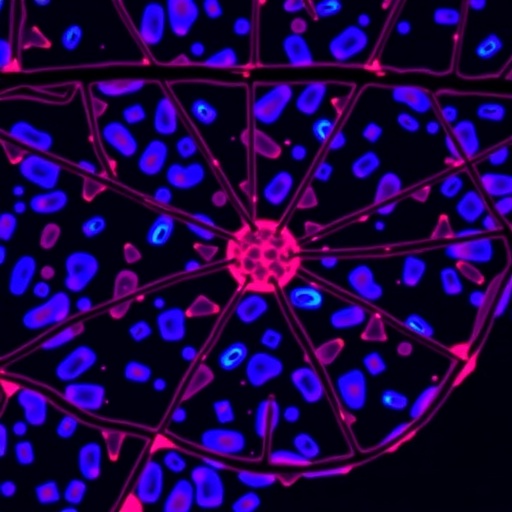
Clear cell renal cell carcinoma (ccRCC) stands as the most common subtype of kidney cancer, notorious for its aggressive clinical course and poor prognosis, particularly in metastatic stages. Despite numerous advancements in cancer therapies, the quest for more effective and personalized treatment strategies for ccRCC remains a pressing challenge. In a groundbreaking study published in BMC Cancer, a multinational team of researchers has shed light on Reticulocalbin-1 (RCN1), a protein predominantly residing in the endoplasmic reticulum, revealing its pivotal role in ccRCC pathophysiology and its promising potential as both a prognostic biomarker and a therapeutic target.
RCN1 has previously attracted significant scientific interest due to its association with tumor aggressiveness and poor outcomes in various solid cancers. However, its expression patterns and functional implications in ccRCC had remained unexplored – until now. The recent investigation combined state-of-the-art in-silico transcriptomic mining from publicly available large datasets with a comprehensive retrospective cohort analysis involving 306 ccRCC patients who underwent surgical tumor resection at the University Hospital Bonn’s Clinic of Urology. This integrative approach enabled the researchers to robustly correlate RCN1 expression with clinical outcomes and tumor biology.
Detailed examination of transcriptomic and proteomic databases demonstrated that RCN1 is markedly overexpressed in ccRCC relative to normal kidney tissue, both at the messenger RNA and protein levels. This striking pattern was corroborated by the cohort’s tissue analyses, where 63.7% of tumor samples exhibited high, homogeneous RCN1 expression. These results strongly suggest that RCN1 is not merely incidentally elevated but rather may play a fundamental role in the malignant phenotype of ccRCC.
Clinically, high RCN1 expression emerged as a powerful predictor of worse overall survival, validated statistically at both mRNA (p < 0.001) and protein (p = 0.01) levels. The study further linked elevated RCN1 to established markers of tumor aggressiveness, including higher histological grade (p = 0.002), advanced tumor staging (p = 0.036), lymph node involvement (p = 0.004), as well as distant metastatic spread (p = 0.017). This comprehensive association strengthens the hypothesis that RCN1 contributes to tumor progression and dissemination in ccRCC.
Interestingly, immune microenvironment analysis revealed a nuanced relationship between RCN1 expression and immune cell infiltration. While clusters of macrophages showed a tendency toward correlation with RCN1 levels (p = 0.051), no significant connection was found with CD8+ T-lymphocyte abundance. This suggests RCN1’s role could extend into modulating macrophage-rich niches within the tumor milieu, a domain increasingly recognized for its influence on tumor behavior and therapy resistance.
To interrogate the functional implications of RCN1 in tumor cell biology, the researchers conducted in vitro silencing experiments using siRNA in two ccRCC-derived cell lines, Caki-1 and A498. Targeted depletion of RCN1 led to striking decreases in cellular migration and invasive capabilities, underscoring its involvement in mechanisms governing metastatic potential. These findings mark RCN1 as not only a passive prognostic marker but an active driver of ccRCC aggressiveness.
From a molecular standpoint, RCN1’s localization within the endoplasmic reticulum places it at the heart of protein folding and calcium-binding processes, which are critical for cellular homeostasis and stress responses. The aberrant upregulation of RCN1 in ccRCC might perturb these functions, enabling tumor cells to adapt and thrive under oncogenic stress, thus facilitating invasive and metastatic behavior.
The identification of RCN1 as a biomarker with dual prognostic and functional significance opens exciting avenues for therapeutic intervention. Targeting RCN1 or its downstream pathways could impair tumor progression and potentially enhance the efficacy of existing treatments. Moreover, its homogeneous expression pattern in a majority of ccRCC tumors suggests that RCN1-directed therapies might benefit a large subset of patients.
Future research will undoubtedly focus on elucidating the precise molecular mechanisms by which RCN1 facilitates tumor invasion and evasion from immune surveillance. Additionally, exploring its interaction with other components of the tumor microenvironment could reveal novel insights into the complex ccRCC ecosystem.
Given the urgent demand for biomarkers that reliably predict patient outcomes and guide therapy selection, the discovery of RCN1’s role represents a pivotal advance. Clinicians might soon have at their disposal a biomarker that seizes not only prognostic information but offers a tangible target for drug development, bringing ccRCC management into a new era of precision oncology.
This comprehensive analysis and functional validation underscore the emerging paradigm that proteins involved in endoplasmic reticulum function and stress response pathways are critical contributors to cancer progression. RCN1 exemplifies this with its multifaceted influence on tumor cell behavior and potential to integrate diagnostic and therapeutic strategies.
As more data emerge confirming RCN1’s significance across various tumor types, this novel biomarker could inspire a broader paradigm shift in understanding cancer biology — one where intracellular organelle dynamics are as vital as genetic mutations in dictating disease course and therapeutic vulnerabilities.
In sum, this landmark study provides compelling evidence that RCN1 serves as a robust prognostic biomarker and a promising target for therapeutic intervention in clear cell renal cell carcinoma. Its elevated expression correlates with aggressive disease features and poor survival, and functional assays assert its role in fostering tumor cell migration and invasion, hallmarks of metastatic potential.
By bridging bench research with clinical correlations in a well-characterized patient cohort and augmented by large-scale data mining, the investigators have set the stage for future translational efforts to mitigate ccRCC lethality. If successfully harnessed, RCN1 could transform personalized medicine approaches, improving outcomes for thousands diagnosed globally with this challenging malignancy.
The insights provided by this research not only deepen our understanding of renal cancer biology but also inspire hope that next-generation biomarkers and targeted therapies can finally tilt the balance in favor of patients battling clear cell renal cell carcinoma worldwide.
Cite Scienmag News
Nathaniel Bowman. (September 20, 2025). Reticulocalbin-1: Biomarker and Therapy Target in RCC. Scienmag. https://scienmag.com/reticulocalbin-1-biomarker-and-therapy-target-in-rcc/
Nathaniel Bowman. "Reticulocalbin-1: Biomarker and Therapy Target in RCC." Scienmag, 20 September 2025, https://scienmag.com/reticulocalbin-1-biomarker-and-therapy-target-in-rcc/. Accessed 5 September 2026.
Nathaniel Bowman. "Reticulocalbin-1: Biomarker and Therapy Target in RCC." Scienmag. September 20, 2025. https://scienmag.com/reticulocalbin-1-biomarker-and-therapy-target-in-rcc/


