


In response to the COVID-19 pandemic, a majority of schools across the U.S. shifted to virtual learning. In a new study, published in Social Education Research, researchers conducted interviews with parents of students who attended middle or high schools to understand how virtual learning impacted their daily routines, stress levels, and the academic performance of the children.

Credit: Christine Herman
In response to the COVID-19 pandemic, a majority of schools across the U.S. shifted to virtual learning. In a new study, published in Social Education Research, researchers conducted interviews with parents of students who attended middle or high schools to understand how virtual learning impacted their daily routines, stress levels, and the academic performance of the children.
The transition to virtual learning necessitated the creation of online lessons in a very short time period and with limited training of teachers. As a result, parents and students had to deal with unexpected changes in their home lives and learning environments.
“Virtual learning will not be limited to the pandemic, and we need to prepare for the future. We can see it becoming more popular, for example as a replacement for snow days. Therefore, we need to know how parents feel, so we can adjust how we approach virtual learning,” said W. Catherine Cheung, an assistant professor of physical therapy at Northern Illinois University.
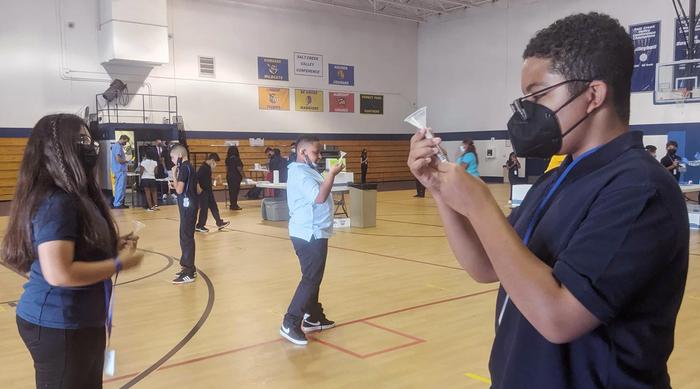
The researchers recruited 20 parents initially as part of a larger research study aimed at examining the feasibility of using saliva-based testing in five K-12 schools in Illinois. The participants filled out questionnaires and participated in semi-structured interviews in the summer of 2021. The researchers then used constant comparative analysis and emergent coding to find patterns in the participants’ answers.
When the parents reflected on the impact of virtual learning, some agreed that its impact on their work schedule was a major source of stress. Additionally, they found it taxing to monitor their children to ensure that they completed their work. “It stopped me from doing a lot of things because I had to make sure that they were doing what they were supposed to. It was like I went back to school,” one parent stated. Virtual learning also caused financial stress, since the families had to buy more groceries and spend more on reliable internet.
The parents were also asked how their children responded to virtual learning, and many felt that the lack of social interaction had a negative effect on their children’s mental health. One parent shared, “I think that isolation had a significant impact on our kids. There’s very little time for socialization anyway and with having older kids, we don’t have the connections with [other] parents.”
Several parents also felt that in-person schooling was better for their children’s academic needs. One parent stated, “I saw that they were falling behind, their learning went down, and their concentration wasn’t there. It was very, very hard.” They were also concerned that their children’s academic performance would be affected once they returned to in-person schooling.
Notably, a few parents, whose children received special education services, reported having positive experiences with virtual learning. These parents were able to assist with their children’s needs better, with one parent reporting, “Remote learning was a great thing for [my child] because he has a neurological disability and has an issue with writing. It allowed him to be more successful at writing because of the format.”
“When we started the study, there were no data available on how the parents were dealing with the situation, outside of anecdotes,” said Rebecca Smith (CGD/IGOH), an associate professor of epidemiology at the University of Illinois Urbana-Champaign. “Now schools can consider different aspects of education, including the home situations of students. They need to think about what the students on the margins are going to need, rather than trust that they’ll get taken care of.”
The study “Exploring Parent Perceptions of Virtual Learning in School: Learning During a Pandemic” can be found at https://doi.org/10.37256/ser.5220244572. The work was done in collaboration with Michaelene Ostrosky, Grayce Wicall Gauthier Professor of Education at Illinois.
Journal
Social Education Research
Method of Research
Observational study
Subject of Research
People
Article Title
Exploring Parent Perceptions of Virtual Learning in School: Learning During a Pandemic
Article Publication Date
31-May-2024
Cite Scienmag News
Courtney Benton. (August 16, 2024). Researchers investigate parent perceptions of virtual learning. Scienmag. https://scienmag.com/researchers-investigate-parent-perceptions-of-virtual-learning/
Courtney Benton. "Researchers investigate parent perceptions of virtual learning." Scienmag, 16 August 2024, https://scienmag.com/researchers-investigate-parent-perceptions-of-virtual-learning/. Accessed 4 September 2026.
Courtney Benton. "Researchers investigate parent perceptions of virtual learning." Scienmag. August 16, 2024. https://scienmag.com/researchers-investigate-parent-perceptions-of-virtual-learning/

