


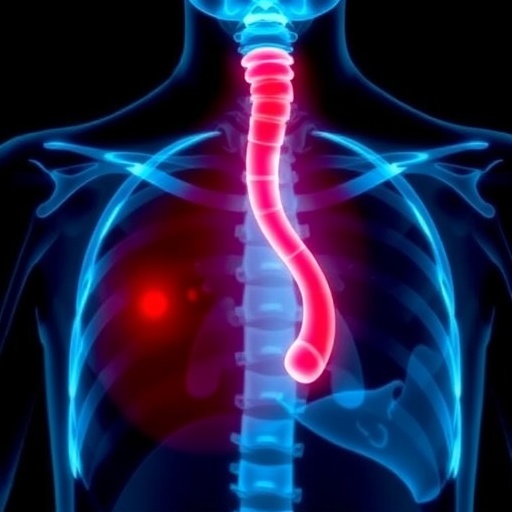
In a groundbreaking advancement that could revolutionize the early detection and treatment of esophageal cancer, researchers have unveiled compelling evidence establishing Barrett’s oesophagus as the universal precursor to oesophageal adenocarcinoma (OAC). OAC stands as the predominant histological subtype of esophageal cancer in developed nations and is notorious for its poor prognosis due to late-stage diagnosis. Historically, the precise role of Barrett’s oesophagus in the oncogenic cascade of OAC has been obscured by clinical ambiguities, particularly because nearly half of OAC patients lack visible Barrett’s metaplasia at diagnosis. However, through an integrative approach combining extensive epidemiological data and sophisticated molecular analyses, this new study elucidates that Barrett’s oesophagus is inextricably linked with the inception of all OAC cases, even when morphological indicators are absent.
This landmark research was conducted by scientists from the Li Ka Shing Early Cancer Institute at the University of Cambridge and involved a comprehensive clinical dataset from 3,100 individuals diagnosed with OAC across 25 UK medical centers. These patients underwent surgical resection of tumorous and adjacent tissues, providing the research team with a rich repository of samples for analysis. The study was further bolstered by whole genome sequencing data from 710 patients and whole exome sequencing from multiple spatially distinct tumor samples in 87 patients. This genomic deep dive provided unparalleled resolution into the clonal architecture and evolutionary trajectories of OAC tumors, offering a window into the molecular underpinnings of tumorigenesis and its relationship to antecedent Barrett’s oesophagus.
The prevailing hypothesis tested by the researchers posited that if multiple oncogenic pathways could lead to OAC, then molecular signatures, mutational landscapes, and associated risk factors would segregate distinctly between tumors arising with or without prior Barrett’s oesophagus lesions. Contrary to this assumption, the study unveiled that the genomic profiles of OAC cancers were remarkably homogeneous regardless of whether Barrett’s oesophagus was endoscopically or histologically detectable at diagnosis. This included similarities in the spectrum of somatic mutations, chromosomal aberrations, and cellular lineage markers, collectively reinforcing the model that Barrett’s oesophagus is the obligate precursor state for OAC.
One of the perplexing clinical observations addressed by this research is the absence of visible Barrett’s oesophagus in approximately 50% of OAC cases at presentation. The scientists hypothesized that tumor progression might obliterate the original Barrett’s mucosa, rendering it undetectable via conventional endoscopic techniques. Supporting this, the study identified biomarkers such as trefoil factor family 3 (TFF3) and regenerating islet-derived protein 4 (REG4) that persist at the cellular level across stages of disease, including in premalignant tissues. These proteins emerged as robust molecular beacons, potentially signaling the “invisible” yet biologically extant Barrett’s epithelium concealed beneath the tumor mass.
Beyond molecular analysis, epidemiological evaluation revealed that patients who lacked endoscopic detection of Barrett’s oesophagus at the time of cancer diagnosis generally presented with more advanced tumor stages. This finding underscores the clinical urgency of identifying Barrett’s oesophagus earlier and more reliably, creating a vital window for intervention before malignant transformation and tumor expansion hinder curative treatment options. Early detection strategies could thus pivot from current reliance on endoscopic visualization towards incorporating sensitive molecular diagnostics capable of unmasking subtle, histologically occult Barrett’s changes.
Dr. Shahriar Zamani, a lead author on the study, emphasized the significance of these findings by stating, “Our data provide incontrovertible evidence that Barrett’s oesophagus is the universal precursor to oesophageal adenocarcinoma. This redefines the paradigm for screening and prevention, underscoring the necessity of detecting Barrett’s oesophagus before it progresses to cancer.” Complementing this perspective, co-author Dr. Lianlian Wu articulated the pressing need for minimally invasive, molecularly targeted screening tools that transcend the limitations of endoscopy and amplify early risk stratification.
This study’s implications extend far beyond academic insight, as they lay foundational groundwork for the development of next-generation diagnostics and therapeutic interventions. One promising diagnostic innovation spearheaded by Professor Rebecca Fitzgerald’s team is the capsule sponge test, a non-endoscopic, minimally invasive method that enables sampling of esophageal cells in a primary care setting. By integrating molecular biomarker detection into such platforms, clinicians could revolutionize early Barrett’s oesophagus diagnosis and thereby reduce the burden of esophageal adenocarcinoma through preemptive management.
Cancer Research UK and the Medical Research Council provided crucial funding support for this research endeavor, signaling a concerted institutional commitment to tackling esophageal cancer’s rising incidence. Moreover, the National Institute for Health and Care Research (NIHR) Cambridge Biomedical Research Centre contributed additional resources, amplifying the collaborative synergy necessary for such comprehensive studies.
The research aligns closely with the mission of the upcoming Cambridge Cancer Research Hospital, an innovative facility designed to integrate clinical excellence with cutting-edge research. This hospital will house concerted efforts to identify cancer at the earliest oncogenic stages, leveraging biomarkers such as TFF3 and REG4 to pioneer new diagnostic and preventative strategies. With the hospital’s foundation supported by the University of Cambridge and Addenbrooke’s Charitable Trust, it promises to become a transformative hub for cancer care and translational research.
This paradigm-shifting study offers a clarion call to the medical community: Barrett’s oesophagus is undeniably the definitive antecedent lesion for esophageal adenocarcinoma. Harnessing molecular insights to develop non-invasive, high-sensitivity diagnostic assays will be paramount in changing the natural history of this lethal malignancy. As Dr. Dani Skirrow of Cancer Research UK highlights, detecting these earliest molecular alterations in patients can empower timely interventions and ultimately save lives by halting cancer progression before it takes hold.
In conclusion, the convergence of epidemiological rigor and molecular precision fundamentally clarifies the pathogenesis of oesophageal adenocarcinoma. By illuminating Barrett’s oesophagus as a hidden yet ubiquitous precursor, this study unlocks transformative avenues for early detection and prevention. The future of esophageal cancer management lies in integrating these molecular insights into pragmatic, patient-friendly screening paradigms, promising improved survival and quality of life for countless individuals at risk.
News Publication Date: 16-Apr-2026
References:
Zamani, SA et al. Integrated epidemiological and molecular data yields insights into the relationship between precancer and cancer states of oesophageal adenocarcinoma. Nat Med; 16 Apr 2026
Cite Scienmag News
Nathaniel Bowman. (April 16, 2026). Researchers Identify Early Marker of Most Common Oesophageal Cancer, Opening Door to Earlier Detection. Scienmag. https://scienmag.com/researchers-identify-early-marker-of-most-common-oesophageal-cancer-opening-door-to-earlier-detection/
Nathaniel Bowman. "Researchers Identify Early Marker of Most Common Oesophageal Cancer, Opening Door to Earlier Detection." Scienmag, 16 April 2026, https://scienmag.com/researchers-identify-early-marker-of-most-common-oesophageal-cancer-opening-door-to-earlier-detection/. Accessed 3 September 2026.
Nathaniel Bowman. "Researchers Identify Early Marker of Most Common Oesophageal Cancer, Opening Door to Earlier Detection." Scienmag. April 16, 2026. https://scienmag.com/researchers-identify-early-marker-of-most-common-oesophageal-cancer-opening-door-to-earlier-detection/


