


Researchers at the University of Jyväskylä, Finland, have developed a model that enables computers to interpret and understand human emotions, utilizing principles of mathematical psychology. This advancement could significantly improve the interface between humans and smart technologies, including artificial intelligence systems, making them more intuitive and responsive to user feelings.

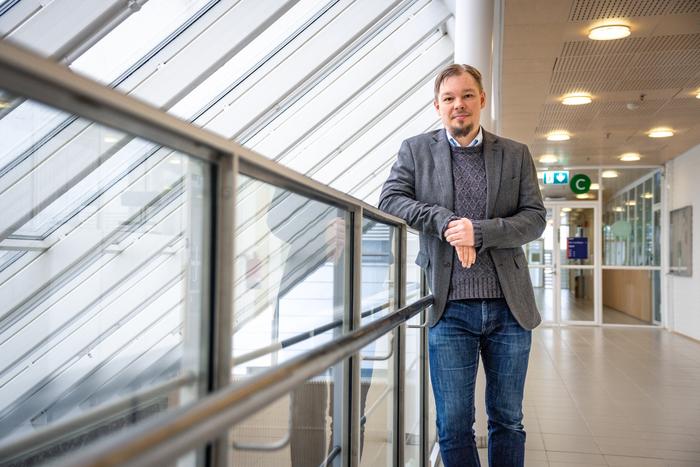
Credit: Teemu Rahikka / University of Jyväskylä
Researchers at the University of Jyväskylä, Finland, have developed a model that enables computers to interpret and understand human emotions, utilizing principles of mathematical psychology. This advancement could significantly improve the interface between humans and smart technologies, including artificial intelligence systems, making them more intuitive and responsive to user feelings.
According to Jussi Jokinen, Associate Professor of Cognitive Science, the model could be used by a computer in the future to predict, for example, when a user will become annoyed or anxious. In such situations, the computer could, for example, give the user additional instructions or redirect the interaction.
In everyday interactions with computers, users commonly experience emotions such as joy, irritation, and boredom. Despite the growing prevalence of artificial intelligence, current technologies often fail to acknowledge these user emotions.
The model developed in Jyväskylä can currently predict if the user has feelings of happiness, boredom, irritation, rage, despair and anxiety.
“Humans naturally interpret and react to each other’s emotions, a capability that machines fundamentally lack,” Jokinen explains. “This discrepancy can make interactions with computers frustrating, especially if the machine remains oblivious to the user’s emotional state.”
The research project led by Jokinen uses mathematical psychology to find solutions to the problem of misalignment between intelligent computer systems and their users.
“Our model can be integrated into AI systems, granting them the ability to psychologically understand emotions and thus better relate to their users.” Jokinen says.
Research is based on emotional theory – the next step is to influence the user’s emotions
The research is anchored in a theory postulating that emotions are generated when human cognition evaluates events from various perspectives.
Jokinen elaborates: “Consider a computer error during a critical task. This event is assessed by the user’s cognition as being counterproductive. An inexperienced user might react with anxiety and fear due to uncertainty on how to resolve the error, whereas an experienced user might feel irritation, annoyed at having to waste time resolving the issue. Our model predicts the user’s emotional response by simulating this cognitive evaluation process.”
The next phase of this project will explore potential applications of this emotional understanding.
“With our model, a computer could preemptively predict user distress and attempt to mitigate negative emotions,” Jokinen suggests.
“This proactive approach could be utilized in various settings, from office environments to social media platforms, improving user experience by sensitively managing emotional dynamics.”
The implications of such technology are profound, offering a glimpse into a future where computers are not merely tools, but empathetic partners in user interaction.
DOI
Method of Research
Computational simulation/modeling
Subject of Research
People
Article Title
Simulating Emotions With an Integrated Computational Model of Appraisal and Reinforcement Learning
Article Publication Date
11-May-2024
Cite Scienmag News
Courtney Benton. (June 4, 2024). Researchers developed a model that allows a computer to understand human emotions. Scienmag. https://scienmag.com/researchers-developed-a-model-that-allows-a-computer-to-understand-human-emotions/
Courtney Benton. "Researchers developed a model that allows a computer to understand human emotions." Scienmag, 4 June 2024, https://scienmag.com/researchers-developed-a-model-that-allows-a-computer-to-understand-human-emotions/. Accessed 4 September 2026.
Courtney Benton. "Researchers developed a model that allows a computer to understand human emotions." Scienmag. June 4, 2024. https://scienmag.com/researchers-developed-a-model-that-allows-a-computer-to-understand-human-emotions/

