


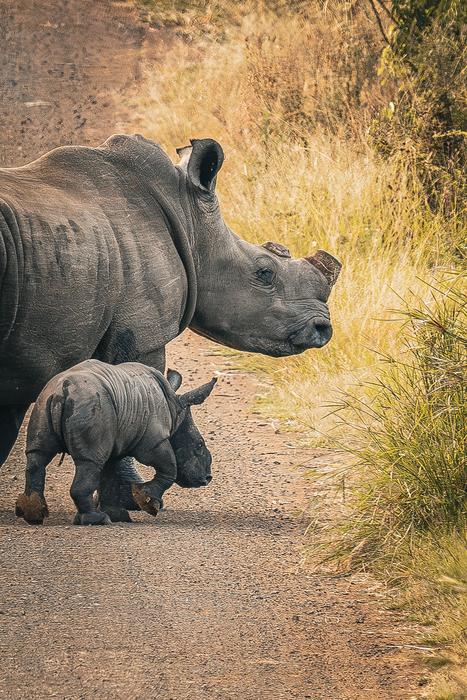
An extensive international study published in the prestigious journal Science on June 5, 2025, has shed new light on the effectiveness of dehorning as a strategic intervention to reduce rhino poaching. Conducted over seven years across 11 private and public reserves in South Africa’s Greater Kruger region, the research reveals that dehorning rhinos can lead to an unprecedented 78% decline in poaching incidents. This landmark quantitative analysis offers hope for bolstering conservation efforts for all five rhino species, whose survival is persistently imperiled by illegal horn trade.
The research project emerged from a collaborative alliance among conservation scientists, frontline reserve managers, and multiple organizations, including the Greater Kruger Environmental Protection Foundation (GKEPF), the University of Cape Town (UCT), Nelson Mandela University, University of Stellenbosch, and the University of Oxford. Recognizing the critical need to scientifically evaluate anti-poaching practices, the study compiled robust data encompassing nearly two thousand poaching cases and dehorning operations carried out on over two thousand rhinos. The interdisciplinary collaboration ensured both practical insight and rigorous analytical methods shaped the findings.
At the core of the study lies a careful statistical comparison of poaching rates before and after dehorning within multiple reserves, alongside comparisons between reserves employing dehorning and those relying solely on traditional anti-poaching measures. With 2,284 rhinos dehorned across eight reserves, the researchers demonstrated that this targeted intervention substantially decreased vulnerability to poaching. Remarkably, this reduction was achieved while dedicating just 1.2% of the total rhino protection budget, underscoring dehorning’s cost-effectiveness relative to the broader investment of $74 million made in reactive anti-poaching interventions such as patrols, surveillance technology, and arrests.
Despite these positive outcomes, the study also highlights emerging challenges that warrant close attention. Poachers continue to target dehorned rhinos to extract horn stumps and rapidly regrowing tissues, a behavior increasingly documented in data from 2024 and 2025. Moreover, dehorning may inadvertently redirect poaching efforts towards horned populations in other areas, potentially exacerbating pressure elsewhere. These findings emphasize the crucial importance of integrating dehorning within a comprehensive and adaptive conservation strategy that includes continuous monitoring of poaching patterns and horn regrowth rates.
The study critiques the prevailing reliance on reactive law enforcement alone, revealing no statistically significant evidence that intensified patrols, tracking dogs, helicopters, or advanced detection cameras have substantially curbed poaching. While such measures enable the apprehension of offenders—with over 700 poacher arrests made during the study period—systemic issues such as local poverty, corruption, and inefficacious criminal justice systems undermine their deterrent impact. Repeat offenses and evasion of punishment remain persistent barriers to diminishing illegal wildlife crime.
Dr. Tim Kuiper, lead author and conservation biologist at Nelson Mandela University, emphasized the conservation landscape’s global importance, noting that the Greater Kruger region harbors approximately 25% of Africa’s rhinos. The poaching data analyzed represented about 6.5% annual losses of the rhino population, a distressing figure that magnifies the stakes involved. His team’s data-driven approach offers a scientific foundation upon which management can refine resource allocation and intervention prioritization to maximize conservation outcomes.
From a funding perspective, the study provides invaluable guidance for donors aiming to optimize the impact of their investments. Dr. Markus Hofmeyr of the Rhino Recovery Fund pointed out that this research informs strategic funding decisions by pinpointing which anti-poaching interventions deliver measurable benefits and which require re-evaluation or augmentation. The findings encourage redirecting financial support toward preventative approaches like dehorning and away from less effective or purely reactive tactics.
The study’s success owes much to the science-policy interface that enabled practitioners at the frontline of rhino conservation to identify pressing knowledge gaps, collect detailed operational data, and engage with academic researchers for quantitative evaluation. Sharon Hausmann, CEO of GKEPF, highlighted this dynamic synergy, underscoring how it bridges ground realities and scientific rigor. Such collaboration ensures that conservation science remains grounded in firsthand field experience while equipping managers with actionable insights.
Statistical analysis supervised by Professor Res Altwegg at UCT was fundamental in transforming complex datasets into robust conclusions. By collecting meticulous records on intervention implementation and corresponding poaching incidents, the researchers performed sophisticated quantitative assessments that confirm or refute intervention effectiveness. This rigorous approach enables adaptive management rooted in empirical verification rather than anecdote or convention.
Professor E.J. Milner-Gulland of the University of Oxford, a renowned expert in conservation science, noted the study’s exemplar role in demonstrating how practitioner participation complements academic research. The involvement of reserve managers in initiating data collection and interpreting results drives more relevant and timely conservation strategies, crucial in rapidly evolving environments where poacher tactics continuously adapt.
The research also underscores the intricate socio-economic and governance factors that fundamentally influence wildlife crime dynamics. Poverty prevalence at the local level forces some individuals into high-risk activities such as poaching. Corruption within enforcement and judicial systems further weakens deterrence mechanisms by facilitating impunity for offenders. Addressing these systemic challenges requires holistic approaches beyond conservation, involving community development, governance reforms, and anti-corruption initiatives.
Ultimately, this study does not present dehorning as a panacea but as a scientifically validated tool that significantly reduces poaching risk when integrated into broader conservation strategies. The dramatic reduction in poaching intensity achieved signifies a major step forward for rhino conservation globally. The evidence-based findings challenge conservation stakeholders to rethink and recalibrate their methods, investments, and policies in the face of evolving threats to one of Africa’s most iconic megafauna.
With rhino populations continuing to face existential threats, this pivotal research reaffirms the necessity of marrying innovation, collaboration, and empirical assessment in wildlife protection. It establishes a new benchmark for evaluating conservation interventions and demonstrates how targeted, data-informed actions can alter trajectories in landscapes beleaguered by poaching. For policymakers, scientists, conservationists, and funders alike, the implications resonate beyond rhinos—offering a compelling blueprint for confronting wildlife crime worldwide.
News Publication Date: 5 June 2025
Web References:
- https://doi.org/10.1126/science.ado7490
- https://gkepf.org/
- https://enactafrica.org/research/research-papers/landscape-of-fear-crime-corruption-and-murder-in-greater-kruger
References: Article published in Science journal, DOI 10.1126/science.ado7490
Cite Scienmag News
Margaret Porter. (June 5, 2025). Research Reveals Dehorning Rhinos Significantly Cuts Poaching Rates. Scienmag. https://scienmag.com/research-reveals-dehorning-rhinos-significantly-cuts-poaching-rates/
Margaret Porter. "Research Reveals Dehorning Rhinos Significantly Cuts Poaching Rates." Scienmag, 5 June 2025, https://scienmag.com/research-reveals-dehorning-rhinos-significantly-cuts-poaching-rates/. Accessed 5 September 2026.
Margaret Porter. "Research Reveals Dehorning Rhinos Significantly Cuts Poaching Rates." Scienmag. June 5, 2025. https://scienmag.com/research-reveals-dehorning-rhinos-significantly-cuts-poaching-rates/


