


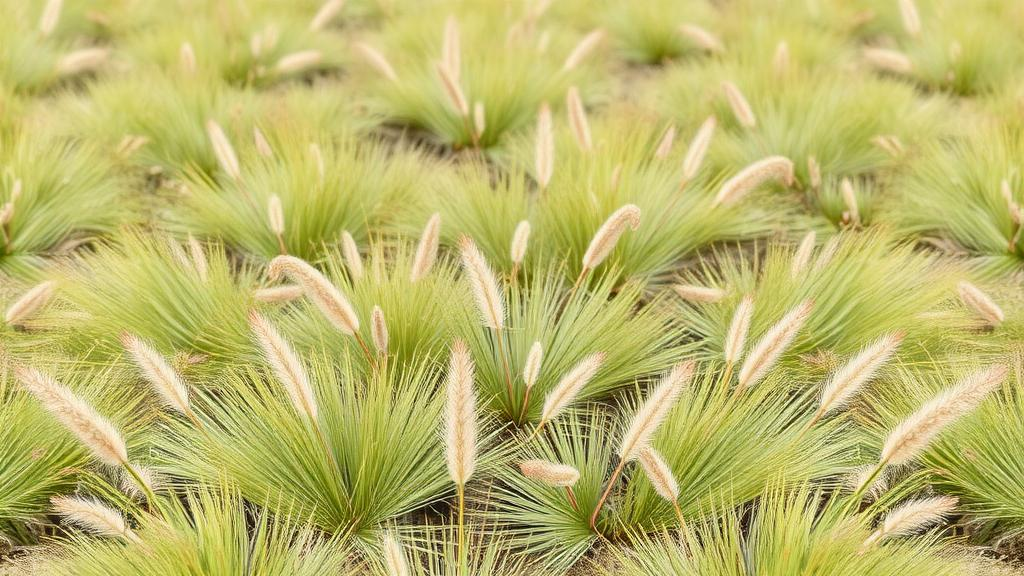
A plot-based analysis classified China’s Stipa steppes into five biogeographic groups, 26 alliances, 91 associations and 12 communities, establishing what the researchers describe as the first systematic and comprehensive classification of these grasslands based on plot data. The study used 1,337 plots and designed the classification to be compatible with the International Vegetation Classification. It also verified the Stipa-dominated alliances represented in the current vegetation classification system of China, while finding that the four vegetation subformations of Tussock Steppe were not completely supported.
The study area covered Stipa steppes in the Songnen Plain, Inner Mongolian Plateau, Loess Plateau, Tibetan Plateau and northwest mountain areas of China. Because the vegetation classification system of China, or China-VCS, had not been completed, the researchers used the available plot data to classify Stipa steppes at several levels. Their framework combines broad biogeographic groups with alliances, associations and smaller communities, using dominant and diagnostic species to distinguish the units and maintain consistency with the International Vegetation Classification.
To develop the classification, the researchers partitioned the 1,337 plots into clusters through hierarchical clustering. They then used supervised noise clustering to improve the classifications at the group, alliance and association levels. Non-metric multidimensional scaling ordination was applied to visualize the homogeneity of plots within each cluster.
Site and climatic vectors were overlaid on the ordination, allowing the vegetation groupings to be examined in relation to geographic patterns and climate variables. Indicator Species Analysis was used to identify diagnostic species for each cluster. The reported climatic variables were annual mean temperature, annual precipitation, mean temperature of the coldest quarter, mean temperature of the warmest quarter, precipitation of the driest quarter, precipitation of the wettest quarter, temperature seasonality and precipitation seasonality.
Together with dominant species, the diagnostic species supplied the botanical basis for defining the biogeographic groups, alliances and associations in the resulting classification. The findings provide the strongest support for the alliances already recognized in China-VCS, but the incomplete support for the four Tussock Steppe subformations shows that the analysis did not simply reproduce the existing framework. The study is a national classification based on 1,337 plots across five broad study regions; it is not a local vegetation survey or an assessment of change through time.
Its conclusions concern how the sampled Stipa steppe vegetation can be divided into hierarchical units, with compatibility to the International Vegetation Classification built into the classification criteria.
Subject of Research: Plot-based hierarchical classification of Stipa steppe vegetation across China
Article Title: Vegetation classification of Stipa steppes in China, with reference to the International Vegetation Classification
Article References: Liu, C., Qiao, X., Guo, K., Zhao, L., & Pan, Q. (2022). Vegetation classification of Stipa steppes in China, with reference to the International Vegetation Classification. Vegetation Classification and Survey, 3, 121-144. https://doi.org/10.3897/vcs.72875
Image Credits: AI Generated
DOI: 10.3897/vcs.72875
Keywords: Stipa steppes, China, vegetation classification, vegetation plots, International Vegetation Classification, biogeographic groups, plant communities, climate gradients, Vegetation, classification, Stipa, steppes
Cite Scienmag News
Gavin Prescott. (October 19, 2026). Research report: Vegetation classification of Stipa steppes in China, with reference to the International Vegetation Classification. Scienmag. https://scienmag.com/research-report-vegetation-classification-of-stipa-steppes-in-china-with-reference-to-the-international-vegetation-classification/
Gavin Prescott. "Research report: Vegetation classification of Stipa steppes in China, with reference to the International Vegetation Classification." Scienmag, 19 October 2026, https://scienmag.com/research-report-vegetation-classification-of-stipa-steppes-in-china-with-reference-to-the-international-vegetation-classification/. Accessed 19 October 2026.
Gavin Prescott. "Research report: Vegetation classification of Stipa steppes in China, with reference to the International Vegetation Classification." Scienmag. October 19, 2026. https://scienmag.com/research-report-vegetation-classification-of-stipa-steppes-in-china-with-reference-to-the-international-vegetation-classification/


