
Tuesday, October 20, 2026
Science
No Result
View All Result
  • Login
  • HOME
  • SCIENCE NEWS
  • CONTACT US
  • HOME
  • SCIENCE NEWS
  • CONTACT US
No Result
View All Result
Scienmag
No Result
View All Result
Home Science News Social Science

Research report: Privileged yet precarious postdoctoral becoming: A new materialist duo-ethnography of Chinese PhD returnees

October 20, 2026
in Social Science
Eleanor Graham
By Eleanor Graham Scienmag Editorial Profile - Cultural Anthropology
Reading Time: 2 mins read
0
Research report: Privileged yet precarious postdoctoral becoming: A new materialist duo-ethnography of Chinese PhD returnees

Research report: Privileged yet precarious postdoctoral becoming: A new materialist duo-ethnography of Chinese PhD returnees

65
SHARES
587
VIEWS
Share on FacebookShare on Twitter
ADVERTISEMENT

A duo-ethnographic study of two Chinese PhD returnees working as postdoctoral researchers at elite universities in China finds that postdoctoral appointments can provide an aspirational yet precarious route back into domestic academia. The appointments carry hopes of being recognized as scholars, but that recognition may not arrive in time. They also expose returnees to uneven institutional recognition and everyday material supports that make continued academic work possible.

The researchers examined how two overseas-trained PhD holders experienced postdoctoral appointments after returning to China. This case-study focus addresses a gap in research on academic return migration, which has largely concentrated on returnees who secure faculty positions. Because the study follows only two people, its findings offer an in-depth qualitative account rather than a population-wide estimate or a demonstration that all Chinese PhD returnees face the same pressures.

Drawing on a new materialist assemblage perspective, the authors describe “postdoctoral becoming” as a process assembled through three interrelated elements. First, the postdoctoral appointment functions as a re-entry device that is simultaneously hopeful and insecure. For the participants, it represented a possible step toward recognition as an established scholar while preserving uncertainty about whether that recognition would materialize in time.

The study reports these aspirations and fears, not measured career outcomes for either participant. Second, the analysis identifies infrastructures of partial legibility and uneven recognition. Under these conditions, the returnees’ academic presence becomes visible only in fragments, while their transnational academic capital remains subject to domestic re-certification.

The findings therefore do not support describing the return as a straightforward conversion of overseas credentials into domestic advantage. Instead, overseas training and experience must gain recognition through the institutions where the participants work, making academic re-entry contingent and uneven. Third, ordinary objects and daily routines provide affective-material support.

Mundane elements of the workplace help the postdoctoral researchers sustain academic work amid ongoing precarity. The study frames these ordinary supports as part of the process by which an academic future becomes possible, deferred and unevenly maintained. The analysis does not establish that a particular object or routine caused a particular professional result; it identifies them as practical and emotional resources embedded in the participants’ working lives.

Overall, the study portrays the postdoctoral trajectory of overseas-trained Chinese PhD returnees as neither a linear process of reintegration nor a simple transfer of international credentials into stable domestic status. Postdoctoral appointments may open scholarly possibilities while retaining insecurity, and recognition is negotiated through institutional structures that do not make overseas experience fully legible. The detailed account of two returnees at elite universities highlights how aspiration, institutional recognition and ordinary working practices interact, while its narrow qualitative scope limits broader generalization.

Subject of Research: Postdoctoral re-entry experiences of two Chinese PhD returnees at elite universities

Article Title: Privileged yet precarious postdoctoral becoming: A new materialist duo-ethnography of Chinese PhD returnees

Article References: Yuan, B., Lu, L., & Yan, D. (2026). Privileged yet precarious postdoctoral becoming: A new materialist duo-ethnography of Chinese PhD returnees. Higher Education. https://doi.org/10.1007/s10734-026-01762-7

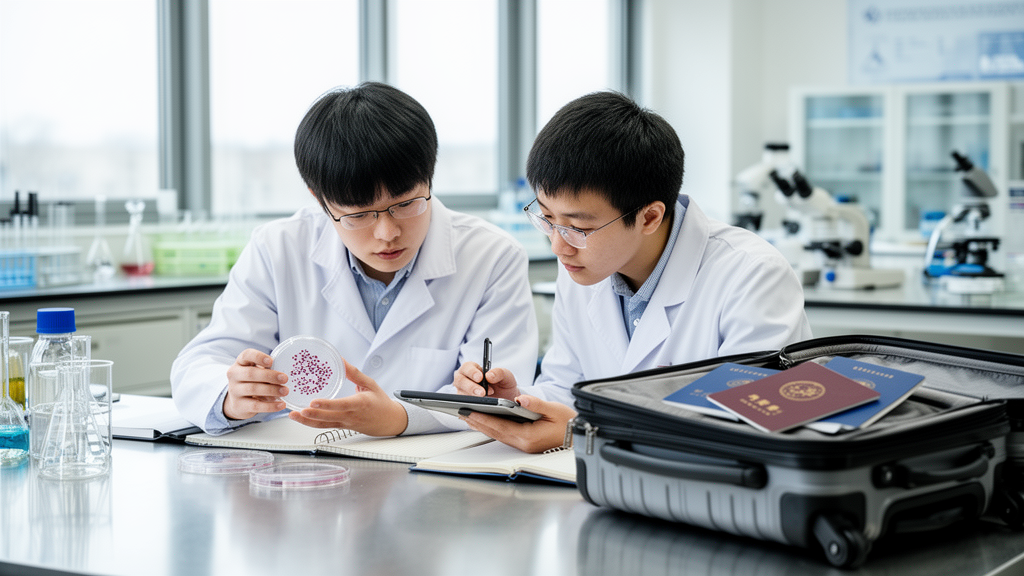
Image Credits: AI Generated

DOI: 10.1007/s10734-026-01762-7

Keywords: academic migration, Chinese PhD returnees, postdoctoral appointments, higher education, academic precarity, scholarly recognition, duo-ethnography, new materialism, academic credentials, career uncertainty, Privileged, precarious

Cite Scienmag News

Eleanor Graham. (October 20, 2026). Research report: Privileged yet precarious postdoctoral becoming: A new materialist duo-ethnography of Chinese PhD returnees. Scienmag. https://scienmag.com/research-report-privileged-yet-precarious-postdoctoral-becoming-a-new-materialist-duo-ethnography-of-chinese-phd-returnees/


Eleanor Graham. "Research report: Privileged yet precarious postdoctoral becoming: A new materialist duo-ethnography of Chinese PhD returnees." Scienmag, 20 October 2026, https://scienmag.com/research-report-privileged-yet-precarious-postdoctoral-becoming-a-new-materialist-duo-ethnography-of-chinese-phd-returnees/. Accessed 20 October 2026.

Eleanor Graham. "Research report: Privileged yet precarious postdoctoral becoming: A new materialist duo-ethnography of Chinese PhD returnees." Scienmag. October 20, 2026. https://scienmag.com/research-report-privileged-yet-precarious-postdoctoral-becoming-a-new-materialist-duo-ethnography-of-chinese-phd-returnees/

Tags: academic credentialsacademic labor and material supportacademic migrationacademic precarityacademic return migrationcareer uncertaintyChinese PhD returneesduo-ethnographyelite Chinese universitieshigher educationinstitutional recognition challengesnew materialismnew materialist ethnographyoverseas-trained Chinese scholarspostdoctoral appointment experiencespostdoctoral appointmentsPostdoctoral research in Chinaprecariousprecarious academic careersPrivilegedreturn migration research gapsscholarly identity formationscholarly recognition
Share26Tweet16
Previous Post

StrokeTime maps cellular responses across the mouse brain’s stroke timeline

Next Post

Retrospective single-school study links selected admissions assessments with medical school awards

Related Posts

AI-built surgery call scheduler passes constraint checks in simulation
Social Science

AI-built surgery call scheduler passes constraint checks in simulation

October 20, 2026
Taiwan landslide-dammed lake study exposes delayed governance escalation
Social Science

Taiwan landslide-dammed lake study exposes delayed governance escalation

October 20, 2026
Ten-day rainfall history improves Southern California landslide detection
Social Science

Ten-day rainfall history improves Southern California landslide detection

October 20, 2026
UT Arlington to test digital prevention for first-year students’ substance use
Social Science

UT Arlington to test digital prevention for first-year students’ substance use

October 20, 2026
Object-based models map burned forests in Mediterranean transfer tests
Social Science

Object-based models map burned forests in Mediterranean transfer tests

October 20, 2026
Review maps governance priorities for equitable agentic AI
Social Science

Review maps governance priorities for equitable agentic AI

October 20, 2026
Next Post
Medical School Admissions Tests Show Distinct Links to Student Awards, Study Finds

Retrospective single-school study links selected admissions assessments with medical school awards

  • Mothers who receive childcare support from maternal grandparents show more optimized

    Mothers who receive childcare support from maternal grandparents show more parental warmth, finds NTU Singapore study

    27656 shares
    Share 11059 Tweet 6912
  • University of Seville Breaks 120-Year-Old Mystery, Revises a Key Einstein Concept

    1061 shares
    Share 424 Tweet 265
  • Bee body mass, pathogens and local climate influence heat tolerance

    682 shares
    Share 273 Tweet 171
  • Researchers record first-ever images and data of a shark experiencing a boat strike

    546 shares
    Share 218 Tweet 137
  • Groundbreaking Clinical Trial Reveals Lubiprostone Enhances Kidney Function

    531 shares
    Share 212 Tweet 133
Science

Embark on a thrilling journey of discovery with Scienmag.com—your ultimate source for cutting-edge breakthroughs. Immerse yourself in a world where curiosity knows no limits and tomorrow’s possibilities become today’s reality!

RECENT NEWS

  • Qualitative Swedish preschool study links children’s verbal fullness expressions with caregivers’ responses
  • From paper to pixels: a pilot evaluation of the validity and reliability of virtual objective structured clinical examination in emergency medicine training
  • Projection-based KNN variants improve sentiment classification on small datasets
  • Health literacy moderates the link between health perception and surgical fear in cataract patients

Categories

  • Agriculture
  • Anthropology
  • Archaeology
  • Athmospheric
  • Biology
  • Biotechnology
  • Blog
  • Bussines
  • Cancer
  • Chemistry
  • Climate
  • Earth Science
  • Editorial Policy
  • Marine
  • Mathematics
  • Medicine
  • Pediatry
  • Policy
  • Psychology & Psychiatry
  • Science Education
  • Science News
  • Social Science
  • Space
  • Technology and Engineering

Subscribe to Blog via Email

Enter your email address to subscribe to this blog and receive notifications of new posts by email.

Join 5,150 other subscribers

© 2025 Scienmag - Science Magazine

Welcome Back!

Login to your account below

Forgotten Password?

Retrieve your password

Please enter your username or email address to reset your password.

Log In
No Result
View All Result
  • HOME
  • SCIENCE NEWS
  • CONTACT US

© 2025 Scienmag - Science Magazine

Discover more from Science

Subscribe now to keep reading and get access to the full archive.

Continue reading