Tuesday, October 27, 2026
Science
No Result
View All Result
  • Login
  • HOME
  • SCIENCE NEWS
  • CONTACT US
  • HOME
  • SCIENCE NEWS
  • CONTACT US
No Result
View All Result
Scienmag
No Result
View All Result
Home Science News Biology

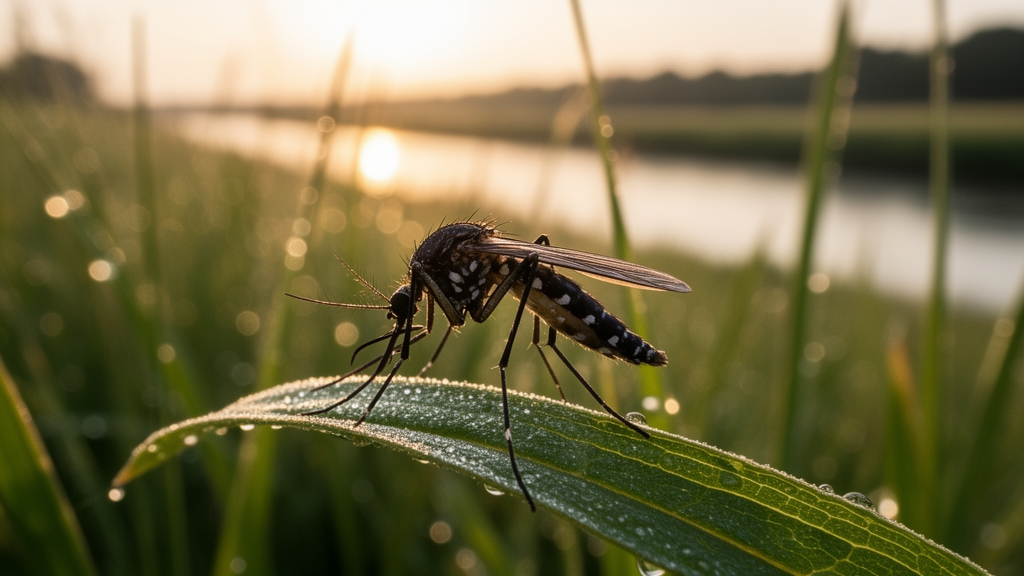
Research report: Presence records of Aedes vexans ( Diptera , Culicidae ) in Germany

October 27, 2026
in Biology, Science News, Technology and Engineering
Drew Townsend
By Drew Townsend Scienmag Editorial Profile - Cell Biology
Reading Time: 2 mins read
0
Research report: Presence records of Aedes vexans ( Diptera , Culicidae ) in Germany

Research report: Presence records of Aedes vexans ( Diptera , Culicidae ) in Germany

65
SHARES
587
VIEWS
Share on FacebookShare on Twitter
ADVERTISEMENT

The records draw on two complementary monitoring approaches.

Aedes vexans is native to Europe and is already widespread in Germany, but it attracts particular attention because of its mass occurrence events, its floodplain-associated ecology and its potential role as a vector of pathogens affecting humans and animals. Mosquitoes more broadly are of major public and animal health relevance, since they may act both as nuisance pests and as vectors of a range of pathogens, and changes in climate, land use and global connectivity have facilitated the spread and establishment of both native and invasive mosquito species across Europe, including Germany.

Despite the species’ prominence, standardised occurrence data have been strikingly scarce. As of 11 February 2026, only 53 occurrence records from Germany were registered in the Global Biodiversity Information Facility (GBIF), underscoring how limited the publicly available data for this species have been. The new compilation therefore represents a substantial expansion of accessible information for researchers studying where the mosquito lives and under which conditions it thrives.

The dataset is not merely an archive. Portions of it have already been used in peer-reviewed studies addressing mosquito distribution modelling, habitat suitability and vector ecology. Previous work applied Aedes vexans occurrence data within a machine-learning framework to help characterise the climatic niche of the invasive species Aedes japonicus under conditions of limited occurrence data for the target species, to develop combined climate-habitat mosquito models, and to evaluate automated feature selection for mosquito distribution modelling. Subsets of the data have also contributed to studies on West Nile virus vectors in Germany and to a recent inventory of the German mosquito fauna.

Understanding the spatial distribution of Aedes vexans also matters for modelling its habitat suitability, and spatially extensive long-term monitoring is considered essential to understand mosquito distribution patterns, assess establishment risks and support vector surveillance and management strategies. The floodplain-linked ecology of the species means its occurrence patterns are closely tied to landscape and hydrological conditions, making detailed distribution data a useful foundation for such analyses.

The authors caution that the citizen-science component carries structural and behavioural biases that must be considered when interpreting and modelling the records. Studies of the broader “Mückenatlas” data have shown that submission numbers are strongly influenced by human population density, regional factors and environmental conditions, and that they reflect participant behaviour rather than true mosquito abundance alone. A follow-up study further quantified the influence of mass media coverage on citizen participation, showing that both the intensity and framing of media reports substantially affect submission numbers across time and space. Although those studies considered multiple mosquito species and the dataset as a whole, the identified biases apply equally to the Aedes vexans records included here.

Subject of Research: Occurrence records of the mosquito Aedes vexans in Germany from citizen-science and active monitoring

Article Title: Presence records of Aedes vexans ( Diptera , Culicidae ) in Germany

Article References: Pothmann, P., Werner, D., Kampen, H., & Thulke, H.-H. (2026). Presence records of Aedes vexans (Diptera, Culicidae) in Germany. Biodiversity Data Journal, 14, Article e191869. https://doi.org/10.3897/bdj.14.e191869

Image Credits: AI Generated

DOI: 10.3897/BDJ.14.e191869

Keywords: Aedes vexans, mosquitoes, Germany, citizen science, Mückenatlas, occurrence data, vector surveillance, biodiversity monitoring, GBIF, floodplains, Presence, records

Cite Scienmag News

Drew Townsend. (October 27, 2026). Research report: Presence records of Aedes vexans ( Diptera , Culicidae ) in Germany. Scienmag. https://scienmag.com/research-report-presence-records-of-aedes-vexans-diptera-culicidae-in-germany/
Drew Townsend. "Research report: Presence records of Aedes vexans ( Diptera , Culicidae ) in Germany." Scienmag, 27 October 2026, https://scienmag.com/research-report-presence-records-of-aedes-vexans-diptera-culicidae-in-germany/. Accessed 27 October 2026.

Drew Townsend. "Research report: Presence records of Aedes vexans ( Diptera , Culicidae ) in Germany." Scienmag. October 27, 2026. https://scienmag.com/research-report-presence-records-of-aedes-vexans-diptera-culicidae-in-germany/
Tags: Aedes vexansAedes vexans distribution in Germanybiodiversity data for Aedes vexansbiodiversity monitoringcitizen scienceclimate change effects on mosquito spreadEuropean mosquito monitoring methodsfloodplain mosquito habitatsfloodplainsGBIFGermanyglobal connectivity and mosquito spreadinvasive mosquito species in Europeland use impact on mosquito habitatsmosquito occurrence data compilationmosquito vector ecologymosquito-borne disease risk in GermanymosquitoesMückenatlasoccurrence datapresencepublic health implications of mosquito proliferationrecordsvector surveillance
Share26Tweet16
Previous Post

Systematic Review Maps Lagos Urban Forest Governance Gaps for Climate Resilience

Next Post

Two Genes, Two Fates: How a Collagen Disorder and Marfan Syndrome Broke the Aorta in Different Ways

Related Posts

Hidden Species Emerge as Vienna Museum Revisits Its Tiny Pauropod Collection
Science News

Hidden Species Emerge as Vienna Museum Revisits Its Tiny Pauropod Collection

October 27, 2026
Ten New Moth Species Unveiled in Landmark Review of China’s Metathrinca
Biology

Ten New Moth Species Unveiled in Landmark Review of China’s Metathrinca

October 27, 2026
New parasitoid wasp species reveals hidden diversity of Eucerotinae in tropical Africa
Biology

New parasitoid wasp species reveals hidden diversity of Eucerotinae in tropical Africa

October 27, 2026
Two New Armoured Tardigrade Species Discovered on Atlantic Seamount
Biology

Two New Armoured Tardigrade Species Discovered on Atlantic Seamount

October 27, 2026
Genetic Myopathy and Mental Health Crisis: A Case Study of Severe Depression and Suicidality
Medicine

Genetic Myopathy and Mental Health Crisis: A Case Study of Severe Depression and Suicidality

October 27, 2026
Eight Weeks of Flexi-Bar Vibration Exercise Improves Cardiovascular Health in Middle-Aged and Older Women
Medicine

Eight Weeks of Flexi-Bar Vibration Exercise Improves Cardiovascular Health in Middle-Aged and Older Women

October 27, 2026
Next Post
Two Genes, Two Fates: How a Collagen Disorder and Marfan Syndrome Broke the Aorta in Different Ways

Two Genes, Two Fates: How a Collagen Disorder and Marfan Syndrome Broke the Aorta in Different Ways

  • Mothers who receive childcare support from maternal grandparents show more optimized

    Mothers who receive childcare support from maternal grandparents show more parental warmth, finds NTU Singapore study

    27656 shares
    Share 11059 Tweet 6912
  • University of Seville Breaks 120-Year-Old Mystery, Revises a Key Einstein Concept

    1061 shares
    Share 424 Tweet 265
  • Bee body mass, pathogens and local climate influence heat tolerance

    682 shares
    Share 273 Tweet 171
  • Researchers record first-ever images and data of a shark experiencing a boat strike

    546 shares
    Share 218 Tweet 137
  • Groundbreaking Clinical Trial Reveals Lubiprostone Enhances Kidney Function

    531 shares
    Share 212 Tweet 133
Science

Embark on a thrilling journey of discovery with Scienmag.com—your ultimate source for cutting-edge breakthroughs. Immerse yourself in a world where curiosity knows no limits and tomorrow’s possibilities become today’s reality!

RECENT NEWS

  • Hidden Species Emerge as Vienna Museum Revisits Its Tiny Pauropod Collection
  • Ten New Moth Species Unveiled in Landmark Review of China’s Metathrinca
  • New parasitoid wasp species reveals hidden diversity of Eucerotinae in tropical Africa
  • Two New Armoured Tardigrade Species Discovered on Atlantic Seamount

Categories

  • Agriculture
  • Anthropology
  • Archaeology
  • Athmospheric
  • Biology
  • Biotechnology
  • Blog
  • Bussines
  • Cancer
  • Chemistry
  • Climate
  • Earth Science
  • Editorial Policy
  • Marine
  • Mathematics
  • Medicine
  • Pediatry
  • Policy
  • Psychology & Psychiatry
  • Science Education
  • Science News
  • Social Science
  • Space
  • Technology and Engineering

Subscribe to Blog via Email

Enter your email address to subscribe to this blog and receive notifications of new posts by email.

Join 5,151 other subscribers

© 2025 Scienmag - Science Magazine

Welcome Back!

Login to your account below

Forgotten Password?

Retrieve your password

Please enter your username or email address to reset your password.

Log In
No Result
View All Result
  • HOME
  • SCIENCE NEWS
  • CONTACT US

© 2025 Scienmag - Science Magazine

Discover more from Science

Subscribe now to keep reading and get access to the full archive.

Continue reading