

Tuesday, October 20, 2026
Science
No Result
View All Result
  • Login
  • HOME
  • SCIENCE NEWS
  • CONTACT US
  • HOME
  • SCIENCE NEWS
  • CONTACT US
No Result
View All Result
Scienmag
No Result
View All Result
Home Science News Agriculture

Research report: Nano-encapsulation of peppermint essential oil in chitosan nanoparticles improves salinity tolerance in lettuce

October 20, 2026
in Agriculture
Alan Morgan
By Alan Morgan Scienmag Editorial Profile - Precision Agriculture
Reading Time: 2 mins read
0
Research report: Nano-encapsulation of peppermint essential oil in chitosan nanoparticles improves salinity tolerance in lettuce

Research report: Nano-encapsulation of peppermint essential oil in chitosan nanoparticles improves salinity tolerance in lettuce

65
SHARES
587
VIEWS
Share on FacebookShare on Twitter
ADVERTISEMENT

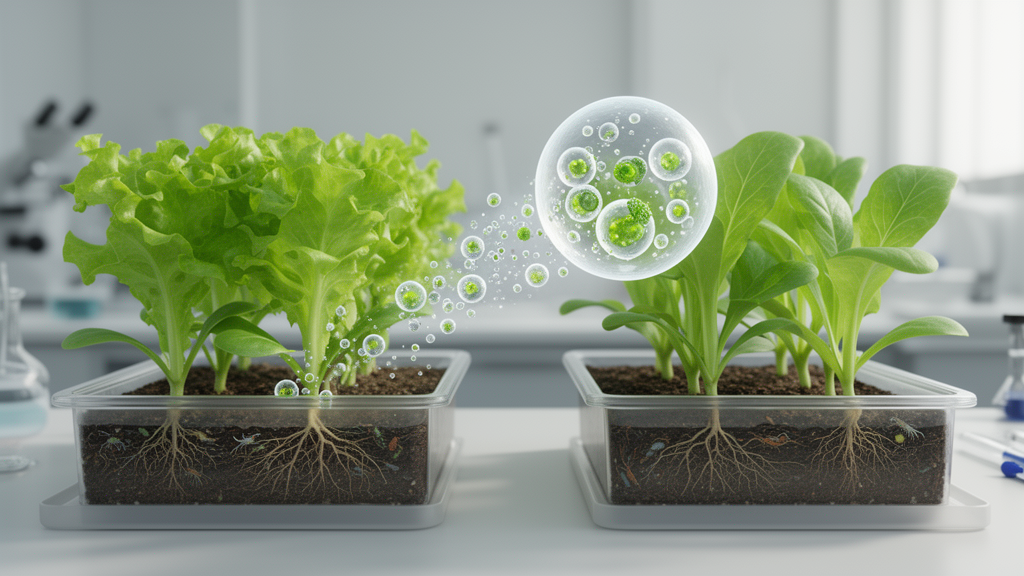
In a greenhouse experiment, lettuce exposed to 50 millimolar sodium chloride showed improved growth and biochemical performance when treated with peppermint essential oil loaded into chitosan nanoparticles, with the strongest effects recorded for the 500-parts-per-million formulation. The study found that this treatment increased the measured uptake of nitrogen, phosphorus and potassium, strengthened antioxidant enzyme activity, reduced markers of oxidative stress and increased several components of plant performance. The formulation also proved more effective than separate applications of peppermint essential oil and chitosan nanoparticles under the tested conditions.

The researchers used a factorial design that combined three salinity levels—0, 25 and 50 millimolar sodium chloride—with five foliar treatments. These treatments consisted of distilled water as a control, peppermint essential oil-loaded chitosan nanoparticles at 500 and 1,000 ppm, peppermint essential oil at 1,000 ppm, and chitosan nanoparticles at 0.5%. Lettuce, identified in the study as Lactuca sativa L., was assessed through its physiological, biochemical and nutritional responses.

Salt exposure at 50 millimolar sodium chloride reduced growth traits and the accumulation of photosynthetic pigments while increasing hydrogen peroxide and malondialdehyde, which the researchers used as markers of oxidative stress. Relative to the high-salinity comparison reported in the study, nitrogen, phosphorus and potassium uptake increased by 94%, 230% and 76%, respectively. The activities of ascorbate peroxidase, guaiacol peroxidase and superoxide dismutase also rose, by 219%, 225% and 165%.

These coordinated changes indicated that the treatment affected several measured aspects of plant physiology rather than a single growth indicator. The biochemical response included marked increases in total phenolics, total flavonoids, ascorbic acid and soluble proteins, alongside changes in the two oxidative-stress markers. Hydrogen peroxide decreased by 163% and malondialdehyde by 62% in the study’s reported comparison with the high-salinity control.

Together, the results showed stronger antioxidant and metabolic capacity together with reduced oxidative stress. The researchers also linked these changes to improved plant performance: treated lettuce had greater root and shoot biomass, more leaves, increased stem diameter and a higher fresh weight of the lettuce head. The 500 ppm nano-encapsulated treatment was more effective than the 1,000 ppm nanoparticle treatment, as well as the separate peppermint essential oil and chitosan nanoparticle applications.

These results support nano-encapsulation as a promising approach to mitigating salinity-induced damage in lettuce, but the evidence remains specific to the controlled greenhouse experiment. The authors state that field validation is required before the approach can be evaluated under agricultural conditions. Within the tested scope, however, the results indicate that packaging peppermint essential oil in chitosan nanoparticles produced a coordinated improvement in nutrient uptake, antioxidant defense, oxidative-stress regulation and growth.

The clearest effect occurred in lettuce exposed to 50 millimolar sodium chloride, where the 500 ppm formulation outperformed both nanoparticle concentrations and the separately applied materials.

Subject of Research: Greenhouse effects of nano-encapsulated peppermint essential oil on salinity-stressed lettuce

Article Title: Nano-encapsulation of peppermint essential oil in chitosan nanoparticles improves salinity tolerance in lettuce

Article References: Rasouli, F., Haghaninia, M., Golestaneh, S., Asadi, M., & Mahdavinia, G. (2026). Nano-encapsulation of peppermint essential oil in chitosan nanoparticles improves salinity tolerance in lettuce. BMC Plant Biology. https://doi.org/10.1186/s12870-026-10089-5

Image Credits: AI Generated

DOI: 10.1186/s12870-026-10089-5

Keywords: lettuce, salinity stress, peppermint essential oil, chitosan nanoparticles, nano-encapsulation, greenhouse experiment, antioxidant enzymes, nutrient uptake, plant growth, oxidative stress, peppermint, essential

Cite Scienmag News

Alan Morgan. (October 20, 2026). Research report: Nano-encapsulation of peppermint essential oil in chitosan nanoparticles improves salinity tolerance in lettuce. Scienmag. https://scienmag.com/research-report-nano-encapsulation-of-peppermint-essential-oil-in-chitosan-nanoparticles-improves-salinity-tolerance-in-lettuce/


Alan Morgan. "Research report: Nano-encapsulation of peppermint essential oil in chitosan nanoparticles improves salinity tolerance in lettuce." Scienmag, 20 October 2026, https://scienmag.com/research-report-nano-encapsulation-of-peppermint-essential-oil-in-chitosan-nanoparticles-improves-salinity-tolerance-in-lettuce/. Accessed 20 October 2026.

Alan Morgan. "Research report: Nano-encapsulation of peppermint essential oil in chitosan nanoparticles improves salinity tolerance in lettuce." Scienmag. October 20, 2026. https://scienmag.com/research-report-nano-encapsulation-of-peppermint-essential-oil-in-chitosan-nanoparticles-improves-salinity-tolerance-in-lettuce/

Tags: antioxidant enzymesbiochemical markers of oxidative stress reduction in salt-stressed plantsChitosan nanoparticleseffects of nanotechnology-based treatments on lettuce growth and nutritionessentialfoliar application strategies for salinity stress alleviation in greenhouse-grown lettucegreenhouse experimentimpactlettucenano-encapsulationNano-encapsulation of peppermint essential oil in chitosan nanoparticles for salinity stress mitigation in lettucenutrient uptakeOxidative stresspeppermintpeppermint essential oilplant antioxidant enzyme activation under salt stressplant growthrole of peppermint essential oil-loaded chitosan nanoparticles in improving plant biochemical performancesalinity stresssalinity tolerance enhancement in Lactuca sativa using natural nanoformulations
Share26Tweet16
Previous Post

Research report: Shifts in invasive pneumococcal disease epidemiology following the SARS-CoV-2 pandemic in Madrid, Spain: insights from a six-year hospital-based study

Next Post

Legal Analysis Maps Ocean Digital Twins’ Challenge to BBNJ Benefit-Sharing

Related Posts

Soybean seed pigmentation is associated with oil and lipid differences
Agriculture

Soybean seed pigmentation is associated with oil and lipid differences

October 20, 2026
Postbiotics Gain Ground as Functional Foods, but Human Evidence Varies
Agriculture

Postbiotics Gain Ground as Functional Foods, but Human Evidence Varies

October 20, 2026
Research report: Spatiotemporal optimization of micro spray mist: effects on growth physiology in apple trees and comprehensive evaluation
Agriculture

Research report: Spatiotemporal optimization of micro spray mist: effects on growth physiology in apple trees and comprehensive evaluation

October 20, 2026
Cyanidin glycosides protect zebrafish brains in Alzheimer’s-like model
Agriculture

Cyanidin glycosides protect zebrafish brains in Alzheimer’s-like model

October 20, 2026
Bayesian workflow analyzes censored soybean R6 timing across CO₂, light and photoperiod treatments
Agriculture

Bayesian workflow analyzes censored soybean R6 timing across CO₂, light and photoperiod treatments

October 20, 2026
Resveratrol pretreatment accompanies fewer DBDPE-associated changes in female mice
Agriculture

Resveratrol pretreatment accompanies fewer DBDPE-associated changes in female mice

October 20, 2026
Next Post
Legal Analysis Maps Ocean Digital Twins’ Challenge to BBNJ Benefit-Sharing

Legal Analysis Maps Ocean Digital Twins’ Challenge to BBNJ Benefit-Sharing

  • Mothers who receive childcare support from maternal grandparents show more optimized

    Mothers who receive childcare support from maternal grandparents show more parental warmth, finds NTU Singapore study

    27656 shares
    Share 11059 Tweet 6912
  • University of Seville Breaks 120-Year-Old Mystery, Revises a Key Einstein Concept

    1061 shares
    Share 424 Tweet 265
  • Bee body mass, pathogens and local climate influence heat tolerance

    682 shares
    Share 273 Tweet 171
  • Researchers record first-ever images and data of a shark experiencing a boat strike

    546 shares
    Share 218 Tweet 137
  • Groundbreaking Clinical Trial Reveals Lubiprostone Enhances Kidney Function

    531 shares
    Share 212 Tweet 133
Science

Embark on a thrilling journey of discovery with Scienmag.com—your ultimate source for cutting-edge breakthroughs. Immerse yourself in a world where curiosity knows no limits and tomorrow’s possibilities become today’s reality!

RECENT NEWS

  • Empagliflozin stabilizes electrical activity in failing heart cells
  • Morphological revision describes six new Eotrechus skater species
  • Legal Analysis Maps Ocean Digital Twins’ Challenge to BBNJ Benefit-Sharing
  • Research report: Nano-encapsulation of peppermint essential oil in chitosan nanoparticles improves salinity tolerance in lettuce

Categories

  • Agriculture
  • Anthropology
  • Archaeology
  • Athmospheric
  • Biology
  • Biotechnology
  • Blog
  • Bussines
  • Cancer
  • Chemistry
  • Climate
  • Earth Science
  • Editorial Policy
  • Marine
  • Mathematics
  • Medicine
  • Pediatry
  • Policy
  • Psychology & Psychiatry
  • Science Education
  • Science News
  • Social Science
  • Space
  • Technology and Engineering

Subscribe to Blog via Email

Enter your email address to subscribe to this blog and receive notifications of new posts by email.

Join 5,150 other subscribers

© 2025 Scienmag - Science Magazine

Welcome Back!

Login to your account below

Forgotten Password?

Retrieve your password

Please enter your username or email address to reset your password.

Log In
No Result
View All Result
  • HOME
  • SCIENCE NEWS
  • CONTACT US

© 2025 Scienmag - Science Magazine

Discover more from Science

Subscribe now to keep reading and get access to the full archive.

Continue reading