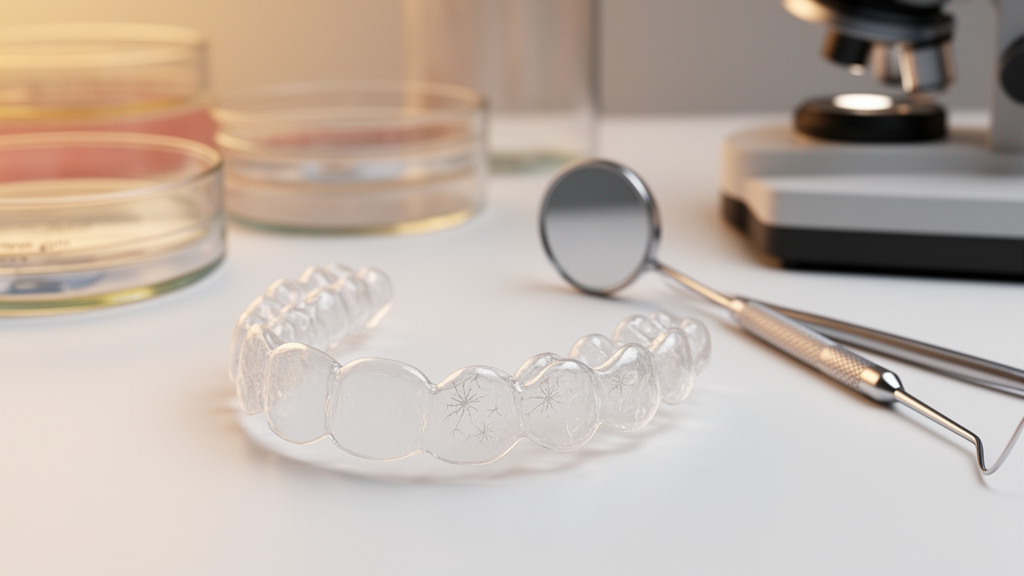
Clear plastic aligners have become one of the fastest-growing tools in orthodontics, promising straighter teeth with better esthetics, comfort, and removability than metal braces. After mapping 132 studies across three interlocking domains of research, a team from Xiangya Stomatological Hospital at Central South University in Changsha, China, concludes that clear aligners are neither microbiologically inert nor uniformly disruptive. Instead, their biological effects depend on a shifting interplay between the material interface, the oral compartment being sampled, the duration of exposure, patient susceptibility, and preventive habits.
The review, conducted according to Joanna Briggs Institute methodology and reported under PRISMA-ScR guidance, searched PubMed, Embase, and the Web of Science Core Collection from database inception through August 31, 2026, with no language restrictions, supplemented by backward and forward citation searching. From 988 records identified, 490 duplicates were removed and 498 unique records underwent title and abstract screening, ultimately yielding 132 included reports. Because individual reports could contribute to more than one evidence domain, the domain-specific counts exceeded the number of unique studies: 62 informed interface properties and microbial adhesion, 47 addressed oral microbial ecology during wear, and 76 covered biofilm control and caries-risk mitigation.
The team deliberately chose a scoping design to map the breadth and heterogeneity of the literature rather than to estimate a single pooled effect, and no quantitative meta-analysis was undertaken. The first major finding concerns the aligner surface itself. Most clear aligners are made from thermoplastic polymers such as glycol-modified polyethylene terephthalate (PETG) or thermoplastic polyurethane (TPU), and direct three-dimensional printing is emerging as an alternative to conventional thermoforming.
Yet the review found that no single polymer, manufacturing method, or surface parameter consistently predicted microbial adhesion or biofilm formation. Outcomes reflected interactions among material characteristics, local topography, salivary conditioning, aging and exposure history, microbial species, and the experimental model used. In one comparison, directly 3D-printed aligners did not consistently reduce microbial adhesion relative to thermoformed ones: after artificial-saliva aging, the roughest printed material did not show the greatest bacterial adhesion, and one printed resin showed broadly comparable adhesion to thermoformed materials after seven days.
Broad categories like PETG, TPU, thermoformed, or printed were, on their own, insufficient to forecast colonization. One recurring pattern did emerge: geometry matters more than average roughness. Multispecies biofilms preferentially accumulated in recessed, folded, scratched, or sheltered regions of aligner specimens, while flatter, more exposed areas retained less biofilm.
In one study, irregular thermoformed regions were preferentially colonized by Streptococcus oralis and Actinomyces viscosus. But even this relationship was not universal; several comparative studies found no link between higher numerical roughness values and greater adhesion. The aligner surface is also not static.
Intraoral exposure, brushing, cleaning chemicals, and even cigarette smoke can alter roughness, porosity, and chemistry over time, meaning surface roughness is a dynamic outcome of processing, wear, cleaning, and lifestyle rather than a fixed material attribute. When the reviewers turned to the clinical microbiology of aligner wear, the picture was one of localized, site-specific, and time-dependent change rather than a uniform whole-mouth shift. Of the 47 reports in this domain, 37 used longitudinal, repeated-measures, before-after, or crossover designs, sampling saliva, aligner-associated biofilm or fluid, supragingival plaque, subgingival plaque, and mucosal sites over schedules ranging from a single 24-hour wearing cycle to 1.5 years of treatment.
Salivary and tooth-associated communities often remained relatively stable at the community level. In contrast, the inner aligner surface sometimes exhibited distinct taxonomic, functional, metabolic, and pH-related changes: during 24 hours without cleaning, inner-aligner diversity declined and Streptococcus and Lactobacillales increased while Actinomyces and Rothia decreased. In multisite studies, variation among saliva, tooth-associated plaque, subgingival plaque, and tray plaque generally exceeded variation over time or between appliance groups.
Evidence on specific caries- and periodontal-associated organisms was similarly context-dependent. Comparative culture and qPCR studies found salivary Streptococcus mutans and Lactobacillus levels either similar between aligner and fixed-appliance groups or less likely to reach high-caries-risk levels with aligners by six months. One shotgun metagenomic study of adolescents with poor plaque control detected increases in caries-associated species and biofilm-related functions alongside rapid white spot lesion development, even as the overall supragingival community stayed broadly stable.
Periodontal-pathogen findings were generally less unfavorable with aligners than with fixed appliances, though not uniformly unchanged. Notably, the same genus, Rothia, was reported as decreased on the inner aligner surface, enriched in saliva from users with white spot lesions, and associated with favorable hygiene indicators in separate studies, underscoring that no single taxonomic signature was consistently reproduced across sites and time points. Perhaps the most technically striking section concerns function and metabolism.
Relative stability in taxonomic diversity does not guarantee functional stability. Metagenomic analysis of supragingival plaque during the first three months of treatment found enrichment of folate biosynthesis, biotin metabolism, genes for type IV pili and polar flagella, and changes in starch, sucrose, and galactose metabolism. A cross-sectional microbiome-metabolome study of patients with aligner-associated white spot lesions identified 27 differential salivary metabolites, mostly amino acids or amino-acid-related compounds, implicating broader remodeling of amino acid and nitrogen metabolism rather than simple carbohydrate fermentation.
Direct comparison of plaque from the aligner-facing interface and the exposed tooth surface revealed clearly separated metabolomic profiles among 2,502 detected metabolites, with the aligner-facing niche showing lower metabolite diversity and stronger metabolite-metabolite interactions under poor plaque control. Local acidity also shifted dynamically: inner-aligner fluid pH fell during 24 hours without cleaning, and cola consumption produced immediate, timing-dependent pH and community changes in the fluid retained under the appliance. The third domain mapped an expansive but uneven intervention literature.
Of 76 reports, 19 investigated conventional cleaning or decontamination, 33 antimicrobial interface modification, 4 anti-adhesive or antifouling modification, 10 anticaries or remineralizing strategies, and 10 probiotic or environment-responsive strategies. The evidence base was predominantly preclinical: 46 reports used in vitro material-microbial models, 7 added ex vivo enamel models, and 9 combined in vitro testing with ancillary animal or preliminary human components, while only 13 were clinical interventions. Many strategies did reduce microbial burden, biofilm outcomes, acidogenicity, or mineral loss under tested conditions.
Quaternized tannic acid coatings achieved greater than 99 percent killing of S. mutans and roughly 82.9 percent killing of Candida albicans, while zwitterionic modifications such as carboxybetaine and polySBMA reduced protein adsorption and early bacterial attachment through hydration layers rather than direct killing. Probiotic regimens and pH-responsive, mechanically activated, or sensor-driven systems likewise showed promising short-term or preclinical effects, though none established sustained changes in community structure or patient-level disease outcomes. Durability, material performance, and safety emerged as critical caveats.
Some modified interfaces retained activity after storage, artificial-saliva exposure, washing, bending, or mechanical challenge, whereas others showed progressive loss: thermoforming and aging reduced the benefit of a chitosan nanocoating, and an N-halamine interface lost clear antibacterial activity by about day 15 of artificial-saliva washing. Formulation trade-offs were common, since the concentration giving the largest microbial reduction was not necessarily the one with the best optical or mechanical profile. Cytocompatibility was generally favorable, with viability often above 80 to 90 percent, but several formulations showed exposure-dependent toxicity, and the review cautions that in vitro assays cannot establish the absence of oral mucosal irritation during prolonged clinical wear.
The review's overarching conclusion is deliberately restrained. The evidence neither establishes causal relationships between interface or microecological changes and clinical disease nor identifies a universally superior intervention, and no included study definitively demonstrated a reduction in incident white spot lesions or caries as a clinical outcome. The authors call for multicenter longitudinal designs, harmonized sampling of oral compartments, longer follow-up, clinically representative aging protocols before microbial testing, and integration of metagenomics, metabolomics, and proteomics with clinical data to build validated risk-prediction tools.
Until then, the aligner-tooth interface should be understood as a dynamic ecological niche whose consequences depend on who wears it, how it is maintained, and what it encounters, rather than as a simple source of harm or a passive piece of plastic.
Subject of Research: Interface properties, oral microbial ecology, and biofilm-control strategies associated with clear aligner treatment
Article Title: Clear aligner interface properties, oral microbial ecology, and strategies for biofilm control and caries-risk mitigation: a scoping review
Article References: Li, Z., Yang, Y., Liu, B., Sun, J., Tang, X., & Yang, Y. (2026). Clear aligner interface properties, oral microbial ecology, and strategies for biofilm control and caries-risk mitigation: a scoping review. Frontiers in Cellular and Infection Microbiology, 16, Article 1951083. https://doi.org/10.3389/fcimb.2026.1951083
Image Credits: AI Generated
DOI: 10.3389/fcimb.2026.1951083
Keywords: clear aligners, orthodontics, oral microbiome, biofilm, dental caries, white spot lesions, antimicrobial coatings, surface roughness, metabolomics, Streptococcus mutans, remineralization, scoping review
Cite Scienmag News
Morgan Morrow. (October 24, 2026). Research report: Clear aligner interface properties, oral microbial ecology, and strategies for biofilm control and caries-risk mitigation: a scoping review. Scienmag. https://scienmag.com/research-report-clear-aligner-interface-properties-oral-microbial-ecology-and-strategies-for-biofilm-control-and-caries-risk-mitigation-a-scoping-review/
Morgan Morrow. "Research report: Clear aligner interface properties, oral microbial ecology, and strategies for biofilm control and caries-risk mitigation: a scoping review." Scienmag, 24 October 2026, https://scienmag.com/research-report-clear-aligner-interface-properties-oral-microbial-ecology-and-strategies-for-biofilm-control-and-caries-risk-mitigation-a-scoping-review/. Accessed 24 October 2026.
Morgan Morrow. "Research report: Clear aligner interface properties, oral microbial ecology, and strategies for biofilm control and caries-risk mitigation: a scoping review." Scienmag. October 24, 2026. https://scienmag.com/research-report-clear-aligner-interface-properties-oral-microbial-ecology-and-strategies-for-biofilm-control-and-caries-risk-mitigation-a-scoping-review/