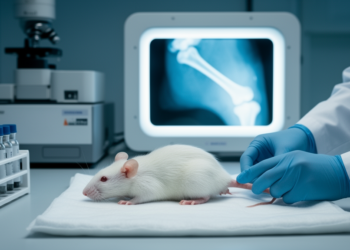
Chimeric mice whose livers are largely rebuilt from human hepatocytes have, for the first time, passed a key test of their usefulness in chemical safety work: a repeated-dose liver micronucleus assay in these animals successfully detected the genotoxicity of two nitrosamines, diethylnitrosamine (DEN) and N-nitrosodimethylamine (NDMA), both of which must be metabolically activated before they can damage chromosomes. The study, published in the journal Genes and Environment, extends a test system that until now had only been shown to work for compounds that do not need metabolic activation.
The micronucleus assay is a standard genotoxicity test that detects chromosomal aberrations by looking for micronuclei, small fragments of chromosome material left behind when cells divide after exposure to a damaging chemical. The version most widely used under Organization for Economic Co-operation and Development guidelines relies on erythrocytes from bone marrow or peripheral blood. That approach has a blind spot: some compounds only become genotoxic after metabolic activation, and active metabolites generated in the liver may never reach bone marrow cells in sufficient quantity, or may be too short-lived to survive the journey, producing misleading negative results.
The liver micronucleus assay was developed to close that gap by targeting the major metabolic organ itself. Because micronuclei only form in cells that divide after exposure, and hepatocytes in adult animals replicate slowly, early versions of the test required surgical or developmental workarounds. In the partial hepatectomy method, animals undergo surgery to trigger liver cell division, but enzymatic activities and cytochrome P-450 levels fall after the operation and do not recover. In the juvenile rat method, young animals with actively dividing hepatocytes are used, but metabolism in juveniles may not fully match that of adults. A repeated-dosing method over 14 or 28 days, developed in the 2010s and recommended by the International Workshop on Genotoxicity Testing, is now widely used and avoids both problems.
Yet even a well-designed rodent liver assay carries a fundamental limitation: species differences in metabolism. If the metabolites produced in a mouse or rat differ qualitatively or quantitatively from those produced in humans, the results cannot be directly extrapolated to people. The PXB-mouse, a chimeric mouse created by transplanting human hepatocytes into an immunodeficient mouse with liver injury, was developed to address exactly this issue. Previous work has shown that the livers of PXB-mice possess functions similar to those of human hepatocytes in terms of mRNA and major metabolic enzyme expression levels, and the animals have been used for human health risk assessment of chemicals, prediction of human pharmacokinetics, and the search for human-specific metabolites.
Until this study, however, liver micronucleus assays in PXB-mice had only been reported for compounds that do not require metabolic activation, namely N-ethyl-N-nitrosourea. The researchers chose DEN and NDMA, two nitrosamines whose genotoxicity depends on metabolic activation, and in particular on the enzyme cytochrome P450 2E1 (CYP2E1).
The experimental animals were male PXB-mice aged 17 to 18 weeks, transplanted with human hepatocytes from a single donor, a two-year-old healthy girl. The replacement index, the percentage of human hepatocytes in the liver, was measured before the study by assessing human albumin in blood, and ranged from 89 percent to 98 percent. DEN was administered orally at 6 mg/kg/day for 14 days or 3 mg/kg/day for 28 days, and NDMA at 2 mg/kg/day for 28 days, with a saline control group. The dosing schedule for DEN required adjustment: an initial plan of 28 days at 12.5 mg/kg/day, a dose previously used in rats, had to be abandoned after four days when the animals lost an average of 17 percent of their body weight. After dosing, livers were fixed, processed with a potassium hydroxide digestion step to disperse hepatocytes, and scored in a blinded manner, with micronucleated cells and mitotic cells counted in 4,000 hepatocytes per treated animal and 8,000 per control animal.
The results were clear for the higher doses. In the groups receiving 6 mg/kg/day of DEN for 14 days, micronucleus frequency in the liver was significantly increased compared with the control group, whether sampling occurred one day or fourteen days after the end of treatment; there was no statistical difference between those two sampling points. A significant increase was also observed in the group receiving NDMA at 2 mg/kg/day for 28 days. Only the lowest DEN dose, 3 mg/kg/day for 28 days, failed to produce a statistically significant increase. Mitotic index showed no statistically significant difference between the control group and any treated group, and no correspondence was found between individual replacement index values and micronucleus frequency or mitotic index.
The findings came with physiological costs that the authors examined carefully. All treatment groups showed statistically significant decreases in body weight compared with controls; in the group given 6 mg/kg/day of DEN, the deficit reached a maximum of 7.3 grams, or 31.5 percent, on day 19, and stood at 6.3 grams, or 27.4 percent, at day 29. Groups 2, 4, and 5 showed statistically significant decreases in absolute liver weight on day 29, but no significant differences in relative liver weight. One control animal died on day 17 for unknown reasons; no deaths or abnormal signs due to administration were observed in the treatment groups. Because reduced food intake and weight loss are known to suppress hepatocyte division, the authors were concerned that such suppression might have occurred, but the unchanged mitotic indices, and mitotic index values comparable to those reported in rats given a similar DEN dose, suggested that marked suppression of hepatocyte proliferation was unlikely.
The authors also addressed a question specific to the chimeric system: whether the slower proliferation of human hepatocytes in older animals would blunt sensitivity. Micronuclei form only when cells divide after exposure, and human hepatocyte proliferation in PXB-mice slows after 15 weeks of age. The mice used here were 18 weeks old, yet the assay still detected clear positive responses, and no correlation was observed between replacement index values and micronucleus frequency within each dosing group, suggesting that cell division frequency at this age does not depend on the replacement index. A previous study also found that CYP expression, including CYP2E1, in PXB-mice transplanted with hepatocytes from donors aged six months and six years was comparable to that in adult human hepatocytes, suggesting that the young donor age used here does not markedly affect CYP expression. However, even after 18 weeks of age, approximately 10 percent of mouse hepatocytes are estimated to remain, and the authors state that further investigation is needed to clarify the impact of these residual mouse cells on test results.
Several limitations frame the significance of the result. The frequency of micronucleated hepatocytes in this study, below 0.2 percent, was lower than the approximately 0.6 to 0.8 percent reported in rats given a comparable DEN regimen, and the maximum tolerated dose of DEN in PXB-mice was markedly lower than in rats or mice, which makes dose justification important, particularly when results are negative. Both compounds tested are metabolized by CYP2E1, so further work is needed to determine whether the system applies to compounds activated by other enzymes. The authors also note that the sensitivity of the test system should be confirmed using compounds with weak potential to induce chromosomal aberrations. With those caveats, the study demonstrates that the liver micronucleus assay in PXB-mice can detect the genotoxicity of compounds requiring metabolic activation, and the authors conclude that the system is expected to provide supportive information for more accurate evaluation of chemical genotoxicity in humans, by enabling assessment of the genotoxicity of human metabolites.
Subject of Research: Evaluation of metabolically activated genotoxic substances using a liver micronucleus assay in chimeric mice with human hepatocytes
Article Title: Application of chimeric mice with human hepatocytes for the evaluation of metabolically activated genotoxic substances
Article References: Fujikawa, M., Matsuyama, R., Yamasaki, C., Tateno, C., & Asano, H. (2026). Application of chimeric mice with human hepatocytes for the evaluation of metabolically activated genotoxic substances. Genes and Environment, 48(1), Article 15. https://doi.org/10.1186/s41021-026-00362-2
Image Credits: AI Generated
DOI: 10.1186/s41021-026-00362-2
Keywords: PXB-mouse, chimeric mice, human hepatocytes, liver micronucleus assay, genotoxicity, diethylnitrosamine, NDMA, metabolic activation, CYP2E1, chemical safety, replacement index, Genes and Environment
Cite Scienmag News
Drew Townsend. (October 28, 2026). Research report: Application of chimeric mice with human hepatocytes for the evaluation of metabolically activated genotoxic substances. Scienmag. https://scienmag.com/research-report-application-of-chimeric-mice-with-human-hepatocytes-for-the-evaluation-of-metabolically-activated-genotoxic-substances/
Drew Townsend. "Research report: Application of chimeric mice with human hepatocytes for the evaluation of metabolically activated genotoxic substances." Scienmag, 28 October 2026, https://scienmag.com/research-report-application-of-chimeric-mice-with-human-hepatocytes-for-the-evaluation-of-metabolically-activated-genotoxic-substances/. Accessed 28 October 2026.
Drew Townsend. "Research report: Application of chimeric mice with human hepatocytes for the evaluation of metabolically activated genotoxic substances." Scienmag. October 28, 2026. https://scienmag.com/research-report-application-of-chimeric-mice-with-human-hepatocytes-for-the-evaluation-of-metabolically-activated-genotoxic-substances/