


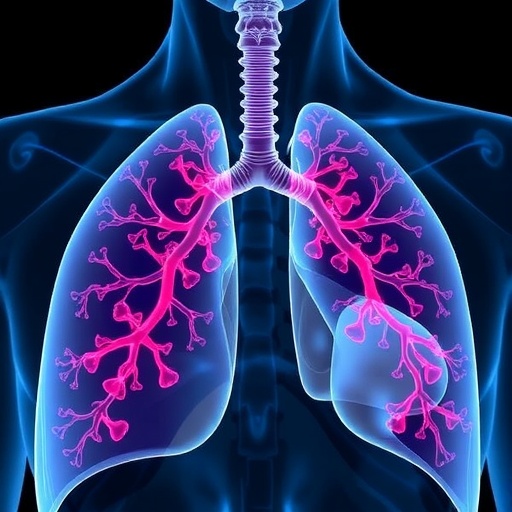
In a groundbreaking study that promises to reshape therapeutic strategies for non-small cell lung cancers (NSCLC), researchers at The Ohio State University Comprehensive Cancer Center – Arthur G. James Cancer Hospital and Richard J. Solove Research Institute (OSUCCC – James) have uncovered critical insights into tumor resistance mechanisms that hinder effective treatment. Published in the esteemed journal Science Translational Medicine, this work elucidates the intricate relationship between lysosomal function, glucose metabolism, and tumor survival pathways, offering hope for patients whose tumors do not respond to current immunotherapy protocols.
Non-small cell lung cancers, particularly squamous cell carcinoma and adenocarcinoma subtypes, have long posed a staggering challenge for oncologists. While immunotherapy has revolutionized treatment paradigms in recent years, a substantial fraction of patients either fails to respond or eventually develops resistance, underscoring the urgent need for novel approaches. The OSUCCC – James team focused their investigation on the lysosome, a cellular organelle integral to maintaining cellular equilibrium through nutrient recycling and metabolic regulation, and a protein known as SREBP-1, a master regulator of lipid and glucose metabolism within tumor cells.
Previous attempts to suppress tumor growth through lysosomal inhibition — employing drugs such as chloroquine (CQ) — have yielded only modest success. Such therapies aim to disrupt the tumor’s metabolic adaptability by impairing lysosome activity, thereby limiting nutrient access necessary for unchecked proliferation. However, tumors have consistently demonstrated an uncanny ability to circumvent such interventions, maintaining metabolic fluxes and promoting survival despite therapeutic pressure. This study provides the first evidence that tumor cells activate a compensatory glucose-lipid metabolic feedback loop mediated by SREBP-1, effectively blunting the impact of lysosomal inhibitors.
At the heart of the discovery is a complex signaling cascade wherein SREBP-1 not only enhances glucose uptake but also orchestrates lipid biosynthesis pathways that cooperate to sustain tumor growth. By increasing glucose flux into the cancer cells, SREBP-1 counterbalances the metabolic disruption caused by lysosomal inhibition, facilitating mitochondrial resilience, and reducing oxidative stress-induced apoptosis. This metabolic plasticity confers a survival advantage, rendering single-agent lysosomal inhibitors insufficient.
The researchers employed sophisticated preclinical models involving both cell cultures and animal subjects to unravel this mechanism. They demonstrated that combining lysosomal inhibitors with agents that simultaneously disrupt glucose transport can induce mitochondrial dysfunction, heighten oxidative stress, and trigger extensive tumor cell death. This dual targeting strategy effectively dismantles the metabolic safety net tumors rely on in the face of lysosomal suppression.
“Our findings reveal an unanticipated metabolic crosstalk and regulatory loop that tumors exploit to withstand lysosomal-targeted therapy,” explained Deliang Guo, PhD, founding director of the Center for Cancer Metabolism at OSUCCC – James and corresponding author of the study. “By intervening at multiple metabolic nodes, particularly glucose and lipid metabolism along with lysosomal activity, we can strategically dismantle tumor defenses and enhance therapeutic efficacy.”
This metabolic feedback loop is significant not just for lung cancers but potentially for a broad spectrum of malignancies characterized by elevated metabolic demands. Tumors with aggressive phenotypes often exhibit heightened uptake of glucose and lipids, which fuels their rapid growth and resistance to stress. Targeting the metabolic flexibility of tumors thus emerges as an innovative avenue to overcome resistance mechanisms that have stymied conventional therapies.
Yaogang Zhong, PhD, senior author and lead researcher on the project, emphasized the clinical relevance: “This approach holds particular promise for patients with lung squamous cell carcinoma and specific subsets of adenocarcinoma who lack actionable genetic mutations, leaving them with limited treatment options. The combinatorial therapeutic strategy we propose harnesses existing drugs with well-established safety profiles, expediting the bench-to-bedside transition.”
Indeed, both chloroquine and simvastatin — commonly used in clinical settings for malaria and cholesterol management respectively — are repurposed drugs that the study utilized. Furthermore, the fatty acid synthesis inhibitor TVB-2640, already in advanced phase II/III clinical trials, complements this triple-pronged assault on tumor metabolic machinery. The convergence of these agents into a cohesive treatment protocol highlights the translational potential of the findings.
Mechanistically, glucose transporter inhibition amplifies mitochondrial vulnerability by preventing the energy substrate influx required for survival during lysosomal stress. This mitochondrial damage precipitates oxidative stress, destabilizing tumor cell homeostasis and culminating in apoptosis. Simultaneously, lipid metabolism disruption interrupts membrane biogenesis and signaling lipid production essential for tumor viability, collapsing the compensatory metabolic loop.
This research not only deepens fundamental understanding of cancer metabolism but also advocates for integrated therapeutic regimens that consider the networked nature of tumor survival pathways. By exploiting the metabolic dependencies of tumors, combinations that target lysosomal pathways in concert with glucose and lipid metabolic circuits can yield robust antitumor responses.
As the metabolic landscape of cancer cells continues to be an ever-expanding frontier, these findings illuminate new targets and strategies to counteract the adaptability that makes tumors so formidable. The study thus marks a pivotal advance in precision oncology, setting the stage for clinical trials that could redefine treatment standards for patients with refractory lung cancers.
Future investigations are poised to explore the applicability of this metabolic combination approach to other cancer types exhibiting metabolic plasticity. Moreover, understanding the precise molecular interactions within the glucose-lipid-lysosome axis may uncover additional therapeutic targets and biomarkers predictive of treatment response.
In conclusion, this seminal study spearheaded at OSUCCC – James offers a compelling roadmap to outmaneuver NSCLC resistance by dismantling a metabolic feedback loop critical for tumor persistence. Through strategic combination therapies that are already clinically accessible, there is renewed hope to significantly improve outcomes for patients battling some of the most aggressive and treatment-resistant lung cancers.
News Publication Date: 28-Jan-2026
Web References:
https://cancer.osu.edu
https://pubmed.ncbi.nlm.nih.gov/41604461/
Cite Scienmag News
Nathaniel Bowman. (March 5, 2026). Research Highlights Promising New Therapies for Difficult-to-Treat Lung Cancers. Scienmag. https://scienmag.com/research-highlights-promising-new-therapies-for-difficult-to-treat-lung-cancers/
Nathaniel Bowman. "Research Highlights Promising New Therapies for Difficult-to-Treat Lung Cancers." Scienmag, 5 March 2026, https://scienmag.com/research-highlights-promising-new-therapies-for-difficult-to-treat-lung-cancers/. Accessed 3 September 2026.
Nathaniel Bowman. "Research Highlights Promising New Therapies for Difficult-to-Treat Lung Cancers." Scienmag. March 5, 2026. https://scienmag.com/research-highlights-promising-new-therapies-for-difficult-to-treat-lung-cancers/


