


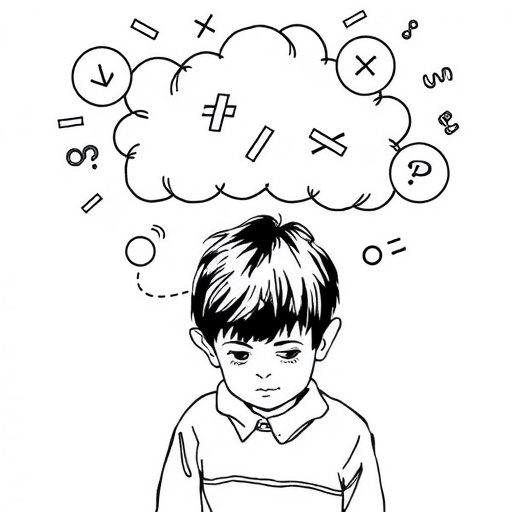
In recent years, the intricate relationship between repetitive negative thinking (RNT) and mental health disorders has garnered substantial attention from the psychological research community. A groundbreaking correction published in BMC Psychology by Li, K., Ren, L., Li, X., and colleagues advances our understanding of how RNT functions within the transdiagnostic framework of depression and anxiety in children. This comprehensive exploration delves into how repetitive negative thinking serves as a core cognitive mechanism bridging these two prevalent and often comorbid psychological conditions, thereby shedding new light on diagnostic and therapeutic avenues.
Repetitive negative thinking, characterized by persistent and intrusive focus on negative themes, has long been identified as a critical factor contributing to the onset and maintenance of depressive and anxious symptomatology. However, its precise role across diagnostic boundaries remains ambiguous. The correction article by Li et al. amplifies previous findings by rigorously analyzing RNT’s transdiagnostic value in childhood mental health, emphasizing that RNT is not merely a symptom but a potentially causal process underlying multiple disorders.
One of the cardinal challenges in child psychopathology lies in differentiating overlapping symptoms of anxiety and depression. This diagnostic complexity has prompted researchers to adopt transdiagnostic perspectives, seeking underlying processes common to several disorders rather than focusing solely on disorder-specific symptoms. Li and colleagues’ work represents a significant stride toward this paradigm by investigating the repetitive negative thinking dimension, which transcends conventional diagnostic categories and may represent a unified treatment target.
Central to this inquiry is the cognitive model proposing that RNT reflects maladaptive cognitive processing patterns involving rumination and worry. Rumination typically pertains to repetitive focus on past negative experiences, while worry involves anticipatory concerns about future threats. The study’s in-depth assessment of these components in children highlights their synergistic effects in fostering and perpetuating depressive and anxious states, which are often intertwined.
Furthermore, the correction underscores methodological advancements that fortify the robustness of findings in this domain. Utilizing longitudinal designs coupled with sophisticated statistical modeling, the researchers trace developmental trajectories of RNT, offering nuanced insights into how these cognitive patterns evolve and encode vulnerability over time. Their approach advocates for the early identification of at-risk children exhibiting elevated RNT levels, which may herald subsequent clinical manifestations.
The implications of viewing RNT through a transdiagnostic lens are profound for clinical intervention frameworks. Traditional cognitive-behavioral therapies (CBT) often distinguish treatment protocols based on discrete diagnoses. In contrast, targeting RNT may enable clinicians to implement more holistic, efficient interventions capable of addressing both anxiety and depression concurrently. Li et al.’s article reinforces this by showing that therapeutic reduction of RNT correlates with symptomatic improvements across both disorder spectra.
Moreover, the developmental specificity presented in the study accentuates unique challenges in child populations compared to adults. Children’s cognitive capacities, emotional regulation skills, and social contexts dynamically interact with RNT processes. Consequently, tailored interventions that accommodate these developmental factors are essential. The correction notes the necessity for age-appropriate modifications in assessment tools and therapeutic techniques to optimize outcomes.
This article also reflects on the neurobiological substrates implicated in repetitive negative thinking. Emerging neuroscientific evidence points toward dysregulation in networks governing self-referential thought and executive control, such as the default mode and frontoparietal networks. Li and colleagues discuss how their psychological findings align with neurobiological models, suggesting integrative pathways for future interdisciplinary research.
Importantly, the correction highlights the need to understand environmental and contextual determinants influencing RNT in children. Factors such as familial stress, peer dynamics, and exposure to adverse events can exacerbate or mitigate the expression of repetitive negative thoughts. Unpacking these moderating variables enriches the transdiagnostic framework and points toward comprehensive prevention strategies.
Ethical considerations also surface in this research domain, as addressing mental health in vulnerable child populations necessitates sensitive measurement practices and safeguarding against stigmatization. Li et al. reassure that their methodological corrections reinforce ethical rigor, ensuring accuracy and minimizing harm in both research and clinical contexts.
The study’s contribution extends into public health policy by advocating for early screening programs focusing on cognitive risk factors like RNT. Such initiatives could revolutionize the way mental health resources are allocated, potentially reducing the burden of child depression and anxiety through timely intervention.
At the intersection of cognitive science, developmental psychology, and clinical practice, the correction by Li and colleagues invigorates a rapidly expanding scientific conversation. It epitomizes how precision in conceptual frameworks and empirical rigor can illuminate the complex underpinnings of mental health disorders, ultimately fostering more effective treatment paradigms.
While the article is technical and rooted in heavy empirical analysis, its broader narrative resonates with the urgent need to innovate in childhood mental health care. By framing repetitive negative thinking as a pivotal transdiagnostic process, this work challenges conventional siloed approaches and beckons a new era of integrated psychological research and intervention.
Given the global prevalence of depression and anxiety among children and adolescents, understanding mechanisms like RNT is not merely an academic exercise; it is a public health imperative. The corrected findings published in BMC Psychology provide valuable, actionable knowledge capable of transforming current strategies to alleviate psychological distress across youth populations worldwide.
In summation, this correction article represents a landmark contribution to the science of child psychopathology. It offers a rigorous, methodologically sound depiction of repetitive negative thinking’s transdiagnostic role, casting light on pathways that cut across traditional diagnostic boundaries. The future of mental health care for children hinges on such innovative research that bridges cognitive, developmental, neurobiological, and environmental perspectives.
Cite Scienmag News
Glenn Wilkins. (September 25, 2025). Repetitive Negative Thinking in Childhood Depression, Anxiety. Scienmag. https://scienmag.com/repetitive-negative-thinking-in-childhood-depression-anxiety/
Glenn Wilkins. "Repetitive Negative Thinking in Childhood Depression, Anxiety." Scienmag, 25 September 2025, https://scienmag.com/repetitive-negative-thinking-in-childhood-depression-anxiety/. Accessed 4 September 2026.
Glenn Wilkins. "Repetitive Negative Thinking in Childhood Depression, Anxiety." Scienmag. September 25, 2025. https://scienmag.com/repetitive-negative-thinking-in-childhood-depression-anxiety/


