


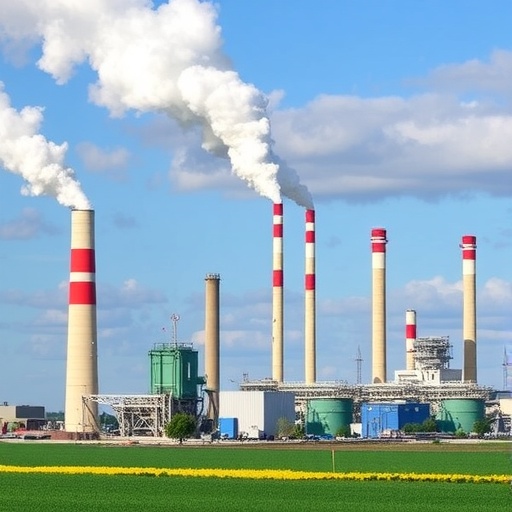
Renewable-fuelled plant factories (RFPFs) represent a revolutionary approach to agriculture, leveraging cutting-edge technology to enhance food production while addressing significant environmental concerns. Recent studies emphasize the urgent need for innovative solutions to meet the ever-increasing global demand for food, particularly in densely populated regions. In China, a country facing immense pressure to provide sufficient vegetables for its vast population, RFPFs emerge as a promising solution. These facilities, powered by renewable energy, not only aim to fulfill dietary demands but also seek to do so in an environmentally responsible manner.
Geospatial analysis plays a pivotal role in the deployment of RFPFs across China’s 369 city-level regions. The multidimensional approach facilitates a comprehensive understanding of the geographic and demographic factors that influence vegetable demand. It assesses not just the potential supply of vegetables but also the infrastructural needs required to create a functioning network of plant factories. This analysis provides a vital roadmap for policymakers and stakeholders, enabling them to make informed decisions regarding the establishment and location of these sustainable food production systems.
The implementation of RFPFs can yield significant advantages, particularly in a cross-city framework. This approach promotes collaboration between different cities, enhancing the overall efficiency of the food supply chain. By leveraging shared resources and optimizing production capabilities, RFPFs can achieve a remarkable reduction in the land required for traditional agriculture, saving an astounding 51,390 square kilometers of cropland. This not only alleviates pressure on arable land but also contributes to preserving biodiversity and reducing habitat destruction.
However, while RFPFs offer numerous benefits in terms of land use and efficient vegetable production, they are not without challenges. A critical concern is the increase in greenhouse gas emissions associated with their establishment. Studies indicate that RFPFs can emit greenhouse gases at rates 1.99 to 2.55 times higher than conventional agriculture, primarily due to the energy-intensive processes involved in manufacturing power modules and constructing facilities. This dilemma highlights the need for a balanced approach that prioritizes both food production efficiency and environmental sustainability.
Mitigating the greenhouse gas emissions associated with RFPFs is essential for their long-term viability. Transitioning to low-carbon pathways emerges as a critical strategy to address this challenge. By adopting renewable energy sources and incorporating energy-efficient technologies, RFPFs can drastically reduce their carbon footprints. Research demonstrates that implementing low-carbon strategies can lead to a reduction of up to 70% in emissions, paving the way for RFPFs to operate within environmentally sustainable parameters. This transition is crucial not just for compliance with environmental standards but for the overall acceptance and success of RFPFs in the broader agricultural landscape.
As the world grapples with the pressing issue of climate change, the urgency of implementing sustainable agricultural practices becomes increasingly evident. RFPFs stand at the forefront of this agricultural revolution, where innovation and sustainability intersect. They provide an opportunity to rethink traditional food production systems through advanced technologies that can be integrated into urban environments, ultimately reshaping how societies think about agriculture and food supply.
Moreover, the overall cost structure of RFPFs is competitive, standing at an affordable 5.88 Chinese Yuan per kilogram. This aspect underscores the economic viability of renewable-fuelled plant factories. Lower costs combined with sustainable practices can incentivize broader adoption among consumers and investors alike. As urban populations continue to grow, the integration of RFPFs into these areas could transform food distribution networks, making them more efficient and resilient against external shocks, such as pandemics or climate-induced disasters.
The urgency of adopting RFPFs is particularly pressing given the backdrop of increasing food insecurity. With global populations expected to rise significantly in the coming decades, ensuring sufficient food supply chains is paramount. RFPFs can serve as a critical buffer against food shortages, especially in urban settings where space is limited and traditional agricultural methods are impractical. They offer a scalable solution that can be tailored to meet local needs while minimizing the ecological footprint of food production.
In addition to their practical benefits, RFPFs also present an opportunity for community engagement and education. By positioning these facilities within urban areas, they can serve as educational hubs, promoting awareness about food production, sustainability, and the importance of reducing individual carbon footprints. Engaging local communities in the operations of RFPFs can foster a culture of sustainability and encourage collective efforts toward environmental stewardship.
Despite the promise that RFPFs hold for the future of food production, their successful implementation will hinge upon collaborative efforts among various stakeholders. Governments, academic institutions, and private enterprises must work together to develop the necessary regulatory frameworks, financial incentives, and technological support to create an ecosystem conducive to the growth of these facilities. Research institutions can play a crucial role in advancing the technology behind RFPFs and providing critical insights into their ecological impacts and operational efficiencies.
In summary, renewable-fuelled plant factories represent a vital innovation in the quest for sustainable food production. They offer numerous benefits, including significant land savings and competitive pricing, but also pose challenges related to greenhouse gas emissions. The path forward involves a commitment to low-carbon transitions and collaborative efforts across multiple sectors. Moving ahead, it is clear that RFPFs could transform agriculture as we know it, enabling societies to produce food more sustainably while also addressing the pressing challenges posed by climate change and urbanization.
Therefore, embracing this approach not only aligns with the objectives of sustainable development but also ensures that future generations can enjoy food security in a rapidly changing world. With the right strategies in place, renewable-fuelled plant factories may well signify the future of efficient, resilient food production systems, paving the way for a new chapter in how we cultivate and consume food globally.
Wang, Y., Wang, C., Chen, C. et al. Renewable-fuelled plant factories ensure large-scale food supply but require low-carbon transition for environmental gains.
Nat Food (2025). https://doi.org/10.1038/s43016-025-01240-w
Cite Scienmag News
Ophelia Keating. (October 11, 2025). Renewable-Fueled Plant Factories Demand Low-Carbon Transition. Scienmag. https://scienmag.com/renewable-fueled-plant-factories-demand-low-carbon-transition/
Ophelia Keating. "Renewable-Fueled Plant Factories Demand Low-Carbon Transition." Scienmag, 11 October 2025, https://scienmag.com/renewable-fueled-plant-factories-demand-low-carbon-transition/. Accessed 3 September 2026.
Ophelia Keating. "Renewable-Fueled Plant Factories Demand Low-Carbon Transition." Scienmag. October 11, 2025. https://scienmag.com/renewable-fueled-plant-factories-demand-low-carbon-transition/


