


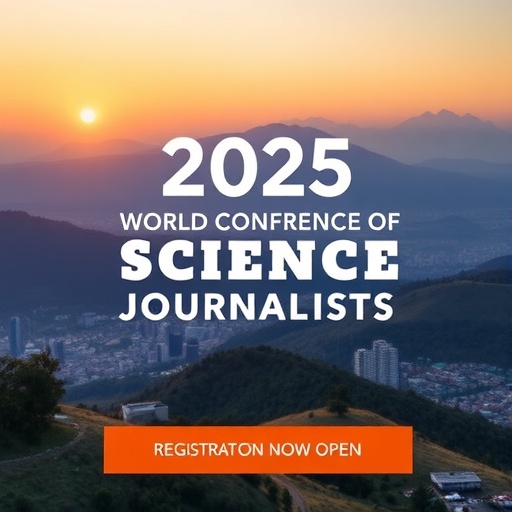
Registration is now open for the World Conference of Science Journalists 2025 (WCSJ2025), which will be hosted from December 1st to 5th at the CSIR International Convention Centre in Pretoria, South Africa. This highly anticipated biennial event represents the largest global gathering of science journalists, science communicators, and scientists eager to elevate their craft, share knowledge, and network with peers across continents. Notably, WCSJ2025 marks the first time this prestigious conference is held on African soil, underscoring the continent’s growing prominence in science and technology discourse.
The conference’s overarching theme, “Science journalism and social justice: journalism that builds understanding and resilience,” reflects the urgent need for robust and ethically grounded science communication in today’s complex social and political landscape. In an era marked by accelerating climate crises, widespread misinformation, and increasing societal polarization, science journalists play a critical role in bridging the gap between scientific knowledge and public understanding, especially in marginalized communities vulnerable to social and environmental injustices.
Participants at WCSJ2025 can expect a comprehensive programme featuring seminars, panel discussions, and workshops that tackle pressing issues such as the wellbeing of individuals and the planet, the evolving state of the journalism profession, the nuanced art of communicating complex science, and strategies to combat misinformation, disinformation, and the proliferation of fake news. These sessions are designed not just to inform but also to equip science communicators with practical tools and ethical frameworks necessary for responsible reporting.
One of the conference highlights will be a session titled “Bringing social justice into ocean science reporting.” This discussion emphasizes the multifaceted threats facing the world’s oceans — climate change, overfishing, pollution, and biodiversity loss — while spotlighting emerging industrial activities such as deep-sea mining and marine geoengineering. The session advocates for including the voices of those communities disproportionately affected by environmental degradation and examines the scientific rigor required to report accurately on these issues. Panelists hail from diverse geographies, including Australia, South Africa, India, and the USA, reflecting a truly global perspective.
Another critical session, “When industry endangers health and ecosystems,” explores how science journalism can serve as a powerful weapon against environmental injustices perpetrated by polluting industries. The panel will delve into methodologies for safely exposing environmental hazards, transforming complex datasets into compelling evidence, and amplifying the voices of marginalized populations. By showcasing real-world examples, the session aims to inspire journalists to utilize investigative techniques that can pressure policymakers and industry leaders toward meaningful reforms.
Artificial Intelligence’s dual role in journalism is scrutinized in the session “AI – Friend or Foe?” Emerging AI technologies are revolutionizing how investigative reporting is conducted by automating data analysis, enhancing fact-checking capabilities, and detecting digital fabrications like deepfakes. Simultaneously, AI tools can be weaponized to spread sophisticated disinformation campaigns that threaten the integrity of newsrooms and public trust. This session will provide insights into how journalists navigate this paradox, leveraging AI’s strengths while mitigating its risks.
WCSJ2025 also addresses the increasingly fraught environment for science journalists reporting in conflict zones and under authoritarian regimes. The session entitled “Reporting under fire: science journalism in conflict zones and authoritarian regimes” offers critical strategies for resilience and risk mitigation in politically repressive contexts. Journalists from countries such as Yemen, Lebanon, and Nigeria will share firsthand experiences of confronting censorship, security threats, and digital suppression while striving to report on climate change, public health emergencies, and technological developments.
As misinformation continues to hinder effective climate action, the conference dedicates a session to “Challenging times: Communicating about climate change when politics promotes denial and misinformation.” Amid 2024’s confirmation as the hottest year on record, science journalists must navigate a landscape rife with denialist narratives fueled by fake news and vested economic interests. This session will investigate the essential role of science communication in reinforcing evidence-based discourse and dismantling climate denialism through transparent, accessible storytelling.
Africa’s burgeoning prominence in astronomy will be spotlighted in “Telling the stories of astronomy in Africa.” With South Africa at the forefront of global astronomical endeavors, hosting the largest share of the Square Kilometre Array (SKA) and housing major instruments such as the Southern African Large Telescope (SALT), the session will explore the challenges and triumphs of covering “big science” projects on the continent. Speakers will discuss the intersection between scientific ambition, funding politics, and the imperative to make complex cosmic discoveries relatable to the public.
The conference’s organizers, including the South African Science Journalists’ Association (SASJA), the Science Diplomacy Capital for Africa (SDCfA), and the National Department of Science, Technology and Innovation (DSTI), in collaboration with the Council for Scientific and Industrial Research (CSIR), have curated this event with an eye toward fostering a vibrant dialogue between science communicators and the communities they serve. Their commitment ensures that WCSJ2025 is not only a platform for exchanging scientific knowledge but also a catalyst for social change.
WCSJ2025 offers delegates a chance to participate in an engaging roster of activities beyond the lecture halls. Attendees can explore excursions that showcase South Africa’s scientific heritage, rich biodiversity, and cultural treasures, thereby deepening their appreciation for local contexts where science impacts everyday life. These immersive experiences complement the core programming, underscoring the conference’s holistic approach to science communication.
By bringing together a diverse assembly of journalists, scientists, and communicators from around the world, the World Conference of Science Journalists 2025 promises to set new standards in ethical, impactful, and socially aware science journalism. This forum is uniquely poised to inspire participants to develop innovative storytelling approaches and to build resilience against the pressures of an often turbulent media environment.
Registration information and further details regarding the programme and speakers are available on the official WCSJ2025 website. For science communicators seeking to amplify the reach and impact of their work while engaging with cutting-edge issues and peer networks, this conference is an indispensable opportunity not to be missed.
Cite Scienmag News
Courtney Benton. (September 3, 2025). Registration Now Open for the 2025 World Conference of Science Journalists in South Africa. Scienmag. https://scienmag.com/registration-now-open-for-the-2025-world-conference-of-science-journalists-in-south-africa/
Courtney Benton. "Registration Now Open for the 2025 World Conference of Science Journalists in South Africa." Scienmag, 3 September 2025, https://scienmag.com/registration-now-open-for-the-2025-world-conference-of-science-journalists-in-south-africa/. Accessed 4 September 2026.
Courtney Benton. "Registration Now Open for the 2025 World Conference of Science Journalists in South Africa." Scienmag. September 3, 2025. https://scienmag.com/registration-now-open-for-the-2025-world-conference-of-science-journalists-in-south-africa/


