

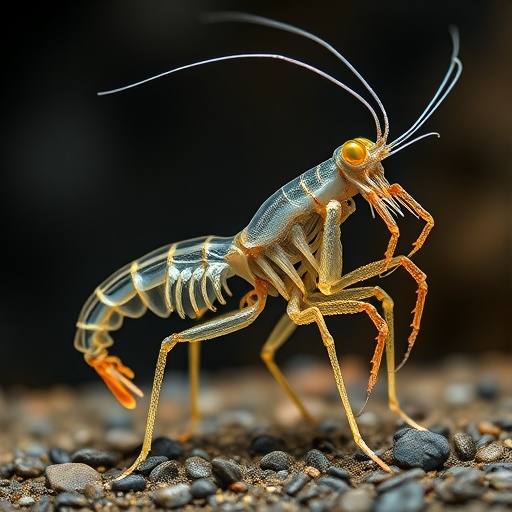
In a groundbreaking study led by researchers Y. Otomo, R. Kimbara, and K. Oguchi, the intricacies of body segmentation in the skeleton shrimp, Caprella scaura, have been scrutinized, revealing significant evolutionary insights into its internal anatomy. This study marks a pivotal advancement in our understanding of the Caprelloidea superfamily within the Amphipoda order. By delving deep into the comparative anatomy of these fascinating crustaceans, the researchers aim to elucidate the factors influencing their morphological adaptations.
Body segmentation is a critical feature in the evolutionary biology of many arthropods, impacting locomotion, feeding, and reproductive strategies. Caprella scaura, commonly referred to as skeleton shrimp, showcases a remarkable reduction in body segmentation compared to its relatives. This research seeks to uncover the evolutionary pathways leading to this distinct anatomical feature. The study’s findings not only emphasize the diversity within the Caprellidae family but also the adaptive significance of reduced segmentation in specific environmental contexts.
One of the central focuses of Otomo and her colleagues is how morphological changes can represent evolutionary responses to ecological pressures. The significance of understanding body segmentation lies in its relationship to both functionality and adaptability. The skeleton shrimp, characterized by its elongated body and peculiar morphology, presents a unique model for investigating these evolutionary trends. Through intricate analyses, the researchers compare the skeletal structures of C. scaura with closely related species, shedding light on the evolutionary mechanisms at play within the Caprelloidea superfamily.
The research highlights the concept of morphological trade-offs, where certain anatomical adaptations may confer both advantages and disadvantages to survival. The reduced body segmentation observed in C. scaura might allow for enhanced flexibility and maneuverability in complex marine environments, where navigating through obstacles becomes crucial. By focusing on internal anatomy and the functional implications of segmentation reduction, the study opens a new dialogue on how anatomical configurations influence ecological interactions and evolutionary trajectories.
Through meticulous dissection and comparative anatomical studies, the researchers have provided detailed insights into the muscle and skeletal arrangements within C. scaura. This methodological approach is significant, as it transcends mere observation and ventures into the realm of functional morphology. The findings support the hypothesis that the reduced segmentation is not just a physical trait but rather a product of sophisticated evolutionary processes driven by environmental demands. The implications of such a transformation can alter our perceptions of evolutionary strategies among marine organisms.
In examining the internal anatomy of this species, the researchers discovered distinctive muscle arrangements that align with enhanced locomotory capabilities. The restructuring of internal musculature, alongside a reduction in external segmentation, suggests a convergence of form and function that ensures the viability of C. scaura within its ecological niche. Such findings contribute to a growing body of literature that links anatomical adaptations to specific ecological roles, highlighting the importance of morphology in the survival of species.
Moreover, the study discusses the implications for taxonomic classifications within the Caprellidae family. Anomalies in body segmentation can indicate diverging evolutionary paths and challenge established taxonomic relationships. The researchers advocate for a reevaluation of how we classify and understand the evolutionary history of these marine crustaceans. As our knowledge evolves, so too will our frameworks for interpreting the complexity of life histories among marine organisms.
The breakthroughs in this research also underscore the potential for further exploration of the evolutionary narrative of crustaceans. By utilizing an integrative approach combining genetics, ecology, and anatomy, future studies may uncover additional layers of evolutionary significance that remain uncovered. As scientists continue to unravel the complexities of evolutionary biology, studies like this pave the way for a deeper appreciation of biodiversity and the intricate histories that shape it.
With implications that extend beyond the realm of anatomy and ecology, findings from this study may inform conservation strategies for marine species facing environmental changes. Understanding the evolutionary adaptations of organisms like C. scaura can provide critical insights that inform how to manage and protect biodiversity in rapidly changing ecosystems. As marine habitats continue to shift, research on evolutionary flexibility and morphological adaptation will become increasingly vital.
Ultimately, Otomo and her team have not only revealed fundamental truths about the body segmentation of Caprella scaura but also have sparked a renewed interest in the comparative anatomy of crustaceans. Their work serves as a reminder of the intricate connections between anatomy, environment, and evolutionary pressure. As we delve deeper into our planet’s biological diversity, studies such as these illuminate the remarkable tapestries of life and the evolutionary stories they tell.
The revelations regarding C. scaura will undoubtedly encourage further academic inquiry into the Caprelloidea superfamily. With each discovery, we inch closer to understanding the complex relationships that define our natural world. Continued research will foster greater insights not just into crustaceans but into the broader narrative of life on Earth, and how it adapts to survive and thrive amid changing environments.
As this monumental study inspires further research and inquiry, it stands as a testament to the unending quest for knowledge within the scientific community, bridging gaps between disciplines and fostering collaborations. In essence, the journey of unraveling the evolutionary secrets of Caprella scaura has just begun, and its implications will reverberate throughout the fields of biology and ecology for years to come.
Subject of Research: Body segmentation in the skeleton shrimp Caprella scaura
Article Title: Reduction of body segmentation in the skeleton shrimp Caprella scaura (Amphipoda: Caprellidae) inferred from comparative internal anatomy of Caprelloidea.
Article References:
Otomo, Y., Kimbara, R., Oguchi, K. et al. Reduction of body segmentation in the skeleton shrimp Caprella scaura (Amphipoda: Caprellidae) inferred from comparative internal anatomy of Caprelloidea. Sci Nat 113, 20 (2026). https://doi.org/10.1007/s00114-026-02072-9
Image Credits: AI Generated
DOI:
Keywords: Evolution, body segmentation, comparative anatomy, Caprella scaura, Caprellidae, morphological adaptations, evolutionary biology.


