


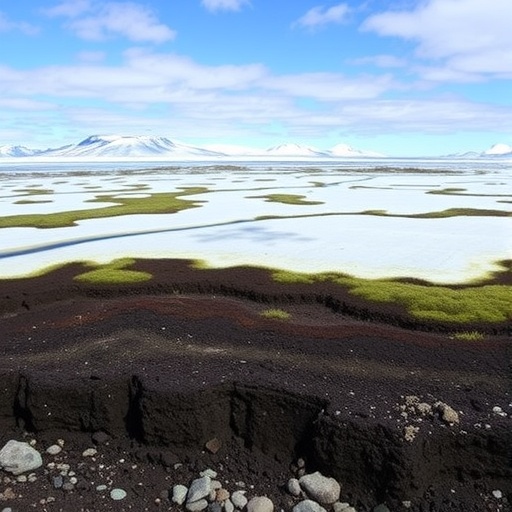
In a groundbreaking study set to leave a lasting impact on our understanding of permafrost dynamics, researchers have delved into the increasingly critical subject of redox potential in Alaskan soils. The study, led by Liebmann, Vogel, and Kholodov, investigates the perennial fluctuations of redox potential in both degraded and non-degraded permafrost soils. This research is crucial as it sheds light on the underlying processes occurring in these environments, which are significantly influenced by climate change.
As the Arctic warms at an alarming rate, permafrost—permanently frozen ground—begins to thaw, revealing the intricate relationships between soil health, microbial activity, and nutrient cycling. The redox potential, or the tendency of a soil to either gain or lose electrons, plays a vital role in determining the biological and chemical processes that occur within these ecosystems. This study uniquely addresses how these redox dynamics differ between degraded and non-degraded permafrost, providing insights that extend beyond regional implications to global ecological impacts.
Understanding redox potential can help scientists and policymakers predict the release of greenhouse gases such as carbon dioxide and methane, both of which are potent climate change agents. The conversion of iron and manganese oxides in soil, for example, is tightly linked to redox conditions and microbial community dynamics. The study emphasizes that even subtle variations in redox potential can have significant consequences for nutrient availability, microbial communities, and, consequently, soil productivity and greenhouse gas emissions.
Researchers employed meticulous fieldwork techniques, collecting extensive soil samples from various regions across Alaska. These samples enabled them to compare the redox potential in sites with different degradation levels. Notably, their findings revealed that degraded permafrost soils exhibited lower redox potential compared to their non-degraded counterparts. This discrepancy underscores the impact of anthropogenic pressures and climate variability on redox dynamics, highlighting the urgent need for targeted conservation efforts.
The study also discusses the implications of these findings for managing permafrost ecosystems and mitigating climate change. By recognizing the importance of redox potential in shaping microbial activity and greenhouse gas emissions, the authors suggest that future conservation strategies must take these factors into account. Elevating our understanding of soil redox dynamics offers a more nuanced view of how permafrost systems respond to environmental stressors, ultimately aiding in the development of more effective climate change mitigation strategies.
Moreover, the study highlights the interconnectedness of terrestrial and atmospheric systems, revealing how shifts in soil chemistry and microbiology can influence global carbon cycles. While previous research has focused primarily on the physical aspects of permafrost dynamics, this new wave of findings emphasizes the need for an integrated approach that considers biogeochemical interactions. The importance of redox potential in this context cannot be overstated; it stands as a pivotal factor in shaping the future landscape of Arctic ecosystems.
Additionally, the authors underscore the potential for climate feedback loops driven by permafrost degradation. As redox potential shifts due to thawing processes, the increased release of methane—a greenhouse gas far more potent than carbon dioxide—could exacerbate global warming. This creates a cycle that not only affects local ecosystems but also poses broader implications for global climate stability.
Scientists involved in this research believe that their findings will stimulate further studies, fostering a deeper understanding of how varying soil conditions under climate stress can alter microbial behavior and greenhouse gas emissions. This research could pave the way for innovative soil management practices that prioritize the maintenance of healthy redox dynamics, thereby contributing to both ecological health and climate change mitigation.
The intricate relationship between soil health and climate change is becoming increasingly apparent in scientific discourse. This study adds a crucial piece to the puzzle, providing evidence that the health of permafrost soils is essential not only for local biodiversity but also for the global climate system. As we continue to grapple with the reality of climate change, understanding these complex interactions will help guide future research and policy decisions.
Importantly, Liebmann and colleagues call attention to the need for interdisciplinary collaboration in future studies. By integrating knowledge from soil science, microbiology, and climate science, researchers can develop a holistic understanding of permafrost dynamics. This collaborative approach is essential to address the multifaceted challenges posed by climate change and to devise actionable strategies for preserving vulnerable ecosystems.
In conclusion, this study not only sheds light on the serious implications of permafrost degradation but also emphasizes the need for urgent action. With rising temperatures threatening these fragile ecosystems, understanding the dynamics of redox potential becomes imperative for anticipating ecological shifts and mitigating climate change impacts. The findings serve as a call to arms, urging scientists, practitioners, and policymakers alike to prioritize permafrost research and conservation efforts.
Through their diligent research, Liebmann, Vogel, and Kholodov have made significant strides in understanding the complexities of permafrost soil dynamics. The urgency of their findings reflects the growing consensus among scientists that immediate and concerted action is required to address the challenges posed by climate change. By keeping a close eye on redox potential dynamics, we can better navigate the treacherous waters ahead, ultimately safeguarding both local ecosystems and the planet at large.
The stakes have never been higher. As we continue to witness the ramifications of climate change, studies like this one will be essential in shaping our response strategies. Information gleaned from research on soil redox potential will allow us to create targeted initiatives aimed at preserving critical ecosystems, a necessary step in our fight against climate change and its pervasive effects.
Liebmann, P., Vogel, C., Kholodov, A. et al. Perennial redox potential dynamics in Alaskan degraded and non-degraded permafrost soils. Commun Earth Environ (2025). https://doi.org/10.1038/s43247-025-03143-x
Cite Scienmag News
Sloane Callahan. (December 30, 2025). Redox Potential Variations in Alaskan Permafrost Soils. Scienmag. https://scienmag.com/redox-potential-variations-in-alaskan-permafrost-soils/
Sloane Callahan. "Redox Potential Variations in Alaskan Permafrost Soils." Scienmag, 30 December 2025, https://scienmag.com/redox-potential-variations-in-alaskan-permafrost-soils/. Accessed 3 September 2026.
Sloane Callahan. "Redox Potential Variations in Alaskan Permafrost Soils." Scienmag. December 30, 2025. https://scienmag.com/redox-potential-variations-in-alaskan-permafrost-soils/


