


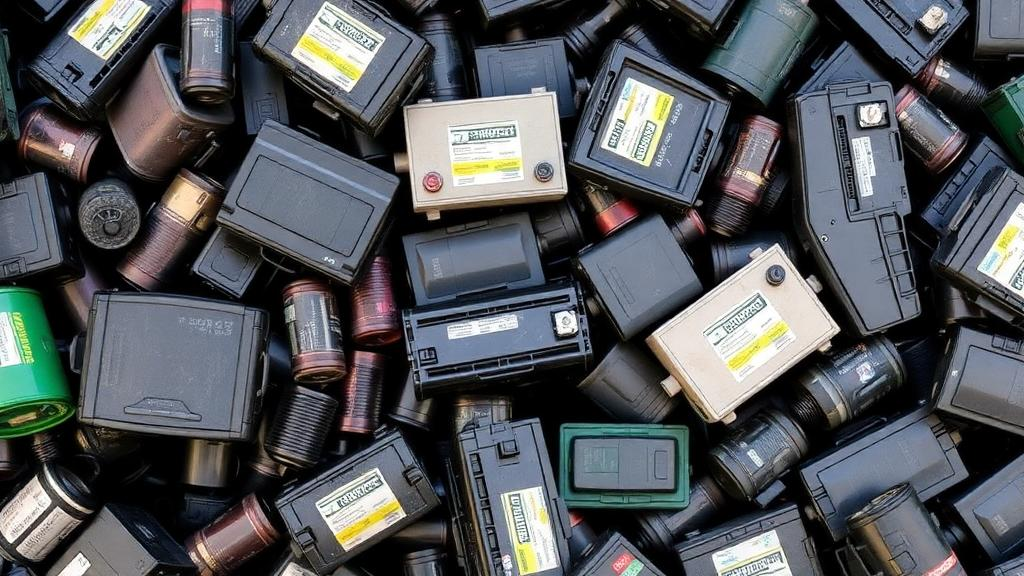
The electric vehicle revolution has a dirty secret buried in its success: every battery that powers a car today will one day become hazardous waste unless the world builds a recycling system capable of recovering its most precious ingredients. Now, a team of researchers in Thailand and the United Kingdom has delivered one of the most detailed economic and environmental audits yet of the crucial first step in that system — the production of so-called black mass, the dark powder of crushed cathode and anode material that holds the lithium, nickel, cobalt and graphite locked inside spent lithium-ion batteries. Their findings, published in iScience, suggest that a carefully engineered mechanical separation line can strip valuable material from dead batteries at a cost so low, and with a carbon footprint so modest, that the economics of battery recycling may be far more forgiving than critics have assumed.
The research, led by Tanongsak Yingnakorn and Sakhob Khumkoa of Suranaree University of Technology with collaborators including Andrew Abbott of the University of Leicester, tackles a gap that has long frustrated the recycling industry. Conventional recycling routes — pyrometallurgy, which smelts batteries at temperatures up to 1,700 degrees Celsius, and hydrometallurgy, which leaches metals with acids — have been studied extensively. But the upstream stage that feeds them, the mechanical shredding and sorting that concentrates the active electrode materials into black mass, has lacked rigorous paired assessments of cost and environmental impact. Without that baseline, engineers designing full recycling flowsheets have been working partly in the dark.
The team’s approach was refreshingly practical. They obtained donated post-consumer waste: a spent 13-kilogram electric vehicle battery module containing sixteen cells with a nickel-manganese-cobalt cathode, and roughly two kilograms of spent mobile phone batteries with lithium cobalt oxide cathodes. Safety came first. The EV module was discharged electrically, from about 28 volts down to below 0.1 volts, using a custom-built resistor bank. The phone cells, too small to wire individually, were immersed for 24 hours in a 10 percent salt solution — effective, but a choice that would later loom large in the environmental accounting. Electron microscopy and X-ray diffraction confirmed the EV cathode was close to the NMC622 composition, while the phone cells carried the classic cobalt-rich chemistry of consumer electronics.
With the batteries stabilized, the researchers fed them through a custom separation line combining three machines: a shredder that reduced everything to fragments under 10 millimeters, a zigzag air classifier that separates materials by density using a serpentine upward airflow, and a circular vibrating screen with a 500-micron mesh. Two processing routes were tested for each battery type, varying the order of screening and air classification. The verdict was clear. For EV modules, the route that screened first, then air-classified twice at motor frequencies of 23 and 55 hertz, recovered 93.28 percent of the available black mass. For phone cells, the analogous route achieved 75.77 percent. The shredded material was processed under a nitrogen purge to prevent reactions of the thermally unstable lithium hexafluorophosphate electrolyte, which can begin degrading below 40 degrees Celsius when exposed to moisture.
The quality of the recovered powder matters as much as the quantity, and here the results were striking. The EV black mass contained about 3.91 percent lithium, 15.02 percent nickel, 6.01 percent manganese, 7.41 percent cobalt and 53.7 percent carbon, with residual aluminum and copper held below 1 weight percent. The phone-derived powder carried 4.32 percent lithium and 30.95 percent cobalt, with 0.72 percent aluminum and 1.01 percent copper. Both comfortably meet commercial trading specifications, such as Fastmarkets’ thresholds of no more than 2 percent aluminum, copper or fluorine. X-ray diffraction showed the cathode crystal structures survived the mechanical journey intact — no phase transformations, no degradation — a critical point for any downstream process hoping to regenerate rather than merely dissolve the material.
Then came the money. The direct processing cost — electricity, nitrogen gas, and for the phone route, salt, water and hazardous waste disposal — came to just $0.11 per kilogram of EV battery input and $0.53 per kilogram for phone cells. Adding depreciation, labor and a 15 percent management overhead brought the loaded costs to $0.31 and $0.73 per kilogram respectively, far below the $2 to $6 per kilogram typical of pilot-scale processes. Against reference black mass prices of $14.22 per kilogram for NMC622 and $14.05 for lithium cobalt oxide, the baseline net profit was $6.89 per kilogram for EV modules and $8.23 for phone cells, assuming free feedstock. Even when the researchers modeled the realistic scenario of buying scrap on the open market — roughly $2.50 to $2.70 per kilogram in Southeast Asia — both routes remained solidly profitable.
A Monte Carlo simulation across five uncertain variables, from metal prices to plant utilization, reinforced the picture. The median net profit under combined uncertainty was $4.97 per kilogram for the EV route and $6.28 for phones, and the probability of the process losing money was 0.2 percent or less. Feedstock acquisition cost emerged as the dominant driver of profitability, dwarfing electricity prices and separation efficiency. The break-even feedstock price averaged $6.59 per kilogram for EV material — meaning current scrap prices would need to more than double before the flowsheet turned unprofitable. Notably, the phone route earned more per kilogram despite its lower separation efficiency, simply because phone batteries pack a higher proportion of active material and metal foil into every gram.
The life cycle assessment told a more nuanced story. Processing one kilogram of battery waste generated just 0.210 kilograms of carbon dioxide equivalent for the EV route and 0.241 for phones — figures dominated almost entirely by electricity consumption. Because Thailand’s grid draws more than 75 percent of its power from gas and coal, location matters enormously: the researchers calculated that moving the same process to a low-carbon grid would cut the global warming potential by 62.8 percent, from 0.210 to 0.078 kilograms of carbon dioxide equivalent per kilogram of input. The phone route’s Achilles heel was the salt-solution discharge step. When waste treatment was included, its carbon footprint jumped to 2.377 kilograms of carbon dioxide equivalent and its freshwater ecotoxicity soared to nearly 17 CTUe, driven by the incineration of contaminated brine. Reusing the discharge solution for additional batches could cut those impacts by 45 to 60 percent.
The authors are candid about the limits. The runs were single batches of 13 and 2 kilograms on a line designed for 100 kilograms per hour; zigzag classifier efficiency is known to degrade at higher solids loadings, so the figures represent a proof of concept rather than validated industrial performance. The two discharge methods differ between feedstocks, complicating direct comparison, and the life cycle inventory assigns no burden to the 5.5 to 8.3 percent of material lost to dust, volatilized electrolyte and incomplete retrieval — a conservative omission, since that fraction may contain hazardous hydrogen fluoride. Fluorine content could not be quantified with the available instrumentation, and only one cathode chemistry per feedstock was tested.
Still, the study offers something the field has lacked: a fully paired techno-economic and environmental baseline for the same physical flowsheet applied to two structurally distinct battery streams under identical accounting boundaries. Its strategic logic is compelling. Mechanical separation cannot recover individual elements or rebuild cathodes on its own, but as a pre-treatment it delivers a high-grade, low-contamination concentrate at a fraction of the cost of competing routes, feeding hydrometallurgical leaching or direct regeneration with maximum efficiency. As cobalt prices rally and black mass payables hit record highs, and as regulators push extended producer responsibility schemes that pay recyclers to accept spent packs, the humble workhorse of the recycling chain — the shredder, the air classifier, the vibrating screen — may prove to be the quiet engine that makes the battery circular economy finally add up.
Subject of Research: Techno-economic and life cycle assessment of black mass production from spent lithium-ion batteries
Article Title: Baseline techno-economic and life cycle assessment of black mass production
Article References: Yingnakorn, T., Kansomket, C., Longbutsri, C., Scott, S., Patcharawit, T., Yang, J. M., Abbott, A. P., & Khumkoa, S. (2026). Baseline techno-economic and life cycle assessment of black mass production. iScience, 29(10), Article 117729. https://doi.org/10.1016/j.isci.2026.117729
Image Credits: AI Generated
DOI: 10.1016/j.isci.2026.117729
Keywords: lithium-ion battery recycling, black mass, electric vehicles, techno-economic analysis, life cycle assessment, hydrometallurgy, NMC cathode, mechanical separation, circular economy, critical metals, battery discharge, carbon footprint
Cite Scienmag News
Faith Mcneil. (October 2, 2026). Recycling’s Hidden Workhorse: How Black Mass Separation Could Make Battery Reuse Pay. Scienmag. https://scienmag.com/recyclings-hidden-workhorse-how-black-mass-separation-could-make-battery-reuse-pay/
Faith Mcneil. "Recycling’s Hidden Workhorse: How Black Mass Separation Could Make Battery Reuse Pay." Scienmag, 2 October 2026, https://scienmag.com/recyclings-hidden-workhorse-how-black-mass-separation-could-make-battery-reuse-pay/. Accessed 4 October 2026.
Faith Mcneil. "Recycling’s Hidden Workhorse: How Black Mass Separation Could Make Battery Reuse Pay." Scienmag. October 2, 2026. https://scienmag.com/recyclings-hidden-workhorse-how-black-mass-separation-could-make-battery-reuse-pay/


