


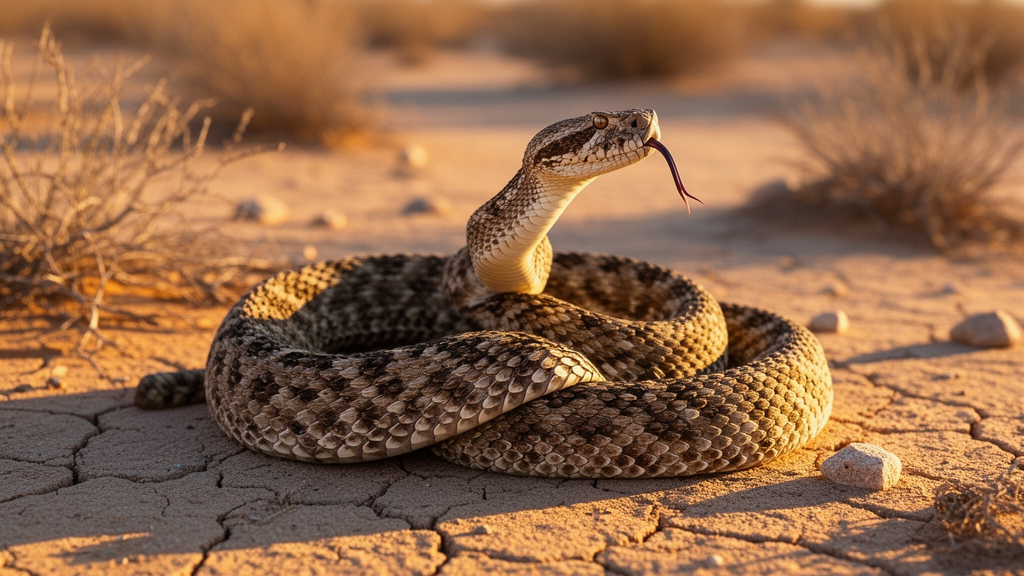
When a rattlesnake strikes in self-defense, it faces a biological dilemma that most animals never confront: every drop of venom it injects is a costly, finite resource that must be manufactured, stored, and rationed. A new study reveals that these snakes do not make that decision randomly. Instead, individual southern Pacific rattlesnakes display remarkably consistent personalities in how aggressively they strike and how much venom they expend, suggesting that even the deployment of a chemical weapon can be shaped by stable behavioral tendencies.
The research, published in the journal Frontiers in Ethology, was conducted by Chelsea E. Martin and William K. Hayes of Loma Linda University in California. The pair subjected 48 subadult and adult southern Pacific rattlesnakes (Crotalus oreganus helleri) to standardized venom extractions across three trials, each separated by roughly two weeks. Their goal was to determine whether the snakes showed repeatability—a hallmark of animal personality—in five distinct defensive behaviors: the number of strikes during restraint, whether they bit during extraction, the number of venom pulses delivered, the total volume of venom expended, and the volume of venom per pulse.
Animal personality, as defined in behavioral ecology, refers to consistent among-individual differences in behavior that persist across time and contexts, independent of factors like sex, age, or body size. While personality research has traditionally focused on axes such as boldness, exploration, and aggression, the authors of this study argue that venom deployment offers a unique window into how personality shapes what biologists call an extended phenotype—a trait expressed outside an organism’s body that influences its survival and reproduction. When a rattlesnake bites, it manipulates the physiology and behavior of its victim, effectively generating an extended phenotype through chemical means.
The experimental protocol was carefully designed to minimize confounding variables. Each snake was restrained in a clear plastic tube with its head extended, and the number of defensive strikes during this tubing process was recorded. A second investigator then grasped the snake’s head with metal tongs and encouraged it to bite a parafilm-covered beaker secured to a ring stand. The snakes were given 30 seconds to bite, and trials were recorded at 240 frames per second on a smartphone camera. Venom was collected with a micro-pipettor, centrifuged, frozen, and later measured using graduated pipets. Body temperature was recorded before each trial to account for its known influence on pitviper defensive behavior, and handling time was logged as a potential stressor.
The results were striking in their consistency. All five measured behaviors exhibited significant repeatability across trials, with repeatability coefficients ranging from 0.27 to 0.47—values the authors characterize as moderate. The highest repeatability was observed for the number of venom pulses (R = 0.47), while the lowest was for bite occurrence (R = 0.27), though the latter carried low confidence. Nearly half of the snakes (47.9 percent) never struck while being tubed, whereas about 10 percent struck during all three trials. Once secured against the beaker, all snakes bit the membrane during at least one trial, and two-thirds bit in every trial.
Beyond repeatability, the researchers identified several factors that influenced venom expenditure. Larger snakes expended more venom, a relationship that followed an exponential pattern—consistent with the fact that venom gland storage capacity expands in three dimensions as a snake grows in length. The number of venom pulses also significantly predicted total venom volume, with snakes delivering more pulses expending more venom. However, even after accounting for these morphological and behavioral factors, consistent among-individual differences persisted in all measured traits, indicating that personality-like variation in venom deployment is not simply a byproduct of size or pulse frequency.
Interestingly, the researchers found a trend toward increased striking across successive trials, with strike frequency rising from the first to the third trial. This pattern ran counter to expectations of habituation, where repeated exposure to a stressor typically dampens defensive responses over time. Instead, the authors suggest that the snakes may have shifted toward a more defensive strategy based on negative experiences from previous trials, implying that the interval between trials—four weeks in this case—may have been long enough to prevent habituation while still allowing learned associations to develop.
The study’s findings carry implications that extend beyond rattlesnake biology. Because venom expenditure is linked to individual behavioral tendencies, some snakes may be less inclined to bite when encountered by humans, while others may be more likely to bite and inject large amounts of venom. The southern Pacific rattlesnake is responsible for the majority of medically significant snakebites in southern California, and clinical severity has been shown to increase with snake size. This suggests that risk to humans may vary not only with the size of a given snake but on an individual basis, meaning that some snakes may pose a greater public health threat than others.
More broadly, the research opens a new frontier in the study of extended phenotypes. While these have traditionally been examined through the lens of architectural structures like spider webs and bird nests, or through host manipulation by parasites, the behavioral processes governing their expression remain comparatively understudied. By demonstrating that consistent individual differences shape not only whether venom is deployed but also how much, the study suggests that personality may influence the intensity, duration, and effectiveness of chemically induced extended phenotypes. The authors propose that similar approaches could illuminate how other chemical effectors—including toxungens, pheromones, and manipulative compounds—modify the behavior and fitness of recipient organisms.
The authors caution that their findings were obtained under artificial laboratory conditions, and that venom expended during extraction may not perfectly reflect venom deployment during natural defensive strikes. Free-ranging snakes face more complex biotic and abiotic environments, and the kinematics of biting during a rapid defensive strike differ from those of a controlled extraction. Nevertheless, the study represents the first evidence that consistent among-individual differences are associated with variation in the quantity of a chemical effector released to elicit an extended phenotype in another organism, and it underscores the importance of behavioral variation in determining how organisms deploy chemical weapons across the natural world.
Subject of Research: Repeatability of venom expenditure and defensive bite behavior in southern Pacific rattlesnakes
Article Title: Repeatability in venom expenditure during defensive bites in rattlesnakes: use of a chemical weapon deployed to generate an extended phenotype
Article References: Martin, C. E., & Hayes, W. K. (2026). Repeatability in venom expenditure during defensive bites in rattlesnakes: use of a chemical weapon deployed to generate an extended phenotype. Frontiers in Ethology, 5, Article 1918065. https://doi.org/10.3389/fetho.2026.1918065
Image Credits: AI Generated
DOI: 10.3389/fetho.2026.1918065
Keywords: rattlesnakes, venom expenditure, animal personality, extended phenotype, defensive behavior, repeatability, chemical effector, pitvipers, Crotalus oreganus helleri, venom metering, behavioral ecology, human-wildlife conflict
Cite Scienmag News
Arthur Russell. (October 16, 2026). Rattlesnakes Show Consistent Personalities in How Much Venom They Spend. Scienmag. https://scienmag.com/rattlesnakes-show-consistent-personalities-in-how-much-venom-they-spend/
Arthur Russell. "Rattlesnakes Show Consistent Personalities in How Much Venom They Spend." Scienmag, 16 October 2026, https://scienmag.com/rattlesnakes-show-consistent-personalities-in-how-much-venom-they-spend/. Accessed 16 October 2026.
Arthur Russell. "Rattlesnakes Show Consistent Personalities in How Much Venom They Spend." Scienmag. October 16, 2026. https://scienmag.com/rattlesnakes-show-consistent-personalities-in-how-much-venom-they-spend/


