


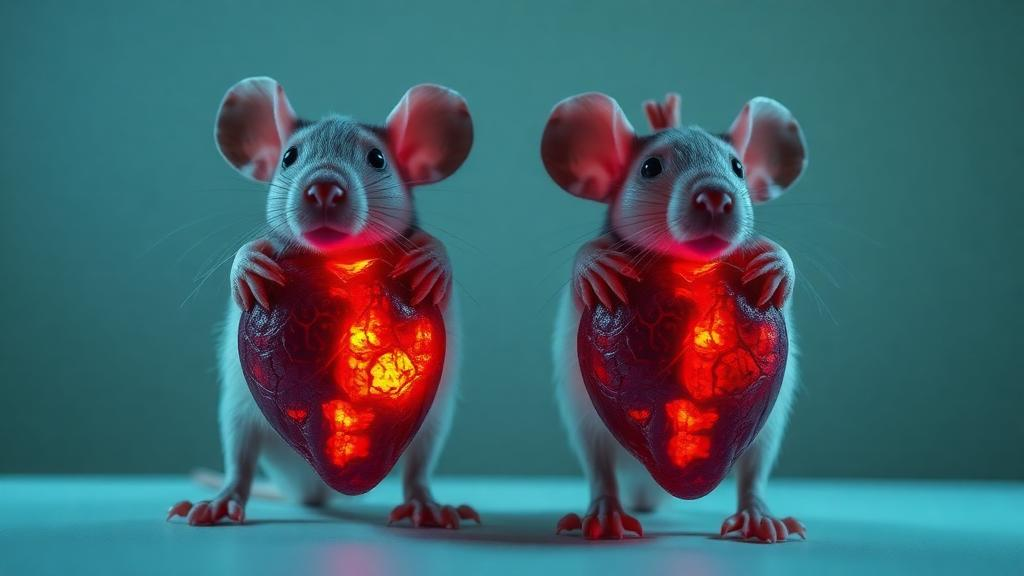
A long-term laboratory study in rats suggests that the radiation environment of deep space may leave a lasting mark on the heart, with damage emerging well after the exposure itself has ended. Researchers report in PLOS One that rats exposed to simulated galactic cosmic radiation developed increased collagen deposition within the walls of their coronary vessels, a form of perivascular cardiac fibrosis that appeared during extended follow-up rather than immediately after irradiation. The finding, published on 30 September 2026, adds to growing concern that astronauts traveling beyond low Earth orbit could face cardiovascular risks that are difficult to detect in the short term but potentially significant over a lifetime.
The study, titled “Multiple simulated spaceflight stressors impact cardiac fibrosis, calcium dynamics, immune function, cytokines and gene variants in rat, Rattus norvegicus,” examined how several simulated spaceflight stressors influenced the rodent heart across multiple biological domains. Rather than focusing on a single endpoint, the investigators assessed structural changes in cardiac tissue, calcium handling within heart cells, immune function, circulating cytokine profiles and gene variants. This breadth matters because the cardiovascular system is integrated: a shift in immune signaling or calcium dynamics can ripple outward into tissue remodeling, electrical instability and impaired pumping function over time.
Galactic cosmic radiation is one of the defining hazards of missions beyond the protective envelope of Earth’s magnetosphere. Unlike the charged particles trapped in the Van Allen belts or the sporadic bursts of solar particle events, galactic cosmic rays consist largely of high-energy protons and heavier atomic nuclei traveling at near-relativistic speeds. When these particles, sometimes called HZE ions, pass through biological tissue, they deposit dense tracks of ionization that can damage DNA, proteins and cell membranes in ways that differ from the sparse ionizations produced by X-rays or gamma rays. Because Earth’s magnetic field and atmosphere shield people on the ground and largely protect crews in low Earth orbit, this radiation environment is essentially impossible to study directly in humans without leaving the planet.
To approximate that environment on the ground, researchers use particle accelerators to deliver carefully calibrated doses of heavy ions and protons to animal models. In the rat study, exposure to this simulated galactic cosmic radiation was associated with the accumulation of collagen in and around the coronary vessel wall. Collagen is the structural protein that forms scar tissue, and its excessive deposition, known as fibrosis, stiffens tissue and interferes with normal function. Perivascular fibrosis, specifically, thickens the supporting structures around blood vessels, which can restrict the ability of coronary vessels to dilate and deliver blood on demand. In the heart, such changes are associated with reduced compliance and an elevated risk of diastolic dysfunction in clinical medicine.
What makes the result particularly noteworthy is its timing. The fibrotic changes emerged during long-term follow-up, meaning the hearts of the exposed animals did not show the full extent of remodeling immediately after the radiation exposure. This delayed pattern is consistent with a broader theme in radiation biology: some forms of injury unfold slowly as cells respond to initial damage, inflammatory signals persist, and tissue repair processes go awry. For mission planners and flight surgeons, delayed effects are the most difficult kind to manage, because they may not announce themselves during a mission or even in the years immediately following it.
The study’s multi-domain design also reflects how modern space biology frames health risk. Calcium dynamics within cardiac cells are central to every heartbeat: calcium ions trigger the contraction of the heart muscle and must be rapidly cleared to allow relaxation. Disruption of this cycling can impair both the strength and rhythm of the heartbeat. Immune function and cytokines, the signaling molecules that coordinate inflammatory responses, connect to cardiac health because chronic low-grade inflammation is a recognized driver of fibrosis and vascular disease. By measuring these systems alongside structural tissue changes and genetic variation among the animals, the researchers could build a more complete picture of how simulated spaceflight stressors propagate through biology.
The inclusion of gene variants in the analysis acknowledges an important reality of radiation risk: individual susceptibility is not uniform. Variation in genes governing DNA repair, antioxidant defenses, inflammatory signaling and calcium handling could plausibly influence how strongly a given organism responds to the same radiation exposure. In a population of rats, as in a population of astronauts, some individuals may be intrinsically more vulnerable to fibrotic remodeling or immune dysregulation than others. Understanding that variability is a prerequisite for personalized risk assessment, which agencies such as NASA have identified as a priority for protecting crews on long-duration missions.
The research was supported by funding from the National Aeronautics and Space Administration under award 80NSSC19K0498 and by the Foundation for Heart Science under award 081735, with the funders having no role in study design, data collection, analysis or manuscript preparation. The authors declared no competing interests. The work was conducted by researchers based in the United States and published as a peer-reviewed article in PLOS One under the DOI 10.1371/journal.pone.0357485. An accompanying illustration by Dave Kiehl, released under a CC-BY 4.0 license, depicts the potential cardiovascular effects of galactic cosmic radiation during a Mars mission, including the perivascular fibrosis observed in the study.
The relevance to human spaceflight is direct. A crewed mission to Mars would expose astronauts to months of galactic cosmic radiation with no option for early return, and current mitigation strategies, primarily spacecraft shielding and mission duration limits, offer only partial protection against high-energy heavy ions. Cardiac fibrosis is a slow, cumulative process in terrestrial medicine, linked over decades to hypertension, aging and cancer therapies involving radiation to the chest. If deep-space radiation accelerates or initiates similar remodeling, the cardiovascular consequences might only surface years after a mission concludes, complicating both health monitoring and long-term care of former astronauts.
At the same time, the researchers and the field at large caution against overinterpreting a single animal study. Rats are not humans, simulated radiation exposures involve dose rates and particle spectra that only approximate the true space environment, and the doses used in laboratory studies are often delivered over compressed timeframes compared with the chronic, low-dose exposure of an actual mission. Translating these findings into human risk estimates requires replication across species, dose ranges and exposure schedules, as well as mechanistic work to identify the biological pathways linking heavy-ion exposure to collagen deposition in coronary vessels. Still, the study strengthens the case that the heart belongs on the list of organs that space agencies must actively monitor and protect, and it underscores a sobering possibility: the most consequential injuries of a journey to Mars may be the ones that reveal themselves only after the homecoming.
Subject of Research: Cardiac effects of simulated galactic cosmic radiation exposure in rats
Article Title: Simulated space radiation may damage rat hearts long after exposure
Article References: Simulated space radiation may damage rat hearts long after exposure. (n.d.). Original publication
Image Credits: AI Generated
DOI: Not provided
Keywords: space radiation, galactic cosmic rays, cardiac fibrosis, rats, PLOS One, NASA, Mars missions, coronary vessels, collagen deposition, calcium dynamics, immune function, astronaut health
Cite Scienmag News
Grant Pearson. (September 30, 2026). Rat Hearts Show Lasting Damage After Simulated Cosmic Radiation Exposure. Scienmag. https://scienmag.com/rat-hearts-show-lasting-damage-after-simulated-cosmic-radiation-exposure/
Grant Pearson. "Rat Hearts Show Lasting Damage After Simulated Cosmic Radiation Exposure." Scienmag, 30 September 2026, https://scienmag.com/rat-hearts-show-lasting-damage-after-simulated-cosmic-radiation-exposure/. Accessed 4 October 2026.
Grant Pearson. "Rat Hearts Show Lasting Damage After Simulated Cosmic Radiation Exposure." Scienmag. September 30, 2026. https://scienmag.com/rat-hearts-show-lasting-damage-after-simulated-cosmic-radiation-exposure/


