Thursday, October 29, 2026
Science
No Result
View All Result
  • Login
  • HOME
  • SCIENCE NEWS
  • CONTACT US
  • HOME
  • SCIENCE NEWS
  • CONTACT US
No Result
View All Result
Scienmag
No Result
View All Result
Home Science News Cancer

Rare SWI/SNF-Deficient Sinonasal Carcinomas Characterized in 10-Case Study

October 28, 2026
in Cancer, Medicine
Nathaniel Bowman
By Nathaniel Bowman Scienmag Editorial Profile - Precision Oncology
Reading Time: 2 mins read
0
Rare SWI/SNF-Deficient Sinonasal Carcinomas Characterized in 10-Case Study

Rare SWI/SNF-Deficient Sinonasal Carcinomas Characterized in 10-Case Study

65
SHARES
587
VIEWS
Share on FacebookShare on Twitter
ADVERTISEMENT

The retrospective analysis focused on the clinical characteristics, morphological features, and immunophenotypes of the tumors. The ten patients ranged in age from 33 to 76 years, and the group included seven women and three men. In six of the ten cases, the tumors were centered in the nasal cavity, while the remaining four arose in the paranasal sinuses.

When the researchers classified the tumors by which SWI/SNF subunit was lost, nine cases proved to be SMARCB1-deficient carcinoma and one was SMARCA4-deficient carcinoma. Both SMARCB1 and SMARCA4 are subunits of the SWI/SNF complex, and their loss is the defining molecular feature of this tumor category.

Under the microscope, the tumors displayed markedly heterogeneous morphology. The SMARCB1-deficient carcinomas exhibited basaloid, rhabdoid, undifferentiated, and adenoid architectural patterns, meaning they could take on appearances resembling several different tumor types. The single SMARCA4-deficient carcinoma in the series showed a basaloid morphology.

The study also captured information on patient outcomes. Three of the ten patients developed recurrent disease, and two developed metastases, underscoring that despite its rarity, this tumor type can follow an aggressive clinical course in a subset of patients.

Because SWI/SNF-deficient sinonasal carcinomas are so rarely encountered in clinical practice, individual institutions seldom accumulate enough cases to describe them systematically. The authors conclude that their ten-case cohort, while morphologically diverse, adds clinicopathological data to a very sparsely documented entity and may help pathologists and oncologists recognize the range of appearances these tumors can adopt.

The work is an early-access, peer-reviewed article that carries a permanent DOI, with a final version of record to follow. As a retrospective single-institution series of only ten patients, it describes observed features and outcomes rather than testing treatments, and its findings are best understood as an enriched descriptive portrait of an exceptionally rare cancer rather than a basis for clinical recommendations.

Subject of Research: Clinicopathological features and prognosis of rare SWI/SNF-deficient sinonasal carcinoma based on ten retrospective cases

Article Title: Clinicopathological analysis of 10 cases of SWI/SNF deficient sinonasal carcinoma

Article References: Wang, X., & Yin, Z. (2026). Clinicopathological analysis of 10 cases of SWI/SNF deficient sinonasal carcinoma. Discover Oncology. https://doi.org/10.1007/s12672-026-06184-6

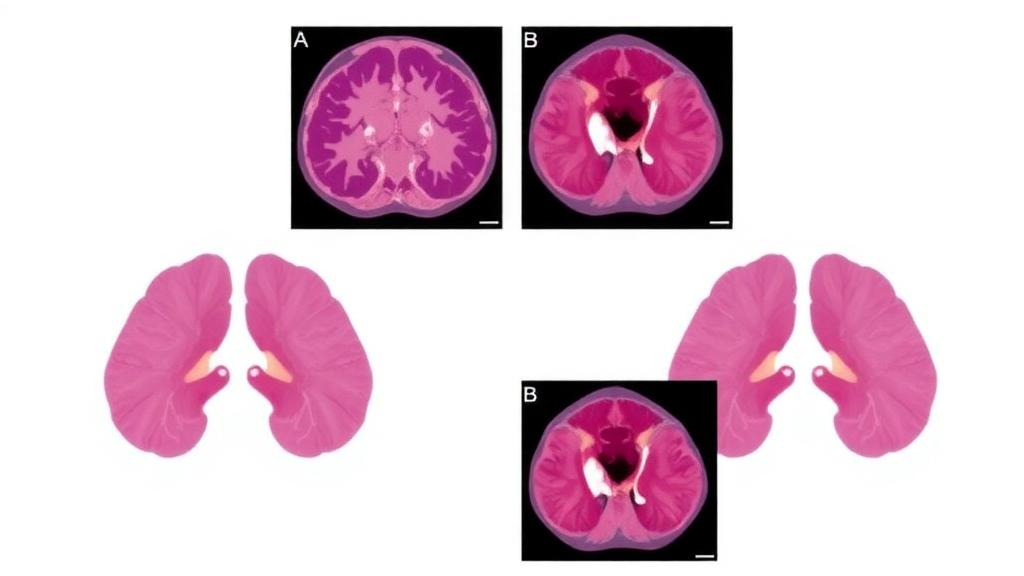
Image Credits: AI Generated

DOI: 10.1007/s12672-026-06184-6

Keywords: SWI/SNF-deficient sinonasal carcinoma, SMARCB1, SMARCA4, sinonasal tumors, retrospective case series, clinicopathology, rare cancers, head and neck pathology, tumor morphology, immunophenotype, Clinicopathological, analysis

Cite Scienmag News

Nathaniel Bowman. (October 28, 2026). Rare SWI/SNF-Deficient Sinonasal Carcinomas Characterized in 10-Case Study. Scienmag. https://scienmag.com/rare-swi-snf-deficient-sinonasal-carcinomas-characterized-in-10-case-study/

Nathaniel Bowman. "Rare SWI/SNF-Deficient Sinonasal Carcinomas Characterized in 10-Case Study." Scienmag, 28 October 2026, https://scienmag.com/rare-swi-snf-deficient-sinonasal-carcinomas-characterized-in-10-case-study/. Accessed 29 October 2026.

Nathaniel Bowman. "Rare SWI/SNF-Deficient Sinonasal Carcinomas Characterized in 10-Case Study." Scienmag. October 28, 2026. https://scienmag.com/rare-swi-snf-deficient-sinonasal-carcinomas-characterized-in-10-case-study/

Tags: aggressive sinonasal tumorsanalysisclinicopathologicalclinicopathologyhead and neck pathologyimmunophenotypemolecular classification of sinonasal cancersrare cancersrare sinonasal carcinomasretrospective case seriessinonasal cancer clinical featuressinonasal carcinoma case seriessinonasal tumor morphologysinonasal tumor recurrence and metastasissinonasal tumorsSMARCA4SMARCA4 deficiencySMARCB1SMARCB1 lossSWI/SNF complex in cancerSWI/SNF-deficient sinonasal carcinomaSWI/SNF-deficient sinonasal carcinomastumor immunophenotypingtumor morphology
Share26Tweet16
Previous Post

VA-ECMO’s Hidden Blind Spot: Coronary Arteries May Starve for Oxygen While Peripheral Readings Look Normal

Next Post

Life by Subtraction: Minimal Cells May Emerge by Shedding Environmental Scaffolds

Related Posts

Implantable chip reads cross-brain synchrony to flag mental states in real time
Medicine

Implantable chip reads cross-brain synchrony to flag mental states in real time

October 29, 2026
Ear nerve stimulation primes platelets and speeds clotting in first-in-human trial
Medicine

Ear nerve stimulation primes platelets and speeds clotting in first-in-human trial

October 29, 2026
Cervical Manipulation Eases Neck Pain More Than Mobilization, but Gains Fall Short
Medicine

Cervical Manipulation Eases Neck Pain More Than Mobilization, but Gains Fall Short

October 29, 2026
Geneticist warns BMP2 wisdom tooth findings may not survive multiple-testing correction
Medicine

Geneticist warns BMP2 wisdom tooth findings may not survive multiple-testing correction

October 29, 2026
Metatranscriptomics reveals 89 tick virus genomes across Italy
Biology

Metatranscriptomics reveals 89 tick virus genomes across Italy

October 29, 2026
Scoping review maps how agitation after traumatic brain injury is managed
Medicine

Scoping review maps how agitation after traumatic brain injury is managed

October 29, 2026
Next Post
Life by Subtraction: Minimal Cells May Emerge by Shedding Environmental Scaffolds

Life by Subtraction: Minimal Cells May Emerge by Shedding Environmental Scaffolds

  • Mothers who receive childcare support from maternal grandparents show more optimized

    Mothers who receive childcare support from maternal grandparents show more parental warmth, finds NTU Singapore study

    27656 shares
    Share 11059 Tweet 6912
  • University of Seville Breaks 120-Year-Old Mystery, Revises a Key Einstein Concept

    1061 shares
    Share 424 Tweet 265
  • Bee body mass, pathogens and local climate influence heat tolerance

    682 shares
    Share 273 Tweet 171
  • Researchers record first-ever images and data of a shark experiencing a boat strike

    546 shares
    Share 218 Tweet 137
  • Groundbreaking Clinical Trial Reveals Lubiprostone Enhances Kidney Function

    531 shares
    Share 212 Tweet 133
Science

Embark on a thrilling journey of discovery with Scienmag.com—your ultimate source for cutting-edge breakthroughs. Immerse yourself in a world where curiosity knows no limits and tomorrow’s possibilities become today’s reality!

RECENT NEWS

  • Research report: Sodium hydrosulfide as a potential orchard treatment for increasing the yield of avocado (Persea americana Mill.) cv. ‘Hass’
  • Implantable chip reads cross-brain synchrony to flag mental states in real time
  • Ear nerve stimulation primes platelets and speeds clotting in first-in-human trial
  • Gamma-only training teaches germanium detectors to reject alpha backgrounds

Categories

  • Agriculture
  • Anthropology
  • Archaeology
  • Athmospheric
  • Biology
  • Biotechnology
  • Blog
  • Bussines
  • Cancer
  • Chemistry
  • Climate
  • Earth Science
  • Editorial Policy
  • Marine
  • Mathematics
  • Medicine
  • Pediatry
  • Policy
  • Psychology & Psychiatry
  • Science Education
  • Science News
  • Social Science
  • Space
  • Technology and Engineering

Subscribe to Blog via Email

Enter your email address to subscribe to this blog and receive notifications of new posts by email.

Join 5,151 other subscribers

© 2025 Scienmag - Science Magazine

Welcome Back!

Login to your account below

Forgotten Password?

Retrieve your password

Please enter your username or email address to reset your password.

Log In
No Result
View All Result
  • HOME
  • SCIENCE NEWS
  • CONTACT US

© 2025 Scienmag - Science Magazine

Discover more from Science

Subscribe now to keep reading and get access to the full archive.

Continue reading