


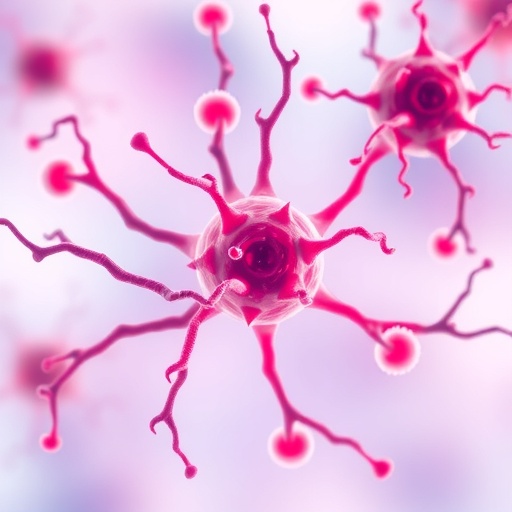
In the relentless battle against chronic diseases such as viral infections and cancer, the immune system’s ability to continually produce fresh T cells—its elite cellular soldiers—is vital. For years, the sources and mechanisms underlying the replenishment of these potent immune cells have remained enigmatic. Now, groundbreaking research from teams at Weill Cornell Medicine and Memorial Sloan Kettering Cancer Center (MSK) illuminates this mystery, unveiling a critical population of stem-like T cells that sustain immunity in protracted disease states.
At the heart of this discovery lies a rare subset of T cells distinguished by the expression of LEF1, a transcription factor previously known for roles in development but now identified as a master regulator of T cell “stemness.” These LEF1-positive stem T cells are responsible for generating and maintaining the pool of effective T cells that combat pathogens and malignancies. The research, published in the prestigious journal Cell on July 1, 2026, reveals that manipulating the levels of LEF1 can either revive exhausted T cells or suppress their activity depending on the disease context.
To decode LEF1’s critical role beyond merely marking stemness, scientists employed CRISPR gene editing to excise the LEF1 gene in mouse models harboring these rare stem T cells. The results were profound: elimination of LEF1 led to a collapse in the self-renewing capacity of stem T cells. In autoimmune diabetes models, this genetic disruption rendered mice significantly less susceptible to disease, as the autoreactive T cells lost their proliferative edge and couldn’t sustain their destructive assault on insulin-producing pancreatic cells.
Conversely, amplifying LEF1 expression in chronic viral infection models yielded a robust expansion of the stem T cell compartment. This intervention reduced the prevalence of terminally differentiated, functionally exhausted T cells, thereby enhancing immune durability. The ability to toggle LEF1 expression presents a tantalizing therapeutic avenue, where augmenting stem T cells could bolster immunity in infections and cancers, while suppressing them might quell autoimmune attacks.
An unexpected revelation emerged when the team conducted comparative molecular analyses of stem T cells derived from two wildly divergent conditions: autoimmune diabetes and chronic lymphocytic choriomeningitis—a viral infection model. Despite the contrast in disease pathology—the former characterized by hyperactive T cells aggressively destroying host tissue, the latter by gradual immune exhaustion—the stem T cells from both contexts displayed an indistinguishable transcriptional profile. Advanced computational methods revealed a shared LEF1-driven genetic program governing their stem-like state, highlighting a universal mechanism that transcends disease type.
This conserved LEF1-regulated gene network encompasses 117 genes co-regulated across both diseases, suggesting that the immune system leverages a common toolkit to maintain stem T cells under persistent stress. Among these genes are those also known to orchestrate behavior in classical embryonic and adult stem cells, emphasizing the deep biological parallels between immune and tissue stem cell maintenance.
Beyond intrinsic genetic programs, the physical microenvironment—the niche—plays a pivotal role in sustaining stem T cells. Much like epithelial stem cells in gut and bone marrow niches, LEF1-positive T cells express unique “address labels,” molecular cues that guide them to specific anatomical regions within lymph nodes and tissues. Disrupting these cellular homing signals by blocking integrins or interfering with Notch signaling pathways led to a marked depletion of the stem T cell population, underscoring that stemness is not merely a cell-intrinsic property but also hinges on external cues from their specialized habitats.
This study’s implications ripple far beyond basic immunology. The detailed elucidation of the LEF1-dependent stem T cell axis sets the stage for innovative therapeutic strategies. In autoimmune diseases, selectively targeting these stem cells could inhibit pathological immune responses, offering hope for durable remission. For persistent infections and cancer, strategies to amplify or engineer the niches supporting stem T cells could rejuvenate immunity when it is most compromised.
Senior author Dr. Andrea Schietinger points to the future potential in oncology, where T cell exhaustion represents a formidable barrier to durable anti-tumor immunity. Harnessing the LEF1 stemness pathway might enable the creation of resilient immune cell reservoirs capable of sustained tumor surveillance and destruction. Similarly, co-corresponding author Dr. Doron Betel underscores the power of integrating computational biology with experimental immunology to uncover fundamental mechanisms with broad disease applicability.
Taken together, this research exemplifies the transformative power of multidisciplinary collaboration. By combining sophisticated disease models, cutting-edge gene editing, and high-dimensional computational analytics, the scientists have uncovered a unifying principle of immune persistence. This breakthrough lays a foundation for a new class of interventions designed not simply to modulate immune responses superficially but to recalibrate the very cellular substrates underlying immune competence.
Most fundamentally, this work reframes our understanding of immunity in chronic disease. Rather than viewing T cell exhaustion or autoimmunity as isolated phenomena, the shared LEF1-driven stemness program positions these states along a continuum regulated by stem T cell dynamics. This insight opens expansive new vistas for research and therapy, where controlling the balance between immune activation and durability becomes a precise, programmable endeavor.
The study was funded by an array of support from the National Institutes of Health and various cancer and diabetes foundations, reflecting the high priority and broad impact of this research. As the team advances toward clinical translation, these findings promise to redefine how we approach treatment of some of the most challenging conditions in medicine today.
News Publication Date: 1-Jul-2026
Web References:
- Dr. Doron Betel: https://vivo.weill.cornell.edu/display/cwid-dob2014
- Dr. Andrea Schietinger: https://www.mskcc.org/research/ski/labs/andrea-schietinger
- Sloan Kettering Institute: https://www.mskcc.org/research/ski/
References: (As detailed in original publication, Cell, 1-Jul-2026)
Cite Scienmag News
Kristina Jarvis. (July 2, 2026). Rare Stem T Cells Could Unlock New Treatments for Chronic Diseases. Scienmag. https://scienmag.com/rare-stem-t-cells-could-unlock-new-treatments-for-chronic-diseases-2/
Kristina Jarvis. "Rare Stem T Cells Could Unlock New Treatments for Chronic Diseases." Scienmag, 2 July 2026, https://scienmag.com/rare-stem-t-cells-could-unlock-new-treatments-for-chronic-diseases-2/. Accessed 4 September 2026.
Kristina Jarvis. "Rare Stem T Cells Could Unlock New Treatments for Chronic Diseases." Scienmag. July 2, 2026. https://scienmag.com/rare-stem-t-cells-could-unlock-new-treatments-for-chronic-diseases-2/


