


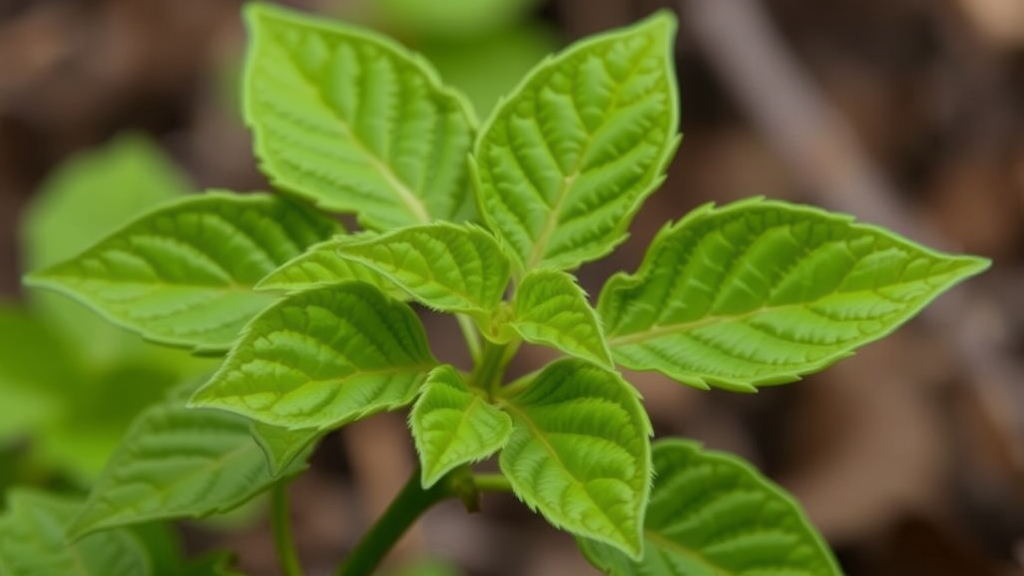
Deep in the mountain forests of southern Italy, a rare blue-flowered herb has been quietly rewriting what scientists think they know about plant rarity. Aegonychon calabrum, a perennial understory herb restricted to a handful of sites in the southern Apennines, has long been assumed to be a fragile specialist, genetically impoverished and evolutionarily frozen in place. A new study comparing it with its widespread relative Aegonychon purpurocaeruleum reveals a very different picture: the endemic species harbors nearly as much genetic diversity as its common congener, displays comparable phenotypic flexibility, and appears to be under active directional or divergent selection on its leaf traits rather than the stabilizing selection typically expected of narrow endemics.
The research, published in Plant Biosystems by a team led by Andrea Coppi and Federico Selvi of the University of Florence together with colleagues from Camerino, Sassari, Basilicata and Palermo, tackled a long-standing question in plant biogeography and evolutionary ecology: do endemic species differ from widespread congeners in the range and patterns of their functional trait variation and genetic structure? While many studies have examined the genetics of rare plants, little is known about how intraspecific variation in functional traits relates to genetic variation in narrow Mediterranean forest endemics, particularly when compared against close relatives occupying similar habitats.
The two species form an ideal natural experiment. Aegonychon calabrum is confined to a few mountain localities in Calabria and one outlier population in Campania, growing in mixed holm oak-broadleaf or Calabrian pine forests up to 1400 meters above sea level. Aegonychon purpurocaeruleum, by contrast, ranges across most of southern Europe eastwards to Iran and is found throughout most of Italy. Both are perennial hemicryptophytic herbs of the forest understory with similar growth habits, showy blue or purple flowers pollinated by long-tongued insects, and the ability to spread vegetatively through creeping sterile stems. Both are diploid, though with different chromosome numbers, and no hybrids are known between them, indicating effective reproductive barriers.
The researchers sampled three populations of the endemic and seven populations of the widespread species, the latter spanning the entire latitudinal gradient of Italy from Lake Garda in the north to Sicily in the south. At each site, leaves were collected from ten fully developed individuals spaced at least ten meters apart to avoid sampling clones of the same plant. Two leaves per individual were used for trait measurements and a third was dried in silica gel for genetic analysis. The team measured three core leaf traits: leaf area, specific leaf area, and leaf dry matter content, which together convey key information about how plants acquire and conserve resources.
The trait results told a nuanced story. Leaf area was significantly lower in the endemic species, supporting the idea that A. calabrum has a more resource-conservative strategy than its widespread relative, consistent with a recent broader study of Mediterranean forest endemics. However, and unexpectedly, the overall amount of intraspecific variation in the three traits was comparable between the species, and in some cases even slightly wider in the endemic, despite the fact that the widespread species was sampled across a far broader range of climatic conditions. Within the endemic, the southern high-elevation population on siliceous substrate showed more resource-acquisitive traits, while the two northern populations on warm calcareous sites exhibited smaller leaves and lower specific leaf area, traits associated with tolerance of drought and nutrient limitation.
When the researchers translated the leaf measurements into Grime’s CSR ecological strategies, which describe trade-offs between competitive ability, stress tolerance and ruderality, they found that species identity explained almost none of the variation. Instead, population effects accounted for between 52 and 81 percent of the variation in the three strategy scores. The endemic’s populations ranged from predominantly stress-tolerant to ruderal, mirroring the spread seen in the widespread species. This lack of clear divergence in ecological strategies suggests that A. calabrum fits the so-called refuge model of endemism, in which narrow distribution reflects stress tolerance and low competitive ability in marginal habitats, rather than the specialist model, in which rarity stems from tight adaptation to a narrowly defined environment.
The genetic analysis, based on AFLP fingerprinting of 94 individuals producing 181 loci, delivered perhaps the most surprising findings. Analysis of molecular variance showed that the vast majority of genetic variation occurs within populations in both species, and mean expected heterozygosity was only slightly lower in the endemic (0.295 versus 0.311). This runs counter to the common expectation that rare, fragmented species suffer genetic erosion. Differentiation among populations was actually lower in the endemic than in the widespread species, and a discriminant analysis of principal components confirmed a clear genetic separation between the two species, with the endemic defined almost exclusively by two unique genetic clusters. Only about five percent of loci were flagged as candidates under selection, pointing to a similarly low impact of adaptive divergence at the genome level in both species.
The pivotal insight came from comparing phenotypic differentiation among populations with neutral genetic differentiation. In both species, phenotypic differentiation in leaf traits substantially exceeded genetic differentiation, a pattern indicating that directional or divergent selection, rather than random genetic drift, is shaping population differences in leaf form and function. The magnitude of the gap between the two measures was far greater than averages reported in meta-analyses of plant populations, reinforcing the conclusion that selection is a powerful force in both the rare and the common species. The authors note that this result held even under conservative assumptions about the additive genetic basis of the traits, making the signature of selection difficult to dismiss as a methodological artifact.
The study also probed whether genetically similar populations share similar trait values, a population-level version of niche conservatism. A significant positive correlation between trait similarity and genetic proximity emerged only for leaf area, and a local autocorrelation analysis revealed that the two northern populations of the endemic, which occupy similar habitats, form a clade with significantly similar trait values. This pattern suggests that shared ancestry and limited environmental divergence, rather than random processes alone, help maintain trait similarity among genetically close populations, even as other forces push populations apart phenotypically.
Taken together, the findings paint the rare Aegonychon calabrum as anything but an evolutionary dead end. Its populations combine substantial genetic diversity, considerable phenotypic plasticity and evidence of ongoing selection, suggesting a real capacity to adapt to changing habitat conditions. For conservation biologists, the message is that narrow range does not necessarily mean genetic fragility, and that Mediterranean forest endemics may harbor hidden adaptive potential. The authors call for future work using genome-wide sequencing approaches such as ddRADseq and genome-wide association studies to characterize genomic variation in endemic and widespread species pairs more comprehensively, opening the way to a deeper understanding of how rarity and adaptability coexist in the plant world.
Subject of Research: Leaf trait variation, genetic structure and selection in a narrow Mediterranean forest endemic plant compared with its widespread congener
Article Title: Are leaf traits and genetic differentiation patterns divergent in endemic vs widespread congeneric plant species? Insights from the Mediterranean forest species pair Aegonychon calabrum-A. purpurocaeruleum (Boraginaceae)
Article References: Coppi, A., Santini, G., Canullo, R., Carrari, E., Chelli, S., Farris, E., Gasperini, C., Rosati, L., Santi, I., Bajona, E., Campetella, G., & Selvi, F. (2026). Are leaf traits and genetic differentiation patterns divergent in endemic vs widespread congeneric plant species? Insights from the Mediterranean forest species pair Aegonychon calabrum-A. purpurocaeruleum (Boraginaceae). Plant Biosystems, 160(5), Article 252. https://doi.org/10.1007/s44473-026-00254-x
Image Credits: AI Generated
DOI: 10.1007/s44473-026-00254-x
Keywords: Aegonychon calabrum, plant endemism, leaf traits, AFLP fingerprinting, genetic diversity, Mediterranean forests, niche conservatism, PST-FST comparison, CSR strategies, population genetics, directional selection, understory herbs
Cite Scienmag News
Juliet Wilcox. (September 12, 2026). Rare Italian Forest Herb Defies Expectations With Surprising Genetic Resilience and Adaptive Leaf Traits. Scienmag. https://scienmag.com/rare-italian-forest-herb-defies-expectations-with-surprising-genetic-resilience-and-adaptive-leaf-traits/
Juliet Wilcox. "Rare Italian Forest Herb Defies Expectations With Surprising Genetic Resilience and Adaptive Leaf Traits." Scienmag, 12 September 2026, https://scienmag.com/rare-italian-forest-herb-defies-expectations-with-surprising-genetic-resilience-and-adaptive-leaf-traits/. Accessed 5 October 2026.
Juliet Wilcox. "Rare Italian Forest Herb Defies Expectations With Surprising Genetic Resilience and Adaptive Leaf Traits." Scienmag. September 12, 2026. https://scienmag.com/rare-italian-forest-herb-defies-expectations-with-surprising-genetic-resilience-and-adaptive-leaf-traits/


