


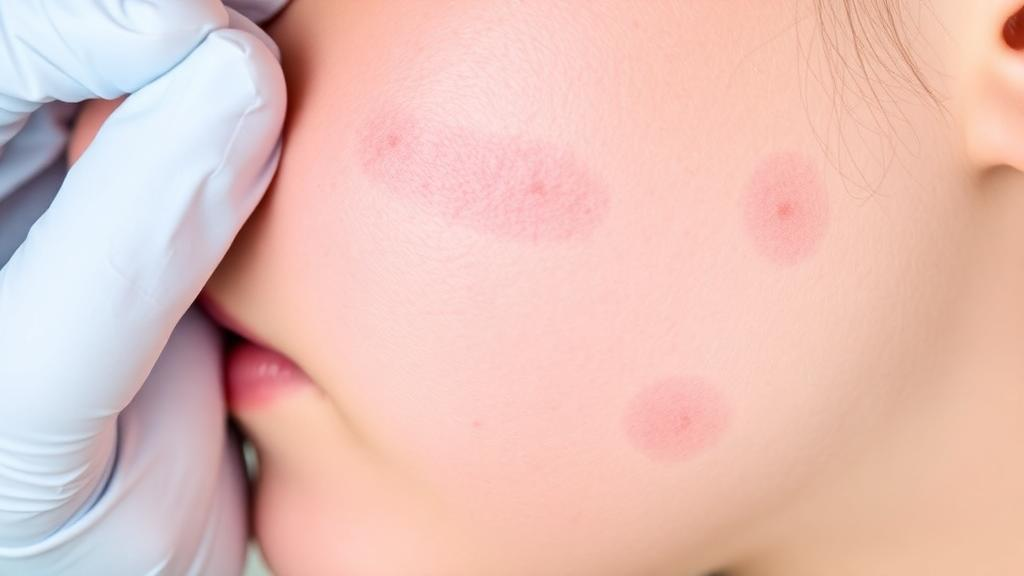
A teenage girl in Japan whose skin had been covered in bleeding, treatment-resistant eczema since infancy has made a dramatic recovery after receiving dupilumab, a biologic drug that blocks key inflammatory signaling molecules. The case, reported in the Journal of Cutaneous Immunology and Allergy, offers the strongest clinical signal yet that a drug designed for ordinary atopic dermatitis can transform the lives of patients whose severe skin disease is driven by a rare genetic syndrome called Costello syndrome.
Costello syndrome is a member of a family of disorders known as RASopathies, all of which arise from mutations that over-activate the RAS-MAPK signaling pathway, a molecular circuit that governs cell proliferation and differentiation. In Costello syndrome, the culprit is a heterozygous activating variant in the HRAS proto-oncogene on chromosome 11p15.5. The resulting condition affects multiple organ systems: patients display distinctive craniofacial features, curly sparse hair, deep creases on the palms and soles, cardiac abnormalities such as hypertrophic cardiomyopathy and arrhythmias, feeding difficulties and failure to thrive from birth, developmental delay, and an elevated lifetime risk of malignancies including rhabdomyosarcoma, neuroblastoma, and bladder carcinoma.
What has drawn increasing scientific attention, however, is the skin. Eczema has long been noted in Costello syndrome, and a study by Siegel and colleagues found eczematous lesions in nearly a quarter of patients carrying HRAS variants. Recent laboratory work has begun to explain why. In a mouse model of Costello syndrome carrying the activating HRAS c.34G>A, p.(Gly12Ser) variant, Katata and colleagues showed that exposure to house dust mites reliably triggered atopic dermatitis-like lesions. The mechanism traced back to the keratinocytes themselves: hyperactive RAS-ERK signaling in the epidermis impaired the skin barrier and stimulated production of epithelial-derived alarmins, the alarm cytokines interleukin-33 and thymic stromal lymphopoietin, which in turn ignited type 2 inflammation. RAS-ERK activation also stabilizes the transcription factor GATA3 in T cells, steering them toward a type 2 helper fate.
The newly reported patient illustrates this biology in human form with unusual clarity. Born at 37 weeks and 3 days after a pregnancy complicated by polyhydramnios and threatened preterm labor, she weighed 3,980 grams and was large for gestational age. She spent her first weeks in a neonatal intensive care unit with persistent tachypnea requiring supplemental oxygen until day of life 22, and feeding difficulties kept her on tube feeding until day of life 40. During infancy, clinicians noted hepatomegaly, shortened extremities, macroglossia, curly sparse hair, and characteristic facial features, but chromosomal analysis, newborn screening, echocardiography, brain MRI, and hearing tests all failed to yield a diagnosis.
The skin told a more alarming story. At roughly one month of age she developed severe eczematous lesions that met the Hanifin and Rajka diagnostic criteria for atopic dermatitis, yet topical corticosteroids and emollients could not control them; the eczema and pruritus persisted, occasionally bleeding and eroding. By 6 months of age her laboratory values painted a picture of raging type 2 inflammation: total IgE of 138 kU/L, thymus and activation-regulated chemokine, or TARC, of 4,744 pg/mL, and eosinophilia at 9.6 percent with an absolute count of 1,325 cells per microliter. Specific IgE testing revealed striking sensitization to egg white at 57.2 UA/mL and cow’s milk at 34.0 UA/mL, prompting elimination of both foods.
The allergic burden deepened along what immunologists call the atopic march, the sequential emergence of eczema, food allergy, asthma, and allergic rhinitis. Oral food challenges beginning at 3 years and 10 months of age repeatedly provoked immediate reactions as her intake was escalated, and an epinephrine auto-injector was prescribed. At age 10 she used it for full anaphylaxis after accidentally eating chocolate containing cow’s milk. Hen’s egg allergy eventually resolved at 12 years, but cow’s milk allergy persisted into adolescence. Wheezing episodes during respiratory infections from around age 2 or 3 led to suspected asthma and regular leukotriene receptor antagonist therapy, while growth faltered, with height falling to approximately minus 5 standard deviations.
The diagnostic odyssey ended at age 7 years and 10 months, when she joined Japan’s Initiative on Rare and Undiagnosed Diseases and underwent whole-exome sequencing. The analysis identified a heterozygous de novo HRAS variant, NM_005343.4:c.37G>T, p.(Gly13Cys), confirming Costello syndrome. This variant is notable because it produces a milder phenotype than the more intensively studied c.34G>A variant: Gripp and colleagues reported less severe short stature, facial coarsening, and cognitive impairment, along with lower frequencies of multifocal atrial tachycardia, papillomata, and neurosurgical interventions, but distinctive findings such as dolichocilia and loose anagen hair. Consistent with that profile, this patient had no cardiac complications, yet her allergic manifestations were anything but mild, a discrepancy the authors caution makes it risky to extrapolate directly from the mouse model mechanism.
By age 14, with roughly 20 percent of her body surface area affected, an Eczema Area and Severity Index score of 16, and an Investigator’s Global Assessment score of 4 despite appropriate high-potency topical corticosteroids, her team turned to dupilumab. The monoclonal antibody blocks the shared receptor component for interleukin-4 and interleukin-13, the two cytokines at the core of type 2 inflammation, and the authors judged targeted inhibition of that axis a rational approach for a patient with her IgE, TARC, and eosinophil profile, and preferable to broader systemic immunosuppression given the anticipated long-term treatment and the malignancy risk inherent to Costello syndrome. She received a 400 milligram loading dose followed by 200 milligrams every two weeks.
The response was rapid and unequivocal. Within one month her eczematous lesions had almost completely resolved, and the improvement was maintained through six months of follow-up with no serious drug-related adverse events. Equally important was what the change meant for daily life: the patient and her family reported a substantial reduction in the burden of skin care and itching, along with better participation in school activities, a meaningful outcome for a teenager who had spent more than a decade managing bleeding skin.
The authors are careful about what this single case can and cannot prove. Family members had allergic diseases, so ordinary atopic predisposition and environmental factors likely contributed to her severity, and it remains unclear whether HRAS activation directly amplified egg- or milk-specific IgE production. No direct mechanistic evidence was obtained linking her mutation to epithelial-driven inflammation. Still, the genetically confirmed diagnosis, the detailed longitudinal follow-up from infancy, and the swift response to IL-4/IL-13 blockade are consistent with the idea that keratinocyte-driven type 2 inflammation amplified her atopic tendency. Dupilumab experience in Costello syndrome remains limited and long-term efficacy and safety are not established, so the authors urge careful continued surveillance. Even so, the case suggests that refractory eczema in Costello syndrome, too often treated as an intractable consequence of the syndrome itself, may be a treatable inflammatory disease in its own right.
Subject of Research: Dupilumab treatment of refractory atopic dermatitis-like eczema in Costello syndrome
Article Title: Case Report: Successful dupilumab treatment for refractory atopic dermatitis-like eczema in a patient with Costello syndrome
Article References: Nonaka, T., Kido, J., Ogata, M., Miyake, T., Yoshida, T., Fukushima, S., Seyama, R., Uchiyama, Y., Matsumoto, N., & Nakamura, K. (2026). Case Report: Successful dupilumab treatment for refractory atopic dermatitis-like eczema in a patient with Costello syndrome. Journal of Cutaneous Immunology and Allergy, 9, Article 17346. https://doi.org/10.3389/jcia.2026.17346
Image Credits: AI Generated
Keywords: Costello syndrome, dupilumab, atopic dermatitis, HRAS, RASopathy, type 2 inflammation, food allergy, interleukin-4, interleukin-13, skin barrier, case report, biologic therapy
Cite Scienmag News
Juliet Wilcox. (October 15, 2026). Rare Genetic Syndrome Case Shows Skin Drug Dupilumab Clears Stubborn Eczema. Scienmag. https://scienmag.com/rare-genetic-syndrome-case-shows-skin-drug-dupilumab-clears-stubborn-eczema/
Juliet Wilcox. "Rare Genetic Syndrome Case Shows Skin Drug Dupilumab Clears Stubborn Eczema." Scienmag, 15 October 2026, https://scienmag.com/rare-genetic-syndrome-case-shows-skin-drug-dupilumab-clears-stubborn-eczema/. Accessed 15 October 2026.
Juliet Wilcox. "Rare Genetic Syndrome Case Shows Skin Drug Dupilumab Clears Stubborn Eczema." Scienmag. October 15, 2026. https://scienmag.com/rare-genetic-syndrome-case-shows-skin-drug-dupilumab-clears-stubborn-eczema/


