Wednesday, October 28, 2026
Science
No Result
View All Result
  • Login
  • HOME
  • SCIENCE NEWS
  • CONTACT US
  • HOME
  • SCIENCE NEWS
  • CONTACT US
No Result
View All Result
Scienmag
No Result
View All Result
Home Science News Medicine

Rare Autoimmune Cerebellar Ataxia Linked to Lymphoma in New Case Report

October 28, 2026
in Medicine
Ophelia Keating
By Ophelia Keating Scienmag Editorial Profile - Health Services Research
Reading Time: 3 mins read
0
Rare Autoimmune Cerebellar Ataxia Linked to Lymphoma in New Case Report

Rare Autoimmune Cerebellar Ataxia Linked to Lymphoma in New Case Report

65
SHARES
587
VIEWS
Share on FacebookShare on Twitter
ADVERTISEMENT

A 70-year-old woman with subacute cerebellar ataxia, fever, elevated D-dimer and multiple cerebral infarctions turned out to have anti-Homer3 antibody-positive autoimmune cerebellar ataxia (ACA) alongside diffuse large B-cell lymphoma (DLBCL), according to a case report published in Frontiers in Hematology. The report, authored by Miao Sun, Xingyang Wang and Yingjie Dai of the Department of Neurology, General Hospital of Northern Theater Command in Shenyang, China, describes what the authors identify as only the second pathologically confirmed case of anti-Homer3 antibody-positive ACA associated with malignancy worldwide, and the first linked to DLBCL.

The association between this antibody and malignancy has remained unclear, and the authors note that most such cases are idiopathic, meaning no underlying cause is identified.

In this case, serum testing confirmed anti-Homer3 antibodies at a titer of 1:30 using a cell-based assay. The diagnostic picture was complicated by systemic findings: the patient presented with fever and elevated D-dimer, a marker of hypercoagulability, and imaging revealed multiple cerebral infarctions. Biopsy of a thigh mass ultimately revealed diffuse large B-cell lymphoma.

Treatment decisions in the case were constrained by the patient’s own choices. She declined both immunotherapy directed at the neurological condition and conventional chemotherapy for the lymphoma. Instead, she received zanubrutinib, a targeted drug, as palliative lymphoma-directed therapy only.

At six-month follow-up, her ataxia had improved and no recurrent stroke had occurred. The authors are explicit, however, that this improvement cannot be attributed to zanubrutinib. They suggest it may reflect spontaneous fluctuation of ACA or other nonspecific factors, and they caution that no causal relationship between the lymphoma and the neurological syndrome has been proven; a chance co-occurrence cannot be excluded.

The authors suggest that lymphoma should be considered during tumor screening in anti-Homer3-positive patients, particularly those who show systemic inflammatory responses or evidence of hypercoagulability.

In this patient, the combination of cerebellar signs, fever, elevated D-dimer and cerebral infarctions pointed in several directions at once before the thigh mass biopsy clarified the picture.

The report is a single-patient case study, and its conclusions are correspondingly limited. With only one pathologically confirmed DLBCL association and one prior malignancy-linked case worldwide, no firm epidemiological or causal inference can be drawn. The authors themselves frame the finding as raising a possibility rather than establishing an association with confidence, and they emphasize that the neurological improvement observed during follow-up may have occurred independently of any lymphoma-directed treatment.

Nevertheless, the case adds to the sparse literature on anti-Homer3 antibody-positive ACA and its possible systemic associations. For clinicians, the practical message offered by the authors is that when patients test positive for this rare antibody, particularly in the presence of systemic inflammatory signs or hypercoagulability, lymphoma deserves a place on the differential diagnosis during tumor screening. For researchers, the case underscores that the association between anti-Homer3 antibody-positive ACA and malignancy remains unclear, and the authors note that a causal relationship remains unproven.

The article was received on 13 August 2026 and accepted on 15 October 2026, and appears in the journal’s Blood Cancer section as an open-access case report.

Subject of Research: A case report of anti-Homer3 antibody-positive autoimmune cerebellar ataxia associated with diffuse large B-cell lymphoma.

Article Title: Anti-Homer3 antibody-positive autoimmune cerebellar ataxia associated with diffuse large B-cell lymphoma: a case report

Article References: Sun, M., Wang, X., & Dai, Y. (2026). Anti-Homer3 antibody-positive autoimmune cerebellar ataxia associated with diffuse large B-cell lymphoma: a case report. Frontiers in Hematology, 5, Article 1967079. https://doi.org/10.3389/frhem.2026.1967079

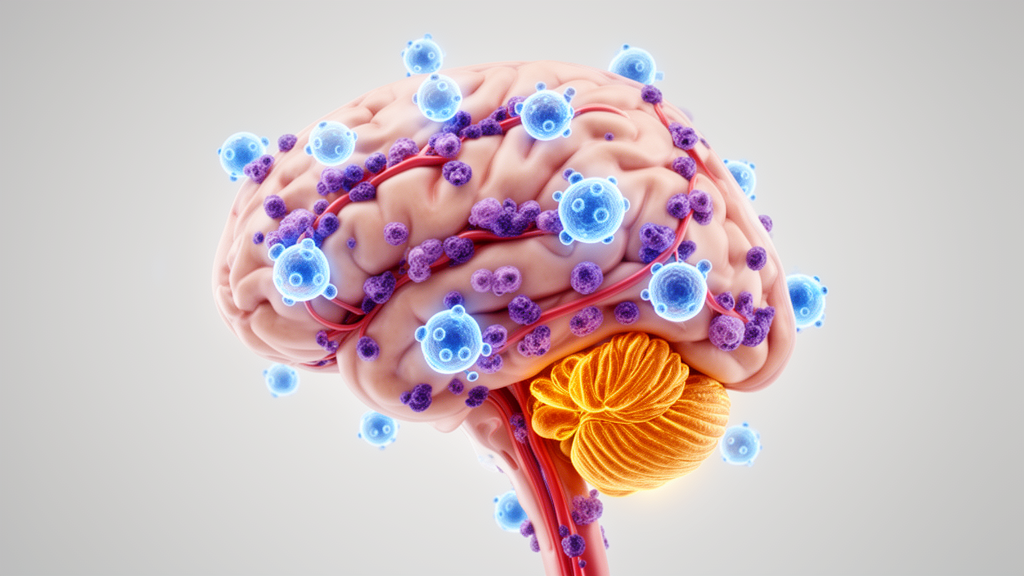
Image Credits: AI Generated

DOI: 10.3389/frhem.2026.1967079

Keywords: anti-Homer3 antibody, autoimmune cerebellar ataxia, diffuse large B-cell lymphoma, paraneoplastic syndrome, case report, cerebellar ataxia, zanubrutinib, cerebral infarction, neuroimmunology, hematology, Anti-Homer3, antibody-positive

Cite Scienmag News

Ophelia Keating. (October 28, 2026). Rare Autoimmune Cerebellar Ataxia Linked to Lymphoma in New Case Report. Scienmag. https://scienmag.com/rare-autoimmune-cerebellar-ataxia-linked-to-lymphoma-in-new-case-report/

Ophelia Keating. "Rare Autoimmune Cerebellar Ataxia Linked to Lymphoma in New Case Report." Scienmag, 28 October 2026, https://scienmag.com/rare-autoimmune-cerebellar-ataxia-linked-to-lymphoma-in-new-case-report/. Accessed 28 October 2026.

Ophelia Keating. "Rare Autoimmune Cerebellar Ataxia Linked to Lymphoma in New Case Report." Scienmag. October 28, 2026. https://scienmag.com/rare-autoimmune-cerebellar-ataxia-linked-to-lymphoma-in-new-case-report/

Tags: Anti-Homer3anti-Homer3 antibodiesanti-Homer3 antibodyantibody-positiveautoimmune cerebellar ataxiaautoimmune neurological diseasescase reportcerebellar ataxiacerebellar ataxia and malignancycerebellar ataxia case reportcerebral infarctiondiffuse large B-cell lymphomahematologyhypercoagulability and cerebral infarctionlymphoma diagnosis in neurological caseslymphoma-associated neurological disordersneuroimmunologyparaneoplastic neurological syndromesparaneoplastic syndromepersonalized treatment in autoimmune cancer syndromesrare autoimmune cerebellar disorderszanubrutinib
Share26Tweet16
Previous Post

Whitefly virome survey in Georgia cucurbits reveals cucurbit chlorotic yellows virus and a dicistrovirus-like virus

Next Post

Active Vaping and Smoking Tied to Poorer Asthma Control in Teens, Study Finds

Related Posts

Nanoparticle-delivered Pt(IV) prodrug shows boosted killing of cisplatin-tolerant oral cancer cells in 3D models
Cancer

Nanoparticle-delivered Pt(IV) prodrug shows boosted killing of cisplatin-tolerant oral cancer cells in 3D models

October 28, 2026
Rare Ring Chromosome 7 Case Links Severe Hypertriglyceridemia to Genetic Syndrome
Pediatry

Rare Ring Chromosome 7 Case Links Severe Hypertriglyceridemia to Genetic Syndrome

October 28, 2026
Invisalign Aligners Fall Short on Extrusion and Tipping, Study Finds
Medicine

Invisalign Aligners Fall Short on Extrusion and Tipping, Study Finds

October 28, 2026
CT83 Protein Marks Triple-Negative Breast Cancer, but Its Aggressive Links Prove Indirect
Medicine

CT83 Protein Marks Triple-Negative Breast Cancer, but Its Aggressive Links Prove Indirect

October 28, 2026
How to build clinical prediction models that survive new populations: a scoping review maps the methods
Medicine

How to build clinical prediction models that survive new populations: a scoping review maps the methods

October 28, 2026
Exosomes, Hydrogels and Silver Nanoparticles Combine in a Three-Part Wound Healing Platform Still Awaiting Clinical Proof
Medicine

Exosomes, Hydrogels and Silver Nanoparticles Combine in a Three-Part Wound Healing Platform Still Awaiting Clinical Proof

October 28, 2026
Next Post
Active Vaping and Smoking Tied to Poorer Asthma Control in Teens, Study Finds

Active Vaping and Smoking Tied to Poorer Asthma Control in Teens, Study Finds

  • Mothers who receive childcare support from maternal grandparents show more optimized

    Mothers who receive childcare support from maternal grandparents show more parental warmth, finds NTU Singapore study

    27656 shares
    Share 11059 Tweet 6912
  • University of Seville Breaks 120-Year-Old Mystery, Revises a Key Einstein Concept

    1061 shares
    Share 424 Tweet 265
  • Bee body mass, pathogens and local climate influence heat tolerance

    682 shares
    Share 273 Tweet 171
  • Researchers record first-ever images and data of a shark experiencing a boat strike

    546 shares
    Share 218 Tweet 137
  • Groundbreaking Clinical Trial Reveals Lubiprostone Enhances Kidney Function

    531 shares
    Share 212 Tweet 133
Science

Embark on a thrilling journey of discovery with Scienmag.com—your ultimate source for cutting-edge breakthroughs. Immerse yourself in a world where curiosity knows no limits and tomorrow’s possibilities become today’s reality!

RECENT NEWS

  • Thermal-spring bacterium yields heat-stable amylase that thins porridge by 90%
  • Machine Learning Could Transform Disease Surveillance in Nigeria, Review Finds
  • Nanoparticle-delivered Pt(IV) prodrug shows boosted killing of cisplatin-tolerant oral cancer cells in 3D models
  • Rare Ring Chromosome 7 Case Links Severe Hypertriglyceridemia to Genetic Syndrome

Categories

  • Agriculture
  • Anthropology
  • Archaeology
  • Athmospheric
  • Biology
  • Biotechnology
  • Blog
  • Bussines
  • Cancer
  • Chemistry
  • Climate
  • Earth Science
  • Editorial Policy
  • Marine
  • Mathematics
  • Medicine
  • Pediatry
  • Policy
  • Psychology & Psychiatry
  • Science Education
  • Science News
  • Social Science
  • Space
  • Technology and Engineering

Subscribe to Blog via Email

Enter your email address to subscribe to this blog and receive notifications of new posts by email.

Join 5,151 other subscribers

© 2025 Scienmag - Science Magazine

Welcome Back!

Login to your account below

Forgotten Password?

Retrieve your password

Please enter your username or email address to reset your password.

Log In
No Result
View All Result
  • HOME
  • SCIENCE NEWS
  • CONTACT US

© 2025 Scienmag - Science Magazine

Discover more from Science

Subscribe now to keep reading and get access to the full archive.

Continue reading