Chronic wounds that refuse to heal remain one of medicine’s most stubborn problems, and a new narrative review argues that the answer may lie in combining three very different materials into a single dressing: exosomes, hydrogels and silver nanoparticles. But the authors are emphatic that the evidence remains almost entirely preclinical, with no tri-modal system of this type yet approved for clinical use.
The scale of the problem is considerable. Epidemiological studies estimate that 19 to 34 percent of people with diabetes will develop a diabetic foot ulcer during their lifetime, and recurrence rates exceed 40 percent within one year after healing. At the mechanistic level, chronic wounds are characterized by prolonged inflammatory signaling, elevated activity of matrix metalloproteinases, reduced growth factor availability, impaired angiogenesis and degradation of the extracellular matrix. Current standard care, which includes debridement, infection control, pressure off-loading and moisture-retentive dressings, manages these wounds but does not directly address the underlying biological dysfunction that keeps them from progressing through the normal phases of healing.
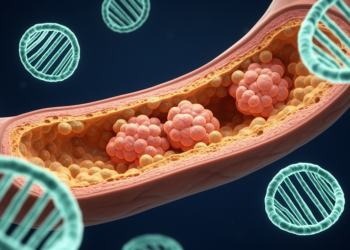
Each component of the proposed tri-modal system brings a distinct function. Exosomes, nanoscale vesicles 30 to 150 nanometers across secreted by most cell types, carry proteins, lipids, messenger RNA, microRNAs, cytokines and growth factors that modulate inflammation, angiogenesis and tissue regeneration in recipient cells. Mesenchymal stem cell-derived exosomes in particular enhance endothelial and fibroblast proliferation, promote angiogenesis and support re-epithelialization through signaling pathways such as PI3K/AKT and Wnt/beta-catenin. However, when exosomes are administered directly, they are rapidly cleared from wound sites, limiting their therapeutic concentration where it is needed.
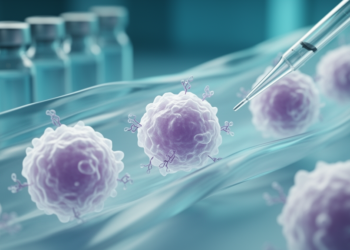
Hydrogels solve this delivery problem. These three-dimensional networks of hydrophilic polymers can absorb many times their dry weight in water, creating a hydrated microenvironment that supports nutrient diffusion, oxygen transport and cellular migration. When exosomes are encapsulated within a hydrogel, the matrix protects them from enzymatic degradation, oxidative stress and mechanical damage while limiting rapid diffusion and systemic clearance. A hyaluronic acid injectable hydrogel containing mesenchymal stem cell-derived exosomes, for example, improved endothelial and fibroblast migration and accelerated wound closure in chronic wound models. Crosslinking density and degradation rate can be tuned to sustain release over days to weeks, although excessive crosslinking may restrict exosome diffusion and insufficient crosslinking may allow premature release.
Silver nanoparticles supply the antimicrobial arm. Their high surface-to-volume ratios enhance interactions with microbial membranes and support sustained release of silver ions, and they kill bacteria by disrupting membranes, promoting reactive oxygen species generation, and interfering with intracellular processes. In vitro studies have reported that these particles can also induce dose-dependent cytotoxicity in keratinocytes and fibroblasts through oxidative stress and mitochondrial dysfunction, with effects strongly influenced by particle size, surface chemistry and ion release kinetics. Silver resistance has also been reported following prolonged or sublethal exposure, through mechanisms including reduced silver uptake, efflux, sequestration and enhanced biofilm formation, underscoring the importance of optimizing dosage and release kinetics.
The review describes several preclinical systems that integrate these elements. An injectable antibacterial hydrogel incorporating exosome-loaded alginate microspheres and silver nanoparticles was developed for infected scald wounds, enabling sustained exosome release and reporting broad-spectrum antibacterial activity against Staphylococcus aureus, Escherichia coli and Pseudomonas aeruginosa. In a murine infected wound model, this hydrogel significantly improved wound closure compared with controls, with a reported p-value below 0.05, though the authors note these outcomes depended on nanoparticle concentration and release kinetics, and long-term toxicity and systemic safety remain insufficiently characterized. Other examples include a composite of exosomes and nanosilver in a quaternized carboxymethyl chitosan-alginate hydrogel that reported antibacterial activity along with increased cell proliferation, angiogenesis, collagen deposition and enhanced wound closure in vivo, with cytocompatibility maintained under the tested conditions.
The authors are careful to distinguish between genuine synergy and merely additive effects. According to accepted pharmacological frameworks, synergy occurs when a combined response exceeds the expected additive contribution of the components, yet most current studies employ integrated multifunctional systems without factorial experimental designs that would independently assess each component, pairwise combinations and the complete formulation. The available evidence, the review concludes, should be interpreted primarily as demonstrating complementary or additive multifunctionality, while true synergy remains a hypothesis requiring formal quantitative validation. Direct quantitative comparison across studies is also limited by variability in experimental models, outcome measures and reporting methodologies.
The translational barriers are substantial. Scalable exosome production would require closed bioreactor systems with tangential flow filtration rather than conventional flask-based methods, and batch-to-batch variability in donor characteristics, culture conditions and isolation protocols affects yield, cargo composition and biological activity. Terminal sterilization poses a particular challenge because autoclaving, gamma irradiation and ethylene oxide exposure are incompatible with exosome structural integrity and may alter silver nanoparticle surface chemistry, making aseptic processing of pre-sterilized components the only viable strategy. Regulatory classification is similarly unresolved, as no established framework accommodates combined biologic-biomaterial-nanomaterial products across FDA and EMA jurisdictions.
The quality of the underlying evidence is itself a limitation. Most published studies consist of in vitro investigations and small-animal experiments, particularly murine and diabetic rat wound models, which cannot fully replicate human wound healing. Rodents heal predominantly through wound contraction, and their skin architecture, immune responses, vascular dynamics and biofilm complexity differ substantially from human chronic wounds. Sample sizes are often small, follow-up periods short, and publication bias toward positive findings may overestimate therapeutic potential. The review calls for large-animal models, including porcine full-thickness and diabetic wound models, to generate clinically translatable efficacy and safety data before first-in-human studies.
Nevertheless, the review frames tri-modal systems as a conceptually advanced direction in regenerative medicine. Silver-containing wound dressings have already achieved regulatory approval and clinical adoption, and several exosome-based therapies are under clinical investigation for tissue repair, providing partial precedents for the integrated platform. Future research directions include stimuli-responsive hydrogels capable of on-demand release in response to wound pH, reactive oxygen species or temperature, engineered exosomes functionalized with targeting ligands, and smart dressings incorporating biosensors for real-time wound monitoring. Until large-animal and clinical studies validate safety, efficacy and manufacturability, however, the tri-modal exosome-hydrogel-silver nanoparticle platform remains a promising hypothesis rather than an established therapy.
Subject of Research: Tri-modal biomaterial systems combining exosomes, hydrogels and silver nanoparticles for chronic wound healing
Article Title: Exosome loaded hydrogels containing silver nanoparticles for chronic wound healing
Article References: Omar, Y., Mohamed, R., Ashraf, M., Afia, H., John, M., Youseif, S. H., & Maged, M. (2026). Exosome loaded hydrogels containing silver nanoparticles for chronic wound healing. Discover Pharmaceutical Sciences, 2(1), Article 18. https://doi.org/10.1007/s44395-026-00055-3
Image Credits: AI Generated
DOI: 10.1007/s44395-026-00055-3
Keywords: chronic wounds, exosomes, hydrogels, silver nanoparticles, wound healing, biomaterials, regenerative medicine, preclinical studies, antimicrobial, diabetic foot ulcers, tissue regeneration, clinical translation
Cite Scienmag News
Ophelia Keating. (October 28, 2026). Exosomes, Hydrogels and Silver Nanoparticles Combine in a Three-Part Wound Healing Platform Still Awaiting Clinical Proof. Scienmag. https://scienmag.com/exosomes-hydrogels-and-silver-nanoparticles-combine-in-a-three-part-wound-healing-platform-still-awaiting-clinical-proof/
Ophelia Keating. "Exosomes, Hydrogels and Silver Nanoparticles Combine in a Three-Part Wound Healing Platform Still Awaiting Clinical Proof." Scienmag, 28 October 2026, https://scienmag.com/exosomes-hydrogels-and-silver-nanoparticles-combine-in-a-three-part-wound-healing-platform-still-awaiting-clinical-proof/. Accessed 29 October 2026.
Ophelia Keating. "Exosomes, Hydrogels and Silver Nanoparticles Combine in a Three-Part Wound Healing Platform Still Awaiting Clinical Proof." Scienmag. October 28, 2026. https://scienmag.com/exosomes-hydrogels-and-silver-nanoparticles-combine-in-a-three-part-wound-healing-platform-still-awaiting-clinical-proof/