


Accurate diagnosis sits at the heart of malaria control. Every treatment decision, every surveillance figure, and every estimate of disease burden depends on tests that can reliably distinguish infected from uninfected people. Yet the tools used most widely in endemic regions—antigen-based rapid diagnostic tests, or RDTs—rarely receive rigorous field evaluation during the very seasons when transmission peaks and diagnostic performance matters most. A new cross-sectional study conducted in Nigeria during a period of high seasonal malaria transmission now offers a detailed picture of how one commonly used PfHRP2-based RDT performed against light microscopy and polymerase chain reaction (PCR) under real-world conditions.
The research, led by Olugbenga Akinola and colleagues and published in BMC Infectious Diseases, enrolled 511 participants presenting with symptoms suggestive of malaria across study sites in an area of intense seasonal transmission. Whole blood samples collected from each participant were evaluated using a PfHRP2 antigen-based rapid diagnostic test kit and by light microscopy, the two methods most commonly deployed in routine clinical practice across sub-Saharan Africa. To establish a corrective benchmark, the team randomly selected a subset of 153 samples for conventional PCR analysis, a molecular method regarded as a reference standard for detecting low-level parasitemia that other tests may miss.
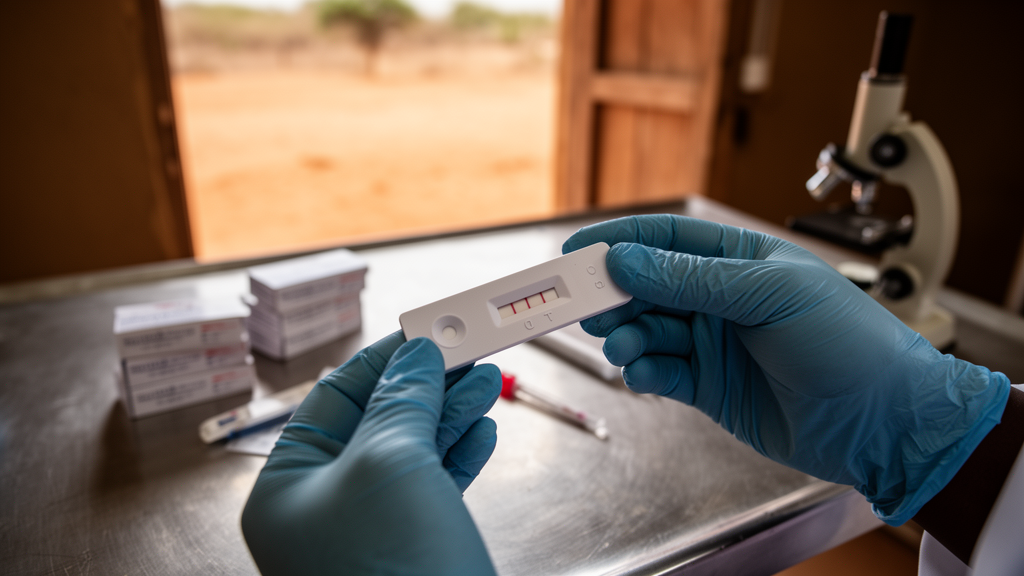
The choice of target antigen is central to how these tests work. Most rapid diagnostic tests deployed in Africa detect histidine-rich protein 2 (HRP2), a protein produced abundantly by Plasmodium falciparum, the parasite species responsible for the vast majority of malaria deaths on the continent. The PfHRP2-based RDT evaluated in this study works by capturing this antigen from a small blood sample, producing a visible line when the protein is present. Because the antigen can persist in the blood for weeks after parasites have been cleared, and because some parasite strains have evolved to delete the genes encoding HRP2, the performance of these tests in any given setting must be assessed empirically rather than assumed.
During the study period, malaria prevalence measured on the field using the RDT was high, reflecting the intense seasonal transmission underway at the time of enrollment. The RDT demonstrated strong sensitivity, correctly identifying the large majority of infections confirmed by the reference methods. This finding is consistent with the design intent of PfHRP2-based tests, which are engineered to detect even low concentrations of circulating antigen and to remain positive for extended periods after infection. In a clinical setting where missing a case can lead to severe disease or death, high sensitivity is a critical property, and the results suggest the test fulfilled this role during peak transmission.
However, the study also revealed a notable weakness in specificity. When compared against PCR, the RDT produced a substantial number of positive results in samples that the molecular method did not confirm as parasitemic. Cohen’s kappa coefficient, used to assess agreement between the RDT, microscopy, and PCR beyond chance, indicated only fair agreement between the RDT and the molecular reference standard. This pattern of discordance is consistent with the known biology of HRP2: the antigen can remain detectable in blood for weeks after effective treatment, meaning that a positive RDT result may reflect a recent, resolved infection rather than an active one requiring treatment.
Light microscopy, the other diagnostic method evaluated alongside the RDT, showed a different profile. While microscopy requires trained personnel, quality-controlled equipment, and adequate electricity—resources that are often scarce in the settings where malaria burden is highest—it offers the advantage of detecting active infection directly by visualizing parasites in blood films. The comparison between RDT and microscopy results in this study highlights the trade-offs that health systems must navigate when choosing between the speed and simplicity of RDTs and the greater specificity of expert microscopy.
The implications of these findings extend beyond individual clinical decisions. Malaria prevalence figures derived from RDT-based surveys are used to allocate resources, guide intervention strategies, and track progress toward elimination goals. If RDTs systematically overestimate prevalence during and after peak transmission seasons because of persistent antigen, the resulting surveillance data may overstate the true burden of active disease. The authors note that this is particularly relevant in settings where transmission is highly seasonal, because the interval between peak transmission and survey periods can strongly influence how many positive RDT results reflect cleared rather than active infections.
The study also underscores the value of PCR as a corrective tool in diagnostic evaluations. By randomly selecting a subset of samples for molecular analysis, the researchers were able to quantify the degree of discordance between field tests and the reference standard, providing a more nuanced picture of diagnostic performance than either field test alone could offer. This approach—using PCR on a representative subset rather than the full sample—offers a practical model for other endemic regions seeking to evaluate their diagnostic tools without the cost of molecular testing on every sample.
For clinicians working in endemic settings, the findings support the continued use of PfHRP2-based RDTs in routine practice, particularly given their proven sensitivity and operational advantages. At the same time, the results argue for awareness of the limitations of these tests during and immediately after peak transmission periods, and for the judicious use of microscopy or molecular confirmation in cases where diagnostic uncertainty could alter management. As malaria-endemic countries pursue increasingly ambitious control and elimination targets, the precision of the diagnostic tools they rely upon will only grow in importance.
Subject of Research: Malaria Diagnostics
Article Title: Dynamics of PfHRP2 antigen-based diagnostic tool efficiencies during high seasonal malaria transmission
Article References: Akinola, O., Adeniyi, O. M., Usman, R., Amusan, A. I., & Gbotosho, G. O. (2026). Dynamics of PfHRP2 antigen-based diagnostic tool efficiencies during high seasonal malaria transmission. BMC Infectious Diseases. https://doi.org/10.1186/s12879-026-14482-1
Image Credits: AI Generated
DOI: 10.1186/s12879-026-14482-1
Keywords: malaria, rapid diagnostic test, PfHRP2, PCR, microscopy, diagnostic accuracy, Nigeria, Plasmodium falciparum, Dynamics, antigen-based, diagnostic, tool
Cite Scienmag News
Ophelia Keating. (October 18, 2026). Rapid Malaria Test Shows High Sensitivity but Weak Specificity During Peak Transmission Season. Scienmag. https://scienmag.com/rapid-malaria-test-shows-high-sensitivity-but-weak-specificity-during-peak-transmission-season/
Ophelia Keating. "Rapid Malaria Test Shows High Sensitivity but Weak Specificity During Peak Transmission Season." Scienmag, 18 October 2026, https://scienmag.com/rapid-malaria-test-shows-high-sensitivity-but-weak-specificity-during-peak-transmission-season/. Accessed 18 October 2026.
Ophelia Keating. "Rapid Malaria Test Shows High Sensitivity but Weak Specificity During Peak Transmission Season." Scienmag. October 18, 2026. https://scienmag.com/rapid-malaria-test-shows-high-sensitivity-but-weak-specificity-during-peak-transmission-season/


