A randomized controlled trial in Malatya, Türkiye, found that earthquake survivors receiving six group sessions of psychoeducation-supported breathing and relaxation exercises had greater improvements in post-traumatic stress symptoms and sleep quality than a comparison group that received no intervention during the study. The analysis included 84 earthquake survivors who completed the trial, with 42 in each group. After the intervention, the exercise group’s mean score on the Post-Traumatic Stress Disorder Short Scale fell by 5.45 points, while its mean score on the Pittsburgh Sleep Quality Index fell by 3.88 points. Both differences relative to the control group were reported as statistically significant at p < .05.
The researchers used a randomized controlled pre-test–post-test design to examine the effects of the program among people affected by the February 6, 2023 earthquakes in Türkiye. They assessed 203 earthquake survivors for eligibility and randomly assigned 90 participants in equal numbers to the intervention and control groups. A total of 84 people completed the study and were included in the final analysis. Participants were recruited from temporary shelters in Malatya, one of the provinces severely affected by the earthquakes. Data collection used a sociodemographic form, the Post-Traumatic Stress Disorder Short Scale, abbreviated PTSD-SS, and the Pittsburgh Sleep Quality Index, abbreviated PSQI.
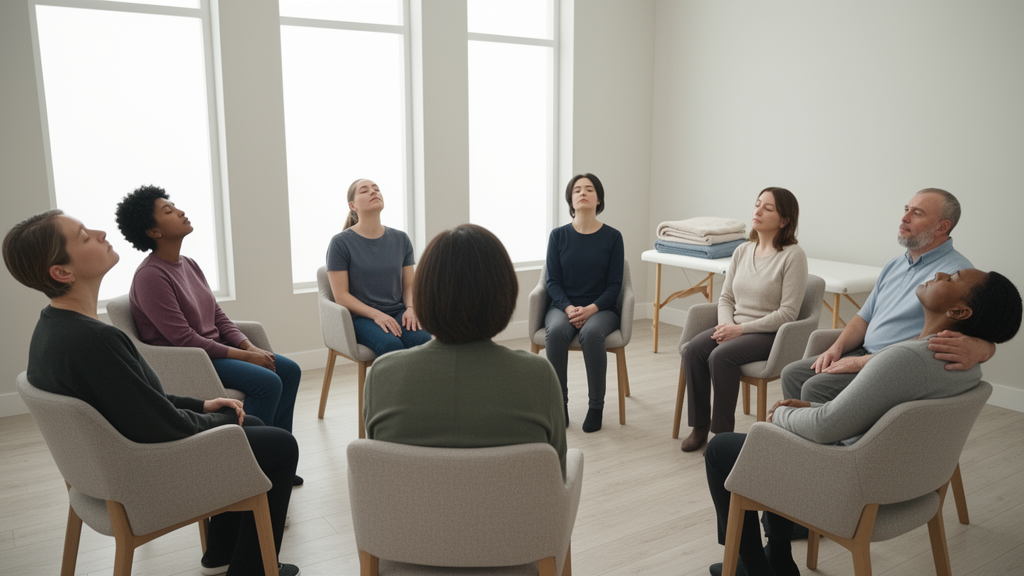
The intervention was delivered through six group training sessions that combined breathing and relaxation exercises with psychoeducation. The control group received no intervention from the researchers during the study period. The reported post-test results indicated reduced post-traumatic stress symptoms and improved sleep quality in the intervention group compared with the control group. The 5.45-point reduction in the mean PTSD-SS score and the 3.88-point reduction in the mean PSQI score were the study’s two principal quantitative findings. The investigators concluded that breathing and relaxation exercises supported by psychoeducation appear to be a low-cost and effective approach for reducing post-traumatic stress symptoms and improving sleep quality among disaster-affected people.
The trial’s evidence is strongest for the specific population and program it examined: earthquake survivors living in temporary shelters in Malatya who completed all parts of the study. The final analysis was based on 42 participants per group rather than all 90 people randomized, which limits how the results can be interpreted independently of study completion. The control condition also tested the complete package against no researcher-provided intervention, so the results do not separate the contribution of psychoeducation from that of the breathing and relaxation exercises. As a single-location study with a modest final sample, the findings offer direct evidence for survivors in that shelter setting but do not by themselves establish the same effect size in other locations, disaster populations or delivery environments.
The report describes the intervention as a structured, low-cost group format intended for post-disaster psychosocial support, but the supplied findings do not establish that the program replaced other psychological or sleep services. The article was published as open-access research in BMC Psychology on September 2, 2026, in an early accepted version that the publisher states may undergo further editorial changes before replacement by the final version of record. The trial was retrospectively registered on August 21, 2026, under ClinicalTrials.gov identifier NCT07781904. Taken together, the reported measurements support the conclusion that six psychoeducation-supported breathing and relaxation sessions were followed by better PTSD-SS and PSQI outcomes than no intervention among the earthquake survivors who completed the trial.
Subject of Research: Randomized trial of group breathing and relaxation exercises for PTSD symptoms and sleep quality among earthquake survivors
Article Title: The effects of psychoeducation-supported breathing and relaxation exercises on Post-Traumatic stress symptoms and sleep quality in earthquake survivors
Article References: KAYAOĞLU, K., & CEVİZ, R. (2026). The effects of psychoeducation-supported breathing and relaxation exercises on Post-Traumatic stress symptoms and sleep quality in earthquake survivors. BMC Psychology. https://doi.org/10.1186/s40359-026-05487-1
Image Credits: AI Generated
DOI: 10.1186/s40359-026-05487-1
Keywords: earthquake survivors, PTSD symptoms, sleep quality, breathing exercises, relaxation training, psychoeducation, randomized controlled trial, disaster mental health, Türkiye, group intervention, effects, psychoeducation-supported
Cite Scienmag News
Glenn Wilkins. (October 22, 2026). Randomized trial links group relaxation exercises to better PTSD symptoms and sleep. Scienmag. https://scienmag.com/randomized-trial-links-group-relaxation-exercises-to-better-ptsd-symptoms-and-sleep/
Glenn Wilkins. "Randomized trial links group relaxation exercises to better PTSD symptoms and sleep." Scienmag, 22 October 2026, https://scienmag.com/randomized-trial-links-group-relaxation-exercises-to-better-ptsd-symptoms-and-sleep/. Accessed 22 October 2026.
Glenn Wilkins. "Randomized trial links group relaxation exercises to better PTSD symptoms and sleep." Scienmag. October 22, 2026. https://scienmag.com/randomized-trial-links-group-relaxation-exercises-to-better-ptsd-symptoms-and-sleep/