


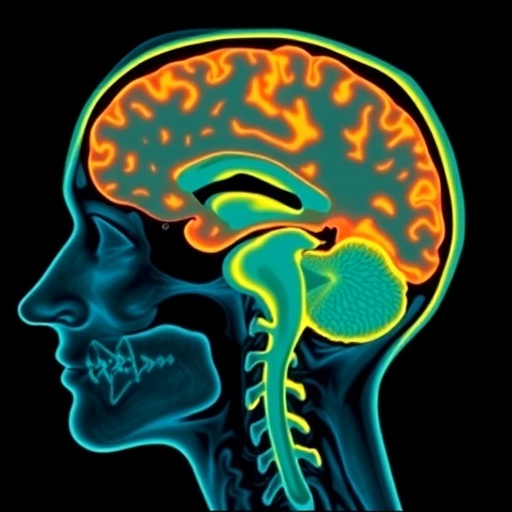
Recent advancements in the realm of neuroimaging have offered an exciting glimpse into the potential for enhanced diagnostic techniques for neurodegenerative diseases. Parkinson’s disease, a progressive disorder that affects movement and can impair cognitive function, typically manifests in various ways, from tremors and stiffness to more subtle changes in cognition. A new study, led by Zeng et al., explores a novel approach through hippocampal functional imaging-derived radiomics features that may significantly improve the diagnosis of cognitively impaired patients struggling with this debilitating condition.
The study is particularly timely, as researchers and clinicians alike are yearning for methodologies that can provide clearer insights into the cognitive decline associated with Parkinson’s disease. Misdiagnosis remains a critical issue, and the stakes are high; the right diagnosis at the right time can dramatically alter the quality of life for patients. Traditional diagnostic tools, including clinical assessments and neuropsychological tests, often fall short in early detection or discerning the nuances of cognitive impairment among Parkinson’s patients.
At the study’s core is the analysis of hippocampal functional imaging. This innovative technique dives deep into the brain’s structure and function, capturing the intricate details of neural activities that are often overlooked by conventional imaging methods. By assessing these detailed patterns, researchers aim to identify biomarkers that correlate with cognitive impairment, paving the way for timely and accurate diagnoses.
The research methodology involved a thorough investigation of the hippocampal regions in the brains of Parkinson’s patients, using advanced imaging technologies. The transformative power of radiomics is that it allows for the extraction and quantification of numerous features from imaging data, transforming qualitative assessments into quantitative analytics. This enables the development of predictive models that can effectively distinguish between healthy cognitive functioning and impairments resulting from Parkinson’s disease.
In their study, Zeng et al. utilized an expansive dataset that encompassed various stages of Parkinson’s disease and a diverse patient demographic. This broad representation is essential for establishing the reliability and generalizability of the findings. By analyzing numerous radiomic features, such as texture, shape, and intensity of imaging patterns, the researchers sought to construct a robust predictive framework that could be beneficial for frontline clinicians.
The implications of their findings are profound. For patients, the likelihood of receiving a timely and accurate diagnosis could herald a new era in disease management. Additionally, it could enhance the personalization of treatment strategies, as understanding the cognitive profile of Parkinson’s patients may assist clinicians in tailoring therapeutic approaches. This could potentially lead to improved outcomes, as interventions could be initiated much earlier than what is currently practiced.
Furthermore, the ability to predict cognitive decline through hippocampal imaging could facilitate further research into the progression of Parkinson’s disease. Understanding the timeline of cognitive impairment could also assist healthcare providers in preparing better care plans as the disease evolves. Insights gathered from this research could help in mapping the disease trajectory, ultimately improving the life quality for many patients.
On the technological front, the integration of artificial intelligence (AI) continues to revolutionize neuroimaging analysis. The sophistication of algorithms designed to analyze radiomic features goes beyond human capability, uncovering hidden patterns that may be imperceptible to trained professionals. This synergy between AI and neuroimaging offers enormous promise in the diagnosis and management of neurological disorders like Parkinson’s disease.
As the study progresses towards validation in clinical settings, there will be an imperative for collaboration across the medical and research communities. Establishing standardized protocols for radiomics feature extraction and the subsequent use of these techniques in clinical practice will be one of the pivotal challenges. Training healthcare providers to interpret these complex data points will also be necessary for the successful adoption of this methodology.
This research carries the potential to not only shift the paradigm for Parkinson’s diagnosis but also inspires a broader reevaluation of how cognitive impairments are assessed in other neurodegenerative diseases. If the techniques employed in this study prove successful, a ripple effect could be felt across the entire spectrum of neurology, encouraging similar approaches in diseases such as Alzheimer’s, Huntington’s, and multiple sclerosis.
In conclusion, the findings from Zeng et al. underscore the need for embracing technology and innovative methodologies in the diagnosis of cognitive impairments associated with Parkinson’s disease. As the medical community looks forward to integrating these advanced techniques into standard practice, the hope remains that patients will gain access to quicker, more accurate diagnoses. With further validation and research, the intersection of radiomics, neuroimaging, and AI holds the key not only to unlocking the complexities of Parkinson’s disease but also paves the way for improving life for millions of individuals affected by neurodegenerative conditions.
As we move forward, the challenge remains: how do we leverage these advancements within existing healthcare frameworks to ensure that the benefits reach those who need them most? It is imperative that the dialogue between researchers, clinicians, and patients continues to evolve, fostering an environment where innovation aligns with compassionate patient care.
In anticipation of future studies, one thing is clear: the path forward is paved with possibilities. The integration of hippocampal functional imaging into the clinical routine could herald a new standard of care for cognitively impaired patients with Parkinson’s disease, illustrating how innovation can lead to enhanced diagnostic precision and ultimately improved patient outcomes.
Zeng, W., Liang, X., Guo, J. et al. Hippocampal functional imaging-derived radiomics features for diagnosing cognitively impaired patients with Parkinson’s disease.
BMC Neurosci 26, 27 (2025). https://doi.org/10.1186/s12868-025-00938-8
Cite Scienmag News
Ophelia Keating. (August 29, 2025). Radiomics Reveals Hippocampal Imaging Potential in Parkinson’s Diagnosis. Scienmag. https://scienmag.com/radiomics-reveals-hippocampal-imaging-potential-in-parkinsons-diagnosis/
Ophelia Keating. "Radiomics Reveals Hippocampal Imaging Potential in Parkinson’s Diagnosis." Scienmag, 29 August 2025, https://scienmag.com/radiomics-reveals-hippocampal-imaging-potential-in-parkinsons-diagnosis/. Accessed 4 September 2026.
Ophelia Keating. "Radiomics Reveals Hippocampal Imaging Potential in Parkinson’s Diagnosis." Scienmag. August 29, 2025. https://scienmag.com/radiomics-reveals-hippocampal-imaging-potential-in-parkinsons-diagnosis/


