


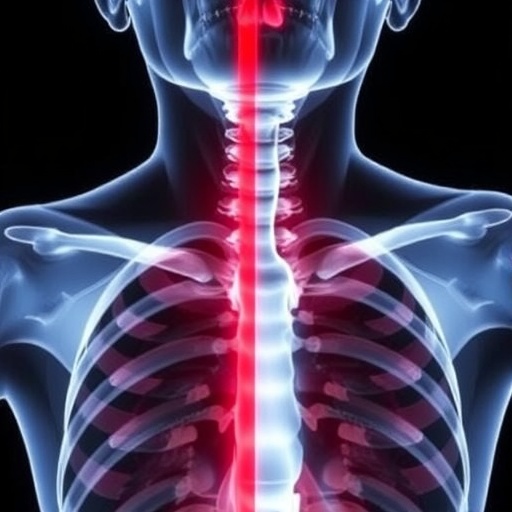
In a groundbreaking study published in BMC Cancer, researchers have rigorously compared the long-standing debate between radical surgery and definitive radiotherapy for the treatment of locoregional upper esophageal squamous cell carcinoma (L-UESCC). This rare but aggressive malignancy presents a unique therapeutic dilemma, with current clinical guidelines offering little consensus on the optimal curative strategy. The study, encompassing a substantial cohort of patients treated over a six-year period, offers fresh insights that could reshape clinical practice and patient outcomes.
Upper esophageal squamous cell carcinoma is a sub-type of esophageal cancer characterized by the abnormal proliferation of squamous cells in the upper third of the esophagus. Due to its anatomic complexity and proximity to critical structures such as the larynx and trachea, therapeutic interventions often present significant challenges. Traditionally, radical esophagectomy has been seen as the cornerstone of locoregional control. However, the potential morbidity associated with surgery has bolstered interest in definitive radiotherapy, either alone or combined with chemotherapy, as less invasive but effective alternatives.
In this study, conducted across two major cancer centers from 2013 to 2018, researchers meticulously tracked 385 patients diagnosed with L-UESCC who underwent curative-intent therapy. Of these, 138 patients underwent radical surgical resection aiming for complete tumor removal, while a more sizable group of 247 patients received definitive radiotherapy. The investigators sought to compare overall survival (OS) between these treatment modalities and uncover prognostic factors that influence patient outcomes through robust statistical methodologies including Kaplan-Meier survival analysis, Cox proportional hazards modeling, and propensity score matching (PSM) to adjust for baseline differences.
The results bring to light a fascinating parity in survival outcomes between surgery and radiotherapy. Prior to adjusting for confounding variables, the median OS for the surgically treated cohort was observed at 27 months, closely mirroring the 29 months recorded for those receiving radiotherapy. Even after PSM adjustments, which refine comparisons by balancing patient characteristics, the median OS remained statistically similar—23 months for surgery versus 30 months for radiotherapy—underscoring that neither approach singularly outperformed the other significantly.
However, a critical nuance emerged when chemotherapy was incorporated. Patients undergoing combined chemoradiotherapy experienced a marked survival advantage over those receiving radiotherapy alone, with median OS extending to 36 months compared to 20 months. This finding highlights the pivotal role systemic therapy can play in augmenting local treatment effects, potentially through eradication of micrometastatic disease and sensitization of tumor cells to radiation-induced cytotoxicity.
Intriguingly, the study also delved into subgroup analyses that illuminated scenarios in which surgery might confer pronounced benefit. In chemotherapy-naïve patients, particularly those with early-stage disease (stage I-II), surgical resection delivered a statistically significant survival edge over radiotherapy. This advantage was not observed in patients with more advanced stage III disease, suggesting a nuanced interplay between tumor burden, systemic therapy responsiveness, and local control methods.
Beyond survival comparisons, the multivariate analysis identified classical oncological variables such as tumor T stage, nodal involvement, and tumor length as independent prognostic determinants. These factors are well-established in esophageal cancer biology and reiterate their strong influence on patient trajectories regardless of the chosen local therapy modality.
These findings collectively underscore the complexity in managing L-UESCC. While radical surgery and definitive radiotherapy can yield comparable overall survival, therapeutic decision-making must incorporate individual patient factors, disease characteristics, and the potential benefits of combined systemic approaches. The data advocates for a personalized, multidisciplinary treatment planning process integrating surgical oncology, radiation oncology, and medical oncology expertise to optimize care.
Furthermore, the study reflects a growing paradigm shift in oncology where less invasive treatment options supplemented by systemic agents can rival traditional radical surgeries, mitigating morbidity without sacrificing efficacy. This is particularly resonant in cancers with intricate anatomical constraints such as upper esophageal tumors, where surgical morbidity and postoperative quality of life are critical considerations.
It is essential to note that the retrospective nature of this study carries inherent limitations, including possible selection biases despite PSM efforts. Prospective randomized controlled trials would be invaluable to definitively establish treatment hierarchies. Nonetheless, given the rarity of L-UESCC and challenges in accruing large patient populations, high-quality observational studies like this provide meaningful guidance.
The integration of chemotherapy with radiotherapy emerges as a key consideration, reinforcing existing evidence in esophageal cancer at large that multimodal therapy often translates into improved patient survival. Particularly, systemic treatments might address occult metastatic disease that local therapies alone cannot eliminate, hence providing a dual assault against the malignancy.
Equally, the nuanced benefit of surgery in early-stage, chemotherapy-naïve patients underscores the continued relevance of radical resection as a curative-intent option, especially when patients are fit and the tumor anatomy allows resectability without prohibitive risk.
The authors conclude with a call for tailored treatment strategies embracing both systemic and local therapies. They advocate for multidisciplinary tumor boards to assess each patient’s unique clinical scenario—balancing tumor stage, comorbidities, performance status, and patient preferences—to arrive at the most promising approach.
In summary, this study challenges conventional dogma that pigeonholes radical surgery as the unequivocal gold standard in L-UESCC treatment. By illuminating equivalence in survival outcomes and elevating chemoradiotherapy as a compelling alternative, it heralds an era of personalized oncology where treatment can be both effective and mindful of quality of life concerns.
As medical science advances towards precision oncology, studies such as this deepen our understanding of complex cancer biology and therapeutic interactions. The growing armamentarium of systemic agents, advanced radiotherapy techniques, and refined surgical methods predicates a future where treatment decisions are increasingly nuanced and evidence-driven.
While further research is needed to validate these findings across diverse populations, clinicians and patients alike can draw encouragement from these insights in navigating a challenging malignancy with historically limited robust guidelines.
This research is a critical step in unraveling optimal strategies against locoregional upper esophageal squamous cell carcinoma, paving the way for improved survival, tailored therapies, and ultimately, better patient-centered outcomes.
Cite Scienmag News
Nathaniel Bowman. (August 27, 2025). Radical Surgery vs Radiotherapy for Upper Esophageal Cancer. Scienmag. https://scienmag.com/radical-surgery-vs-radiotherapy-for-upper-esophageal-cancer/
Nathaniel Bowman. "Radical Surgery vs Radiotherapy for Upper Esophageal Cancer." Scienmag, 27 August 2025, https://scienmag.com/radical-surgery-vs-radiotherapy-for-upper-esophageal-cancer/. Accessed 6 September 2026.
Nathaniel Bowman. "Radical Surgery vs Radiotherapy for Upper Esophageal Cancer." Scienmag. August 27, 2025. https://scienmag.com/radical-surgery-vs-radiotherapy-for-upper-esophageal-cancer/


