


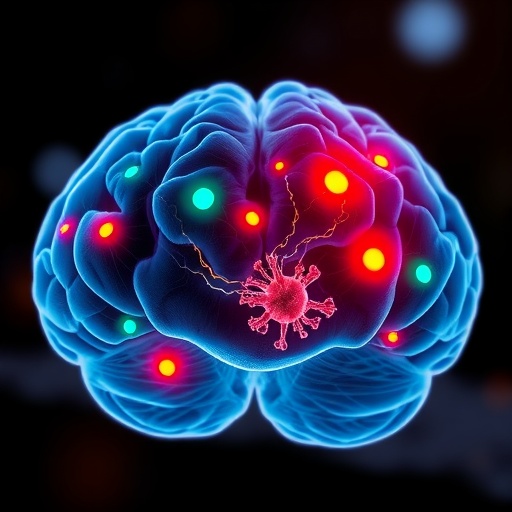
In a groundbreaking study led by The University of Texas MD Anderson Cancer Center, researchers have unveiled compelling insights into how radiation therapy can profoundly influence the immune landscape of brain metastases, opening new avenues for combinational immunotherapeutic strategies. Brain metastases, secondary tumors that originate from cancers elsewhere in the body and colonize the brain, represent one of the most formidable clinical challenges in oncology. Their treatment has been notoriously difficult due to the highly immunosuppressive nature of the brain tumor microenvironment and the protective blood-brain barrier, which together blunt the effectiveness of conventional immunotherapies.
Despite the advances in immune checkpoint inhibitors and cellular therapies that have revolutionized treatment for many cancers, these modalities have shown limited success in brain metastases. The prevailing concept attributes this resistance largely to the “cold” immune microenvironment within the brain, characterized by suppressed immune activation and poor T cell infiltration. Radiation therapy, traditionally employed for its cytotoxic effects on cancerous cells, has garnered interest as a potential immunomodulatory agent. However, the precise mechanisms by which radiation alters immune dynamics within brain metastases remained elusive until now.
Leveraging an integrative approach encompassing RNA sequencing and T cell receptor (TCR) profiling on samples from over 300 patients harboring brain metastases sourced predominantly from breast and lung primaries, the research team decoded the complex interplay between radiation and immune activation. Their findings, recently published in Clinical Cancer Research, reveal that pre-operative radiation not only directly damages tumor DNA but also reshapes the tumor microenvironment through enhanced recruitment and activation of cytotoxic T lymphocytes. This dual impact fundamentally transforms the previously immunologically inert metastatic lesions into immunologically responsive entities.
Mechanistically, radiation induces the release of tumor-associated antigens and danger signals, which act as potent stimulators for antigen-presenting cells and infiltrating lymphocytes. This cascade prompts an upregulation of inflammatory cytokines and immune checkpoints, effectively increasing tumor visibility to the immune system. Interestingly, radiation also modulates tumor vasculature, facilitating enhanced permeability and immune cell trafficking into the tumor bed. Concurrently, suppressive myeloid populations within the microenvironment are either depleted or reprogrammed, further alleviating immunosuppression.
One of the study’s pivotal revelations centers on T cell receptor diversity as a prognostic biomarker. Enhanced TCR diversity corresponds with better immunotherapeutic outcomes, suggesting that radiation-induced augmentation of this diversity might predict patient responsiveness. Such biomarkers hold immense clinical promise, enabling personalized treatment algorithms that optimize radiation-immunotherapy combinations tailored to individual tumor immune profiles.
Dr. Jason Huse, M.D., Ph.D., a leading pathologist at MD Anderson and co-senior author, emphasizes the transformative nature of these findings. “Our results demonstrate that instead of merely bypassing the blood-brain barrier, we should recalibrate our therapeutic focus toward the tumor microenvironment itself. Radiation effectively ‘primes’ these metastases, enabling robust immune engagement that was previously unattainable. This paradigm shift paves the way for clinical trials harnessing synergistic radiation and immunotherapy regimens.”
This shift is particularly significant given the limitations of systemic therapies in penetrating brain lesions. By directly modifying the local immune milieu, radiation circumvents longstanding pharmacologic barriers and leverages the body’s own immune arsenal for tumor eradication. The implications extend beyond localized control; emerging evidence hints at the potential for abscopal effects where immunity induced in the irradiated site mediates systemic antitumor responses.
The research incorporated tissue specimens from a contemporaneous clinical trial spearheaded by Dr. Debra Nana Yeboa, which contrasted pre-operative and postoperative radiation regimens. This comparative analysis reinforced the immunomodulatory superiority of pre-operative radiation, highlighting its capacity to bolster immune infiltration and activation before surgical tumor resection.
While the experimental findings are preliminary and retrospective, the investigators are actively validating these observations in larger, prospective clinical cohorts. The overarching goal is to delineate optimized therapeutic windows and dosing sequences that exploit radiation’s immunogenic potential in concert with checkpoint inhibitors, vaccines, or adoptive cell therapies.
In summary, this study delineates a critical and previously underappreciated function of radiation therapy in rendering brain metastases immunologically “hot.” By integrating radiation with immunotherapeutic modalities, there is a tangible prospect of overcoming the entrenched resistances posed by the brain’s unique protective and suppressive environment. This work marks a pivotal step toward improved survival rates and quality of life for patients afflicted with metastatic brain tumors.
As the oncology community eagerly anticipates forthcoming clinical trials, this research provides an urgent biological rationale for a comprehensive therapeutic strategy that targets both tumor cells and their microenvironment. The convergence of radiation biology and immunotherapy represents a new frontier with the capacity to redefine standard-of-care paradigms for brain metastases.
News Publication Date: June 17, 2026
Web References:
Cite Scienmag News
Nathaniel Bowman. (June 17, 2026). Radiation Therapy Boosts Immune Response in Brain Metastases, Enhancing Treatment Effectiveness. Scienmag. https://scienmag.com/radiation-therapy-boosts-immune-response-in-brain-metastases-enhancing-treatment-effectiveness/
Nathaniel Bowman. "Radiation Therapy Boosts Immune Response in Brain Metastases, Enhancing Treatment Effectiveness." Scienmag, 17 June 2026, https://scienmag.com/radiation-therapy-boosts-immune-response-in-brain-metastases-enhancing-treatment-effectiveness/. Accessed 4 September 2026.
Nathaniel Bowman. "Radiation Therapy Boosts Immune Response in Brain Metastases, Enhancing Treatment Effectiveness." Scienmag. June 17, 2026. https://scienmag.com/radiation-therapy-boosts-immune-response-in-brain-metastases-enhancing-treatment-effectiveness/


