


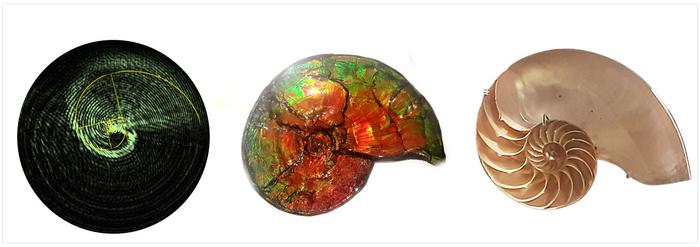
Harvard University researchers have made a groundbreaking advance in the field of optics by developing a new form of light known as the “optical rotatum.” This innovative concept builds upon the principles of optical vortices, which are beams of light that can twist and turn as they propagate. The optical rotatum is not your ordinary beam of light; it exhibits a unique behavior by changing its structure and properties in a way that mirrors patterns commonly found in nature. The researchers believe that these findings could revolutionize the way light is utilized in technological applications.
In a recent publication in the esteemed journal Science Advances, the Harvard team described how their optical vortex beam twists differently throughout its propagation, allowing for the creation of intricate and evolving patterns. This behavior draws a striking resemblance to logarithmic spirals, a mathematical pattern that characterizes natural phenomena such as nautilus shells, sunflower seeds, and even the branching of trees. The connection with nature not only highlights the elegance of the underlying physics but also opens up possibilities for harnessing these light forms in various scientific and engineering contexts.
Named the “optical rotatum,” the light vortex encapsulates the dynamics introduced by torque changes. In classical mechanics, torque is the rotational force exerted around an axis, and a “rotatum” describes how this force evolves over time. The research team was intrigued by the prospect of applying classical mechanics concepts to the behavior of light, leading to the realization that they could create a vortex beam capable of changing its torque as it moves, much like a classical object influenced by forces.
Federico Capasso, the Robert L. Wallace Professor of Applied Physics at Harvard, led this fascinating research. He articulated the significance of their discovery, emphasizing that it demonstrates a new type of light behavior that propagates and can be modulated in novel ways. This flexibility could facilitate precise manipulation of minute particles in various scientific endeavors, potentially impacting fields ranging from materials science to biophysics.
Prior research by Capasso’s team already showcased their ability to engineer light using a metasurface—an advanced form of nanostructured optics designed to manipulate light on a microscopic scale. By utilizing this technology, the researchers were able to control the polarization and angular momentum of light, effectively shaping it into specific structural forms. With the introduction of the optical rotatum, they have now added another layer of complexity and control over how light can be understood and employed.
The researchers’ findings also touch upon the fascinating intersection between mathematics and natural patterns. The realization that their optical rotatum follows the Fibonacci sequence—the famous mathematical series that frequently appears in biological systems—could inspire future research by specialists intrigued by the mathematical descriptions of light and its behavior. Ahmed Dorrah, the first author of the paper and a former research associate in Capasso’s lab, stressed the importance of these findings, hoping they could motivate mathematicians to further explore the universal templates reflected in the nature of light.
The applications of this advanced optical beam are numerous and intriguing. For instance, the optical rotatum could serve as a highly precise optical tweezers system, enabling researchers to manipulate tiny particles in a controlled manner. This capability could ultimately lead to breakthroughs in nanotechnology, allowing scientists to arrange matter at unprecedented scales and precision. Potential applications are not limited to just colloidal particles; the optical rotatum could also find applications in the manipulation of biological specimens, opening new avenues for research in the medical and biological sciences.
Moreover, the technology developed by the Harvard team is notable for its accessibility. Unlike previous attempts to demonstrate torque-changing light, which often required bulky and expensive high-intensity laser setups, Capasso’s team employed a single liquid crystal display and a low-intensity beam. This simplification could significantly lower the barrier to entry, making it feasible for a wider range of research labs to experiment with and capitalize on these findings.
As researchers continue to delve into the implications of their work, they are optimistic about the potential for collaboration across diverse fields. From applied physics to pure mathematics, the concepts underlying the optical rotatum contribute to a growing body of knowledge that might have pervasive effects on future technologies. The findings invite the scientific community to rethink existing paradigms of light manipulation and to innovate anew based on these discoveries.
In conclusion, the advent of the optical rotatum marks a pivotal moment in the understanding of light physics and its potential applications in technology. By intertwining classical mechanics with advanced optics, this research not only deepens our understanding of how light behaves in unique ways but also promises to unlock new possibilities for innovation. The Harvard team’s discovery stands as a testament to the merging of disciplines and the continuous quest to harness the wonders of nature through scientific inquiry. The future holds exciting prospects as we learn to manipulate light not just as a tool, but as a means to engage with the world around us.
Keywords
Optics
Light Manipulation
Optical Vortices
Torque
Fibonacci Sequence
Nanotechnology
Laser Physics
Applied Physics
Mathematical Physics
Natural Patterns
Spiral Growth
Quantum Mechanics
Cite Scienmag News
Bethany Barker. (April 11, 2025). Radiant Spirals: The Nautilus Shell-Inspired Phenomenon of Light. Scienmag. https://scienmag.com/radiant-spirals-the-nautilus-shell-inspired-phenomenon-of-light/
Bethany Barker. "Radiant Spirals: The Nautilus Shell-Inspired Phenomenon of Light." Scienmag, 11 April 2025, https://scienmag.com/radiant-spirals-the-nautilus-shell-inspired-phenomenon-of-light/. Accessed 5 September 2026.
Bethany Barker. "Radiant Spirals: The Nautilus Shell-Inspired Phenomenon of Light." Scienmag. April 11, 2025. https://scienmag.com/radiant-spirals-the-nautilus-shell-inspired-phenomenon-of-light/


