


A transpacific research partnership is betting that the future of radio frequency sensing will not be built from ever-larger arrays of metal antennas, but from supercooled quantum devices small enough to fit inside the tight confines of a military aircraft. Southwest Research Institute, the San Antonio-based applied research organization known simply as SwRI, and Australia’s Adelaide University have signed a three-year memorandum of understanding to jointly develop quantum radio frequency sensing, quantum signal interpretation and analytics, and related technologies. The agreement moves a collaboration that had already produced preliminary results into a formal framework for research, technology maturation and future mission applications.
The partnership is not starting from a blank page. Under the memorandum, a joint research team has already completed first-phase, hands-on evaluations of superconducting quantum RF sensors for signals intelligence applications, conducted at the Jesper Munch Quantum Laboratories at Adelaide University in South Australia. Signals intelligence, the discipline of collecting, intercepting and analyzing electronic signals, underpins defense planning, secure communications and emergency response, and the sensors at the heart of this collaboration are designed to give analysts more usable information from the same crowded electromagnetic environment.
The physics behind the approach is rooted in the behavior of electrons inside superconducting materials. In such materials, RF signals have a dramatic effect on the dynamics of electrons, the negatively charged building blocks of atoms. Ultrasensitive, longer-range quantum RF sensing devices exploit changes in electron trajectory to extract more information from the RF environment than conventional antennas can manage. Precision circuits fabricated from superconducting materials convert those microscopic responses into raw data that yields accurate signal measurements, forming the basis of a sensing architecture that its developers argue outperforms traditional hardware in both sensitivity and information content.
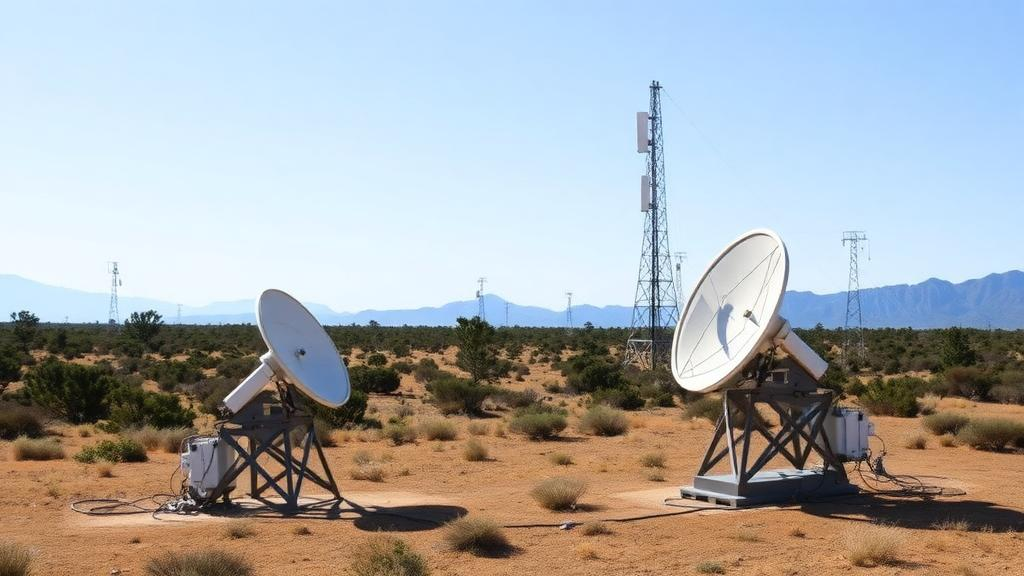
Superconducting quantum RF systems leverage the unique properties of superconducting materials to detect and characterize signals across a broad swath of the electromagnetic spectrum. That breadth matters because the practical alternative, especially aboard military ships and aircraft where every cubic meter is contested, is a collection of bulky antennas each tuned to a portion of the spectrum. Compact quantum systems offer the potential to replace those installations outright, collapsing multiple frequency-specific apertures into a single small package.
Staff Engineer Michael Quinn, who leads quantum RF research and development in SwRI’s Defense and Intelligence Solutions Division offices in Warner Robins, Georgia, framed the size advantage as fundamental rather than incremental. Unlike conventional antennas, which grow bulkier as frequencies get lower, quantum RF device size is independent of frequency, he explained. According to Quinn, these systems achieve broad coverage from kilohertz to terahertz with the same compact hardware, providing more critical information while occupying less space. That combination, he noted, is a major advantage for defense and intelligence missions where size, weight and power are critical considerations, the classic SWaP constraints that shape nearly every airborne and shipboard system design.
The hardware that makes this possible is grown, in a literal sense, at Adelaide University. The university’s quantum laboratories house a state-of-the-art molecular beam epitaxy system, or MBE, that builds advanced superconductor and quantum materials one atomic layer at a time, a process its researchers liken to a 3D printer operating at the atomic scale. The MBE transforms raw materials into a Superconducting QUantum Interference Device, better known as a SQUID, which is then supercooled to minus 452.47 degrees Fahrenheit to activate its superconducting properties and its characteristic RF wave response. At those cryogenic temperatures, the device becomes sensitive to extraordinarily faint electromagnetic signals.
Cryogenics remains one of the technology’s biggest practical hurdles, and reducing that burden is an explicit goal of the collaboration. Researchers are exploring new material architectures designed to raise SQUID operating temperatures, cut cooling requirements and improve portability and operational practicality. Every degree by which the operating temperature can climb translates into smaller, lighter and less power-hungry cooling systems, which in turn determines whether quantum RF sensors can leave the laboratory and fly on real platforms. The partnership deliberately pairs Adelaide University’s expertise in superconducting quantum materials and sensor development with SwRI’s strengths in advanced RF engineering, signals processing and operational applications, covering the full chain from atomic-scale fabrication to fielded mission use.
Professor Giuseppe C. Tettamanzi, director of the Jesper Munch Quantum Laboratories and leader of Adelaide University’s superconducting quantum technologies research program, described how the first phase of joint work unfolded. The SwRI team tested and assessed selected performance metrics of the superconducting quantum RF technology developed by Adelaide University, he said. By combining their complementary expertise, he added, the two institutions are accelerating the development and maturation of quantum RF technologies with the potential to address the challenges of increasingly congested electromagnetic environments and complex operational scenarios. Tettamanzi also positioned the project as an example of the value of deep scientific alliances between Australia and the United States in advancing technologies critical to future security and economic prosperity.
The timing of the agreement reflects a broader surge of public investment in quantum science, which spans computing, communications and sensing and is being backed worldwide as well as at state and federal levels in the United States. In Texas, the recent Texas Quantum Initiative supports strategic planning for quantum technology funding and workforce training, an effort that gives in-state organizations such as SwRI a policy backdrop for expanding their quantum portfolios. At the federal level, the U.S. Department of War announced in June a Post Quantum Cryptography Strategy aimed at protecting critical government and military systems from emerging quantum threats, underscoring how quantum technologies are simultaneously viewed as an opportunity for new capabilities and a risk requiring defensive preparation.
For the engineers involved, the collaboration represents a rare chance to work at the frontier of an emerging discipline before it hardens into standard practice. Institute Engineer David Brown, based in Warner Robins and part of SwRI’s quantum technology exploration team, called quantum RF sensing an incredible new area of technology and described the project as a once-in-a-lifetime opportunity to be on the absolute cutting edge of science and explore the application of the most advanced technology of our lifetime. SwRI, he said, is eager to add these groundbreaking capabilities for its government and industry clients. With the memorandum of understanding now in place, the two institutions have established a foundation for future research, technology maturation and opportunities in quantum sensing, advanced RF systems and related mission applications, and the first-phase evaluations suggest the compact, cryogenically cooled sensors they are refining could eventually do the work of antenna farms many times their size.
Subject of Research: Superconducting quantum radio frequency sensing for signals intelligence applications
Article Title: SwRI, Adelaide University sign quantum RF research and development MOU
Article References: SwRI, Adelaide University sign quantum RF research and development MOU. (n.d.). Original publication
Image Credits: AI Generated
DOI: Not provided
Keywords: quantum sensing, radio frequency, superconductors, SQUID, signals intelligence, SwRI, Adelaide University, molecular beam epitaxy, defense technology, electromagnetic spectrum, quantum materials, research partnership
Cite Scienmag News
Katie Riggs. (October 1, 2026). Quantum RF Sensors Take Aim at Bulky Antennas in New US-Australia Pact. Scienmag. https://scienmag.com/quantum-rf-sensors-take-aim-at-bulky-antennas-in-new-us-australia-pact/
Katie Riggs. "Quantum RF Sensors Take Aim at Bulky Antennas in New US-Australia Pact." Scienmag, 1 October 2026, https://scienmag.com/quantum-rf-sensors-take-aim-at-bulky-antennas-in-new-us-australia-pact/. Accessed 4 October 2026.
Katie Riggs. "Quantum RF Sensors Take Aim at Bulky Antennas in New US-Australia Pact." Scienmag. October 1, 2026. https://scienmag.com/quantum-rf-sensors-take-aim-at-bulky-antennas-in-new-us-australia-pact/


