


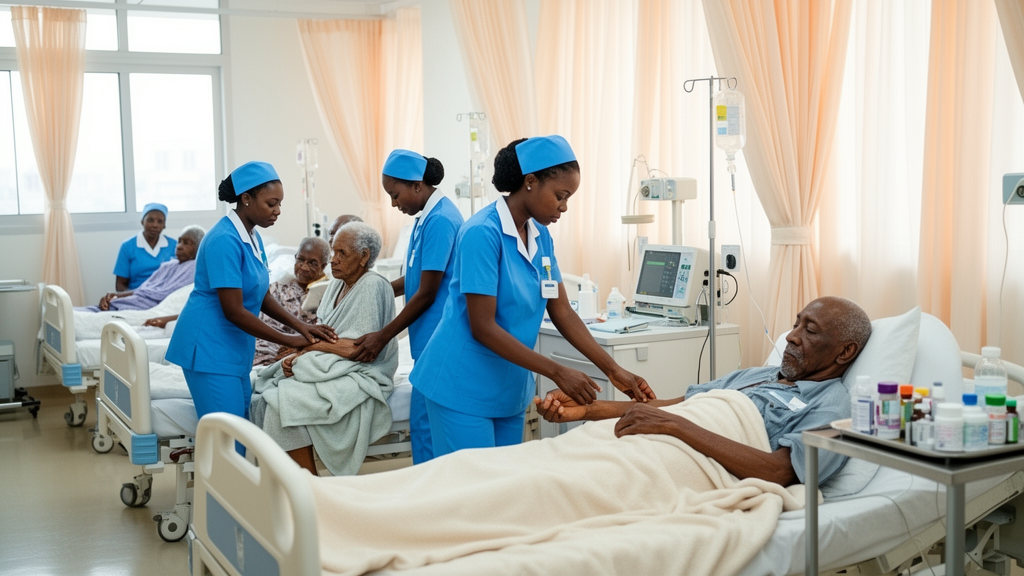
Nurses caring for terminally ill older patients at a Nigerian tertiary hospital described end-of-life care as a compassionate, holistic responsibility focused on preserving dignity and comfort, while reporting cultural barriers, emotional exhaustion and distress associated with repeated exposure to death. Its findings offer a focused account of how nurses understood this responsibility, recognized the dying phase, navigated religious and cultural influences, and experienced the psychological demands of caring for geriatric patients at the end of life. Researchers used a descriptive phenomenological design to examine the perceptions and lived experiences of nurses working across medical, surgical, intensive care, oncology, trauma and palliative care units.
Participants were purposively selected, and data were gathered through semi-structured, in-depth interviews and field notes over three weeks between May and June 2025. Interviews were audio-recorded, transcribed verbatim and analysed thematically using Colaizzi’s phenomenological framework. The researchers described member checking, peer debriefing, reflexivity and detailed documentation as measures used to support the rigour of the analysis.
This design was intended to explore experiences in depth rather than compare groups, test an intervention or calculate rates of clinical outcomes. Four major themes emerged from the interviews: participants’ perception and understanding of end-of-life care; recognition and clinical identification of the dying phase; religious and cultural influences on care delivery; and nurses’ emotional and psychological experiences. The first theme centred on end-of-life care as a holistic responsibility involving physical, emotional, psychological and spiritual support, with an emphasis on preserving patients’ dignity and comfort.
Families were also identified as recipients of support in the study’s description of nurses’ role in providing care to terminally ill patients and their relatives. For identifying the dying phase, nurses relied on both clinical indicators and experiential judgement. In other words, their accounts combined observable clinical information with the professional knowledge developed through previous experience of caring for dying patients.
The findings are also limited in scope because the participants came from one tertiary hospital and included 17 nurses. Accordingly, the study cannot establish how common these experiences are among Nigerian nurses generally or determine whether they differ across hospitals, specialties or regions. Religious and cultural influences were central to how care was delivered.
Religious belief provided emotional support for many participants, whereas cultural taboos surrounding death complicated communication with patients and families. The interviews therefore show that end-of-life care in this hospital involved more than clinical assessment and symptom-focused support: it also required navigating social and religious understandings of death. The researchers recommended culturally sensitive communication strategies as a response to the difficulties described, but the study did not test a particular communication strategy or measure whether one would improve patient, family or nursing outcomes.
The findings do not quantify the prevalence of specific cultural practices or religious beliefs among participants. Repeated encounters with death also produced a substantial emotional burden. Participants described emotional exhaustion, grief, helplessness and moral distress, demonstrating these experiences through the study’s thematic analysis of interview and field-note data.
At the same time, the results portray a strong commitment to compassionate care rather than withdrawal from the responsibility of caring for terminally ill older patients. Religious belief was identified as one potential source of support, and the authors called for greater attention to nurses’ emotional experiences and coping resources in resource-limited settings. The qualitative evidence does not establish that religious support prevents distress, nor does it estimate the prevalence or causes of burnout among Nigerian nurses.
Subject of Research: Nurses’ perceptions and lived experiences of end-of-life care for terminally ill older patients at a Nigerian tertiary hospital.
Article Title: Perceptions and lived experiences of nurses on end-of-life care for terminally ill geriatric patients: a phenomenological study in a Nigerian tertiary hospital
Article References: Fatukasi, B. M., Olubiyi, S. K., Fatukasi, A. O., Adeniyi, Y. E., Ayanbeku, J. K., Abdulmumeen, I. O., Ibrahim, A. O., Yakub, A., & Kolo, S. (2026). Perceptions and lived experiences of nurses on end-of-life care for terminally ill geriatric patients: a phenomenological study in a Nigerian tertiary hospital. BMC Nursing. https://doi.org/10.1186/s12912-026-05541-8
Image Credits: AI Generated
DOI: 10.1186/s12912-026-05541-8
Keywords: end-of-life care, geriatric nursing, nurses, Nigeria, qualitative research, phenomenology, palliative care, cultural taboos, religious support, emotional distress, Perceptions, lived
Cite Scienmag News
Ophelia Keating. (October 20, 2026). Qualitative study of Nigerian nurses caring for terminally ill older patients. Scienmag. https://scienmag.com/qualitative-study-of-nigerian-nurses-caring-for-terminally-ill-older-patients/
Ophelia Keating. "Qualitative study of Nigerian nurses caring for terminally ill older patients." Scienmag, 20 October 2026, https://scienmag.com/qualitative-study-of-nigerian-nurses-caring-for-terminally-ill-older-patients/. Accessed 20 October 2026.
Ophelia Keating. "Qualitative study of Nigerian nurses caring for terminally ill older patients." Scienmag. October 20, 2026. https://scienmag.com/qualitative-study-of-nigerian-nurses-caring-for-terminally-ill-older-patients/


