A qualitative study in Rwanda’s Southern Province identified water, sanitation and hygiene gaps, uneven biosecurity and distinct gender roles throughout the smallholder pork value chain, conditions that participants associated with risks posed by the zoonotic tapeworm Taenia solium . Researchers held focus group discussions with 23 men and 21 women drawn from five nodes of the value chain: farmers, animal health workers, butchers, vendors and consumers. They also interviewed six key informants.
Audio recordings were transcribed verbatim, translated into English and coded through inductive thematic analysis. This design captured participants’ experiences and perceptions; it did not measure infection prevalence, quantify exposure or test whether any identified condition caused disease. Across the chain, participants described several conditions relevant to parasite control.
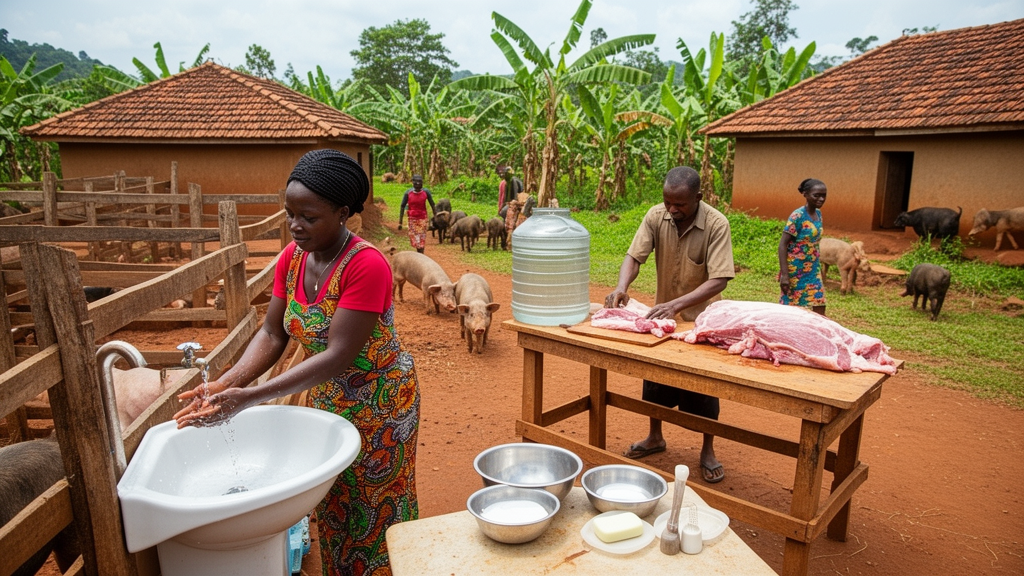
These included free-range pig production, reuse of human waste, limited access to preventive services such as deworming and vaccination, informal slaughter, and consumption of infected or undercooked pork. Inadequate water and sanitation facilities were also frequently reported, creating what participants regarded as serious lapses in hygiene for both people and pigs. The findings show that concerns extended beyond pig husbandry to slaughter, food handling and environmental conditions.
The discussions also revealed a division of responsibilities across gender. Women commonly managed domestic tasks connected with pig husbandry, while men more often performed tasks such as building pens, buying and selling pigs, and slaughtering or butchering. These reported roles identify where participants in future One Health programs could be targeted, but the study did not establish that any group experienced a greater risk of infection.
Its authors instead argued that information campaigns intended to transform gendered norms should be directed to specific recipients at different points in the value chain. Poverty was identified as a major barrier to implementing T. solium control, yet participants expressed enthusiasm for receiving information and resources that could support that goal. However, it remains a qualitative assessment of perceived biosecurity gaps, WASH constraints and social barriers in one district.
Further research would be needed to determine how frequently the parasite is present, which conditions contribute most strongly to transmission and whether any proposed intervention reduces disease or losses.
Subject of Research: Gender roles and WASH barriers in Taenia solium control in Rwanda’s smallholder pork value chain
Article Title: “I will not accept to bury my pig”: Taenia solium, WASH, and gender roles in the smallholder pork value chain in Southern Province, Rwanda
Article References: Schurer, J. M., Uwase, R. Z., Rwagasore, P., Rodrigues, K., Shyaka, A., & Moges, T. (2026). “I will not accept to bury my pig”: Taenia solium, WASH, and gender roles in the smallholder pork value chain in Southern Province, Rwanda. PLOS Neglected Tropical Diseases, 20(10), e0014815. https://doi.org/10.1371/journal.pntd.0014815
Image Credits: AI Generated
DOI: 10.1371/journal.pntd.0014815
Keywords: Taenia solium, Rwanda, porcine cysticercosis, cysticercosis, pork value chain, water sanitation hygiene, gender roles, smallholder farming, One Health, zoonotic disease, will, accept
Cite Scienmag News
Kristina Jarvis. (October 22, 2026). Qualitative Rwanda study maps WASH gaps and gender roles in pork chain. Scienmag. https://scienmag.com/qualitative-rwanda-study-maps-wash-gaps-and-gender-roles-in-pork-chain/
Kristina Jarvis. "Qualitative Rwanda study maps WASH gaps and gender roles in pork chain." Scienmag, 22 October 2026, https://scienmag.com/qualitative-rwanda-study-maps-wash-gaps-and-gender-roles-in-pork-chain/. Accessed 22 October 2026.
Kristina Jarvis. "Qualitative Rwanda study maps WASH gaps and gender roles in pork chain." Scienmag. October 22, 2026. https://scienmag.com/qualitative-rwanda-study-maps-wash-gaps-and-gender-roles-in-pork-chain/