


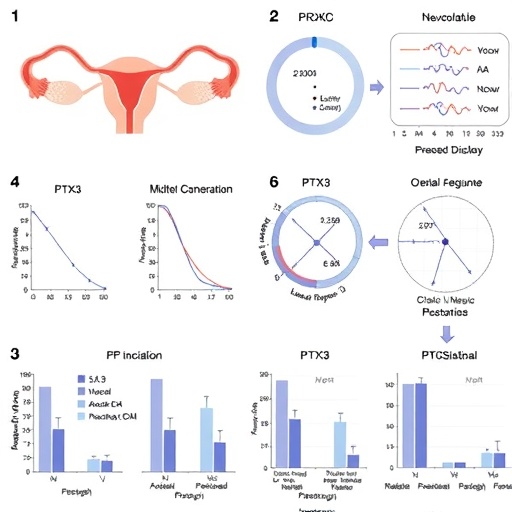
In recent decades, polycystic ovary syndrome (PCOS) has emerged as one of the most common endocrine disorders affecting women globally. Affecting approximately 8-13% of women of reproductive age, PCOS is associated with a range of symptoms, including irregular menstrual cycles, excessive androgen levels, and ovarian dysfunction. As researchers continue to investigate the underlying mechanisms of this complex disorder, new insights are being gained regarding the role of inflammatory markers and modulators in ovarian function. A recent study led by Kalı, Karabulut, Memur, and their team has uncovered significant findings that highlight PTX3 as a critical modulator of functional ovarian response in PCOS.
This groundbreaking research emphasizes PTX3 (Pentraxin 3) as a key protein that mediates various biological processes, including inflammation, tissue remodeling, and reproductive functions. PTX3 has been identified as a long-reactive protein involved in the immune response and has drawn considerable attention due to its potential role in female reproductive health. The study aims to elucidate the relationship between PTX3 levels and ovarian function in women diagnosed with PCOS, contributing valuable insights to the existing body of knowledge surrounding this prevalent condition.
The crux of the research delves into the interaction between PTX3 and two other important mediators: TSG-6 and ITI. TSG-6, or Tumor Necrosis Factor-Stimulated Gene 6, is known for its anti-inflammatory properties and its involvement in reproductive processes, while ITI, or Inter-alpha Inhibitor Proteins, plays a role in modulating inflammatory responses. By evaluating the interplay between these three components, the research offers a comprehensive overview of how they collectively influence ovarian function and health in the context of PCOS.
The methodological approach taken in this study involved a well-designed clinical evaluation among women with diagnosed PCOS. The researchers collected serum samples from the participants and measured the levels of PTX3, TSG-6, and ITI. With a focus on correlating these levels with hormonal profiles and the clinical presentation of PCOS, the researchers aimed to discern the significance of these proteins in the pathophysiology of ovarian dysfunction.
The findings from this study indicate a distinct correlation between elevated PTX3 levels and specific hormonal imbalances seen in women with PCOS. Interestingly, the results suggest that higher PTX3 levels may be associated with increased androgen levels, contributing to the complex hormonal dysregulation characteristic of PCOS. Moreover, the study highlights the potential role of PTX3 as not only a biomarker for inflammation but also as a functional modulator that could influence ovarian activity and follicular development.
Understanding the role of PTX3 in PCOS could have profound implications for the therapeutic strategies pursued in managing the condition. Traditional treatment methods often focus on alleviating symptoms, but a deeper comprehension of the underlying molecular mechanisms could pave the way for innovative interventions directed at modifying the disease process itself. Targeting PTX3 modulation, alongside TSG-6 and ITI, may offer a groundbreaking approach to treating the ovarian dysfunction that plagues many women suffering from PCOS.
Additionally, the research explores the potential of PTX3 as a predictive biomarker in assessing ovarian response to treatment modalities commonly utilized in PCOS management, such as ovulation induction therapies. By identifying the patients who exhibit specific PTX3 profiles, clinicians could tailor their therapeutic interventions, enhancing the likelihood of successful outcomes while minimizing adverse effects.
As the study gains traction in the scientific community, it contributes further to the discussion around the importance of inflammation in reproductive health. Inflammation has often been overlooked in the context of PCOS, yet the relationship between endocrine disruption and inflammatory processes is becoming increasingly recognized as a pivotal element of the syndrome. The implications of this finding extend beyond PCOS, as similar inflammatory mechanisms may be at play in other reproductive health disorders, warranting broader research initiatives.
Moreover, the significance of PTX3 would extend to the realms of fertility and pregnancy outcomes among women diagnosed with PCOS. Given the hormonal landscape and the propensity for inflammation to disrupt normal reproductive function, further inquiry into PTX3’s role may provide invaluable insights into women’s health, particularly during conception and pregnancy.
Furthermore, the research by Kalı et al. emphasizes the value of collaborative and multidisciplinary approaches in understanding PCOS. While the study highlights the roles of PTX3, TSG-6, and ITI, it also sets the stage for integrating knowledge from genetics, endocrinology, and immunology. Future studies may benefit from even larger sample sizes, longitudinal designs, and the incorporation of other biomarkers to establish a more nuanced understanding of PCOS.
In conclusion, the investigation into PTX3 as a critical modulator of functional ovarian response presents an exciting chapter in the ongoing exploration of PCOS. By elucidating the intricate relationships between inflammation and ovarian health, this research could lead to more effective treatment strategies and improved quality of life for women affected by this pervasive condition. As new research findings continue to emerge, the scientific community eagerly awaits the advancements that will follow from these foundational insights into PTX3 and its role in reproductive health.
The collective efforts of Kalı, Karabulut, Memur, and their collaborators will undoubtedly spark further inquiries and discussions surrounding the integration of immunology within reproductive endocrinology. With each discovery, we move closer to unraveling the complexities of PCOS and providing women with the care and understanding they deserve.
Kalı, Z., Karabulut, Ü., Memur, T. et al. PTX3 as a key modulator of functional ovarian response in PCOS: evaluation alongside TSG-6 and ITI. J Ovarian Res 18, 204 (2025). https://doi.org/10.1186/s13048-025-01798-w
Cite Scienmag News
Ophelia Keating. (September 26, 2025). PTX3: Key Modulator of Ovarian Response in PCOS. Scienmag. https://scienmag.com/ptx3-key-modulator-of-ovarian-response-in-pcos/
Ophelia Keating. "PTX3: Key Modulator of Ovarian Response in PCOS." Scienmag, 26 September 2025, https://scienmag.com/ptx3-key-modulator-of-ovarian-response-in-pcos/. Accessed 4 September 2026.
Ophelia Keating. "PTX3: Key Modulator of Ovarian Response in PCOS." Scienmag. September 26, 2025. https://scienmag.com/ptx3-key-modulator-of-ovarian-response-in-pcos/


