


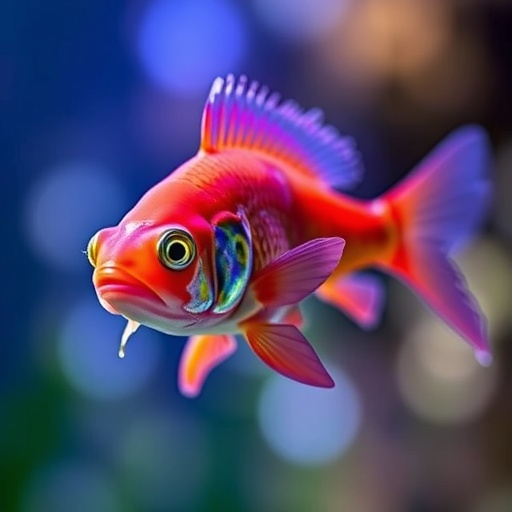
In a groundbreaking study that sheds light on the complex ways psychoactive compounds influence animal behavior, researchers from Canada have unveiled new insights into the effects of psilocybin on social interactions. Psilocybin, the psychoactive alkaloid found in more than 200 species of mushrooms primarily within the Psilocybe genus, is well-known for its capacity to bind serotonin receptors in mammalian brains, altering mood, appetite, aggression, and perception. However, its specific role in modulating social behavior among non-mammalian species has remained largely unexplored—until now.
Published recently in Frontiers in Behavioral Neuroscience, this experimental study focuses on the amphibious mangrove rivulus fish (Kryptolebias marmoratus), a fascinating vertebrate model distinguished by its innate aggressiveness and unique reproductive biology. The research team, led by biologists at The University of British Columbia and Acadia University, meticulously examined how acute, low-dose psilocybin exposure impacts the fish’s social dynamics, particularly aggression and activity during interactions.
Mangrove rivulus fish offer a rare advantage as a model organism because they are self-fertilizing hermaphrodites, producing genetically identical offspring. This genetic homogeneity eliminates variability attributable to genetic differences, thus ensuring that observed behavioral changes can be confidently attributed to the pharmacological effects of psilocybin rather than innate genetic traits. Utilizing three distinct laboratory-bred genetic lines of these fish, the researchers designed a robust experimental framework involving baseline behavioral assessments and psilocybin intervention.
In the initial phase, focal fish were introduced into shared tanks with stimulus fish separated by an opaque barrier with a fiberglass mesh partition. This setup allowed the fish to see and smell each other without physical contact, enabling baseline measurements of social responsiveness and aggression. After a brief adjustment period, the barrier was removed, and their interactions were quantified. Subsequently, the focal fish were immersed in water dosed with psilocybin for twenty minutes before being re-introduced to the same stimulus fish under identical conditions, enabling a direct comparison of behaviors pre- and post-exposure.
Strikingly, the study found that psilocybin-treated fish exhibited a significant reduction in both overall activity and aggressive attack behaviors. Specifically, key behaviors such as swimming bursts, which represent high-energy, non-contact aggressive actions, were markedly diminished. Conversely, low-energy social display behaviors like head-on displays, which function primarily as communication and social assessment gestures, were largely unaffected by psilocybin exposure. These data suggest a selective dampening of escalated aggression without broadly suppressing social engagement or interaction.
From a neuropharmacological perspective, psilocybin’s action at serotonergic sites likely modulates neural circuits governing aggression and motor activity. Serotonin is a well-established neuromodulator of social and aggressive behaviors across vertebrate species, and psilocybin’s affinity for serotonin receptors appears to differentiate between high-intensity, energetically costly interactions versus more subtle social signaling. This selective attenuation underscores a nuanced effect of psilocybin whereby the compound inhibits the escalation of conflict but preserves fundamental social communication.
This research holds transformative potential for both fundamental neuroscience and therapeutic applications. While the effects observed are compelling, the authors emphasize caution in extrapolating direct clinical implications for humans as this study employed isolated dosing and short-term exposure in a non-mammalian vertebrate model. Nonetheless, the findings demand further investigation into the neural pathways and receptor subtypes involved in mediating these behavioral changes, offering a framework for understanding how psychedelics might be leveraged to modulate pathological aggression or social dysfunction in clinical settings.
An intriguing aspect of this work is its demonstration of how aquatic models like the mangrove rivulus can serve as powerful proxies in drug screening and neurobehavioral studies. Their controlled genetic backgrounds and measurable, quantifiable social behaviors provide clarity often unattainable in mammalian models. Future studies could expand on these findings by exploring chronic psilocybin dosing, the effects of repeated exposure, and potential neural adaptation or receptor plasticity over time.
Moreover, elucidating the specific serotonin pathways engaged by psilocybin in the mangrove rivulus could open avenues for detailed mapping of serotonergic networks. Such research might also clarify why certain social behaviors are modulated while others remain resistant, contributing to a broader understanding of the neuroethology of social interaction.
The research team, led by Dayna Forsyth and Dr. Suzie Currie, advocates for subsequent investigations targeting the molecular underpinnings of psilocybin’s selective behavioral effects. By advancing knowledge of how psychedelics function across taxa, these studies may highlight evolutionary conserved mechanisms of serotonin signaling and refine drug development strategies aimed at psychiatric conditions involving aggression or social impairment.
The implications of this research stretch beyond basic science, hinting at future pharmacotherapies designed to manage social conflict and aggression without bluntly suppressing social engagement or overall activity. This elegant balance between mitigating harmful behaviors and preserving essential social functions could revolutionize how psychedelic compounds are integrated into neuroscience and psychiatry.
While more comprehensive studies are necessary to determine long-term outcomes and possible neural adaptations, this investigation provides a strong proof of concept that psilocybin can influence complex social behaviors in vertebrates. The mangrove rivulus fish emerges as a promising model to unravel the multifaceted interactions between psychoactive substances and social conduct, bridging the gap between molecular neuroscience and ethology.
In conclusion, the study marks a significant step toward understanding the behavioral pharmacology of psychedelics beyond mammals. It highlights how psilocybin acts to reduce escalated aggressive behaviors selectively, preserving low-intensity social signals, thus opening pathways for future research that could transform both the scientific comprehension and clinical uses of psychoactive compounds.
News Publication Date: 7-May-2026
Web References: 10.3389/fnbeh.2026.1767175
Cite Scienmag News
Courtney Benton. (May 7, 2026). Psilocybin Compound in Magic Mushrooms Reduces Aggression and Activity in Fish. Scienmag. https://scienmag.com/psilocybin-compound-in-magic-mushrooms-reduces-aggression-and-activity-in-fish/
Courtney Benton. "Psilocybin Compound in Magic Mushrooms Reduces Aggression and Activity in Fish." Scienmag, 7 May 2026, https://scienmag.com/psilocybin-compound-in-magic-mushrooms-reduces-aggression-and-activity-in-fish/. Accessed 4 September 2026.
Courtney Benton. "Psilocybin Compound in Magic Mushrooms Reduces Aggression and Activity in Fish." Scienmag. May 7, 2026. https://scienmag.com/psilocybin-compound-in-magic-mushrooms-reduces-aggression-and-activity-in-fish/


