


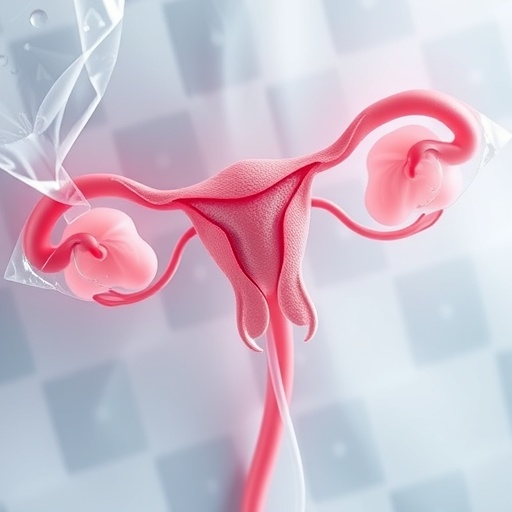
In the realm of reproductive medicine, the cryopreservation of ovarian tissue emerges as a beacon of hope for women facing fertility challenges due to medical illnesses or procedures like chemotherapy. The complexities involved in ensuring the viability of oocytes post-thaw are immense, underscoring the significance of understanding the various mechanisms that contribute to follicle injury during this process. A recent comprehensive review by researchers Chu, Zhang, and Wang delves deeply into the intricate processes surrounding ovarian tissue cryopreservation and the adaptive strategies that may mitigate follicle damage.
Cryopreservation is an advanced technique that allows for the preservation of biological samples at extremely low temperatures. For ovarian tissue, this process involves freezing the tissue in such a way that cellular integrity is maintained. However, the delicate structure of the ovarian follicles is particularly susceptible to damage during both the freezing and thawing stages. This vulnerability highlights the need for well-defined protective strategies to preserve the functional capacity of these follicles, which are crucial for future fertility.
One of the main challenges in ovarian tissue cryopreservation is the formation of ice crystals. Ice crystal formation can puncture cell membranes, leading to detrimental outcomes such as programmed cell death or apoptosis. Chu and colleagues systematically discuss how specific cryoprotectants can be utilized to impede ice crystal formation, effectively preserving the cellular architecture of the follicles. By enhancing the protective properties of these cryoprotectants, they propose that the viability of ovarian follicles post-thaw could see substantial improvement.
Additionally, the review articulates the roles of oxidative stress as a contributing factor to follicle injury. Oxidative damage arises from an imbalance between reactive oxygen species (ROS) and antioxidant defenses in the cell. The freezing and thawing processes exacerbate this oxidative stress, further compromising follicle integrity. The authors highlight the potential of antioxidant therapies as protective measures in ovarian tissue preservation, suggesting that pre-treatment with specific antioxidants could bolster the follicles’ resilience to oxidative insult.
Another significant aspect discussed in the review is the impact of cryopreservation on the extracellular matrix (ECM) surrounding the follicles. The ECM is essential for follicular development and function, providing structural support and biochemical signals necessary for oocyte maturation. The authors emphasize that preserving the ECM during cryopreservation can play a critical role in maintaining follicular health post-thaw. Studies that explore modifications to the cryopreservation protocols, targeting ECM preservation, represent a promising avenue for enhancing the success rates of these procedures.
Moreover, the interplay between various signaling pathways and follicle health is examined in detail. The regulatory pathways that govern follicular growth and survival can be adversely affected during the extreme conditions of cryopreservation. By identifying the key molecular players involved in these processes, including enzymes and transcription factors, researchers can develop targeted interventions that protect follicle integrity. The review underscores the necessity for a multidisciplinary approach, where insights from molecular biology, biochemistry, and reproductive health converge to formulate innovative solutions.
The concept of personalized cryopreservation protocols tailored to individual patients is also gaining traction. Recognizing that each patient presents unique biological challenges, custom protocols that account for factors such as age, hormonal status, and underlying health conditions could lead to better outcomes in follicle preservation. The authors advocate for more extensive clinical trials aimed at establishing such personalized approaches, thus optimizing the chances of successful fertility restoration after future thawing.
Importantly, the ethical considerations surrounding ovarian tissue cryopreservation and transplantation are addressed as well. While the potential benefits of this technology are numerous, careful reflections on the ethical implications are requisite. Discussions around consent, the age of patients, and the long-term consequences of cryopreserved tissue transplantation remain critical topics within both medical and sociological domains. The authors call for transparent guidelines and policies that prioritize patient safety and informed decision-making.
Additionally, the review highlights the current clinical outcomes associated with ovarian tissue cryopreservation. Although several successful live births have been reported following this procedure, the rates of follicle survivability post-thaw continue to necessitate investigation. The potential for non-invasive monitoring techniques to track follicle health and development after transplantation could open new doors for ensuring successful outcomes. This approach emphasizes the dynamic nature of research in reproductive medicine, where continuous improvements are sought.
As advancements in reproductive technologies evolve, the role of artificial intelligence and machine learning in optimizing cryopreservation techniques is emerging as a hot topic. By leveraging big data and computational models, researchers can predict the outcomes of various cryopreservation protocols and refine techniques accordingly. The integration of these technologies within clinical practices holds the promise of revolutionizing patient care and tailoring treatment strategies to individual needs.
In conclusion, the innovative efforts attributed to Chu, Zhang, and Wang in their review shed light on the multifaceted challenges of ovarian tissue cryopreservation while simultaneously charting a course for future inquiries. Their findings accumulate in a robust framework that encompasses the biological, technical, and ethical dimensions of this vital area of research. As the medical community continues to unravel the complexities associated with follicle injury and recovery post-cryopreservation, there is an air of optimism surrounding the potential for improved fertility preservation strategies.
In an era where reproductive options are being redefined through scientific advancements, the insights shared in this review play an important role in enhancing the understanding of ovarian tissue resources. With ongoing research and collaboration, there remains hope for women who wish to reclaim their reproductive health and future childbirth possibilities, cementing cryopreservation’s role as an invaluable asset in reproductive medicine.
Through the concerted efforts of researchers and clinicians, the science of ovarian tissue cryopreservation will undoubtedly continue to evolve, informing practices that will empower countless women around the globe to transcend the barriers imposed by health challenges and nature alike.
Chu, Y., Zhang, J., Wang, L. et al. The mechanism and protective strategies of follicle injury after ovarian tissue cryopreservation and thawed transplantation: a review.
J Ovarian Res 18, 217 (2025). https://doi.org/10.1186/s13048-025-01793-1
Cite Scienmag News
Ophelia Keating. (October 2, 2025). Protective Strategies for Cryopreserved Ovarian Tissue Recovery. Scienmag. https://scienmag.com/protective-strategies-for-cryopreserved-ovarian-tissue-recovery/
Ophelia Keating. "Protective Strategies for Cryopreserved Ovarian Tissue Recovery." Scienmag, 2 October 2025, https://scienmag.com/protective-strategies-for-cryopreserved-ovarian-tissue-recovery/. Accessed 4 September 2026.
Ophelia Keating. "Protective Strategies for Cryopreserved Ovarian Tissue Recovery." Scienmag. October 2, 2025. https://scienmag.com/protective-strategies-for-cryopreserved-ovarian-tissue-recovery/


